A Virtual Museum of
Vintage Gibson Acoustic Guitars and Mandolins
And Free E-book
Illustrating and Exploring the Development of the Instruments of the Gibson Company
Created by Folk and Roots Music Photographer Robert Corwin
Featuring Instruments from the Corwin Collections
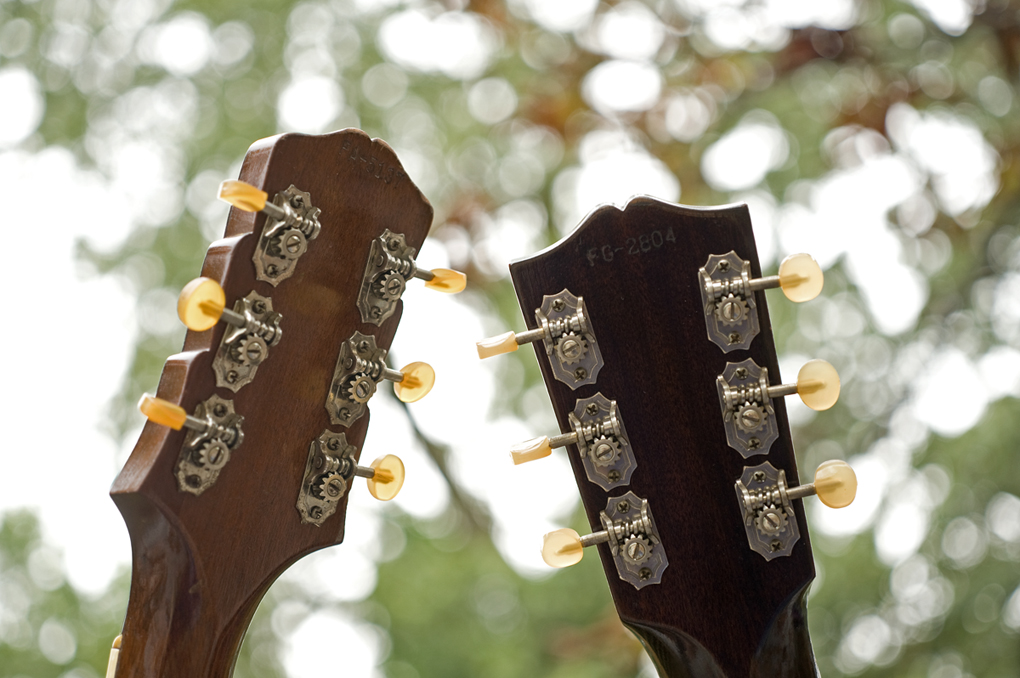
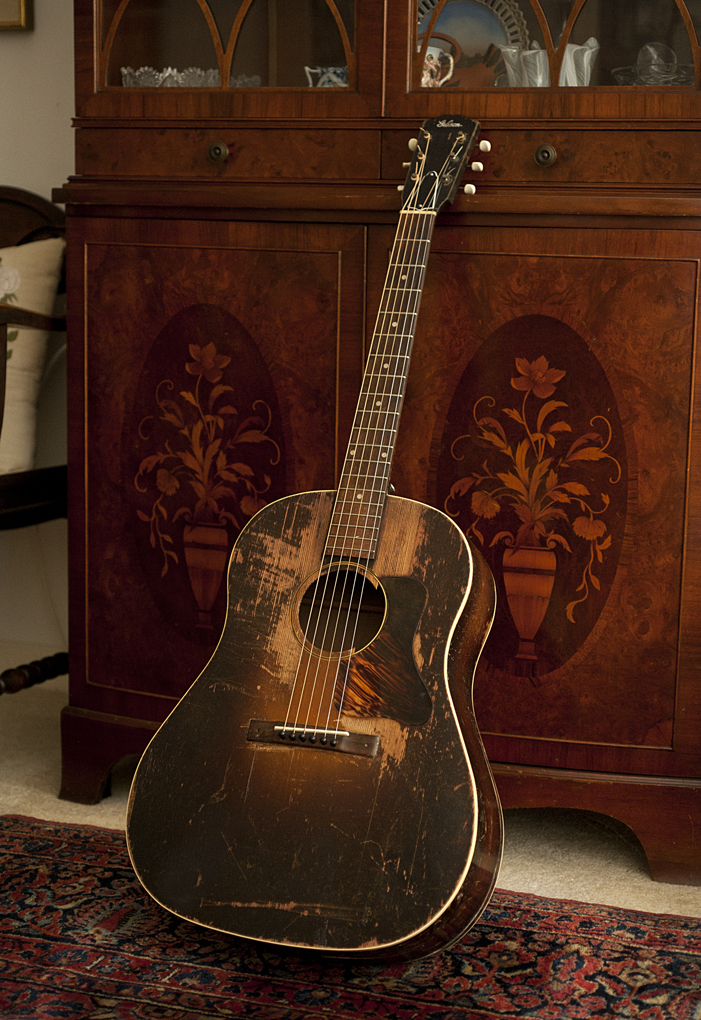
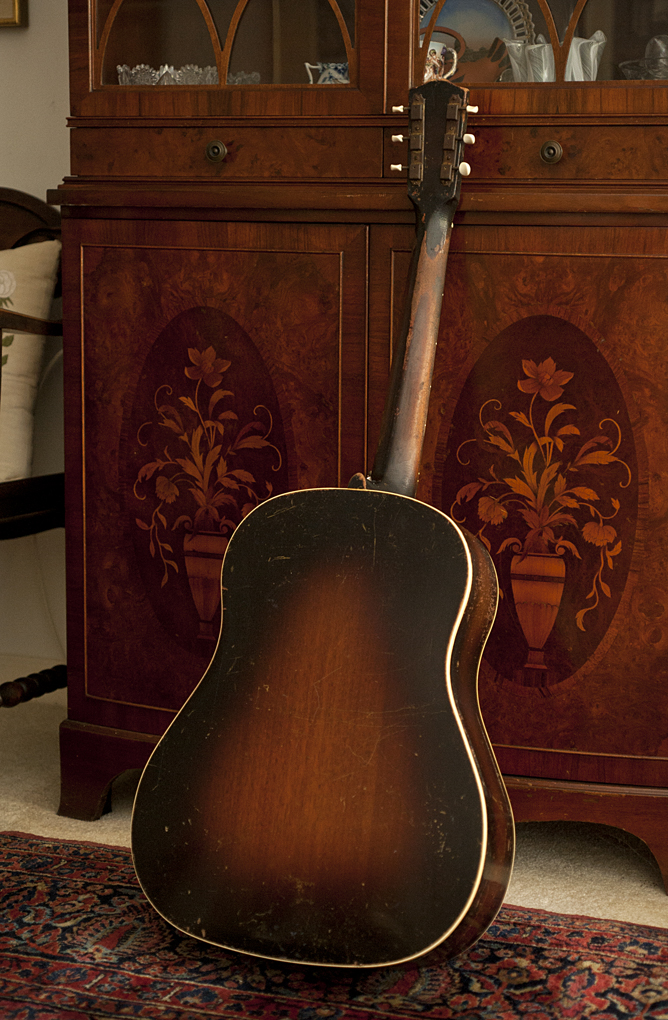
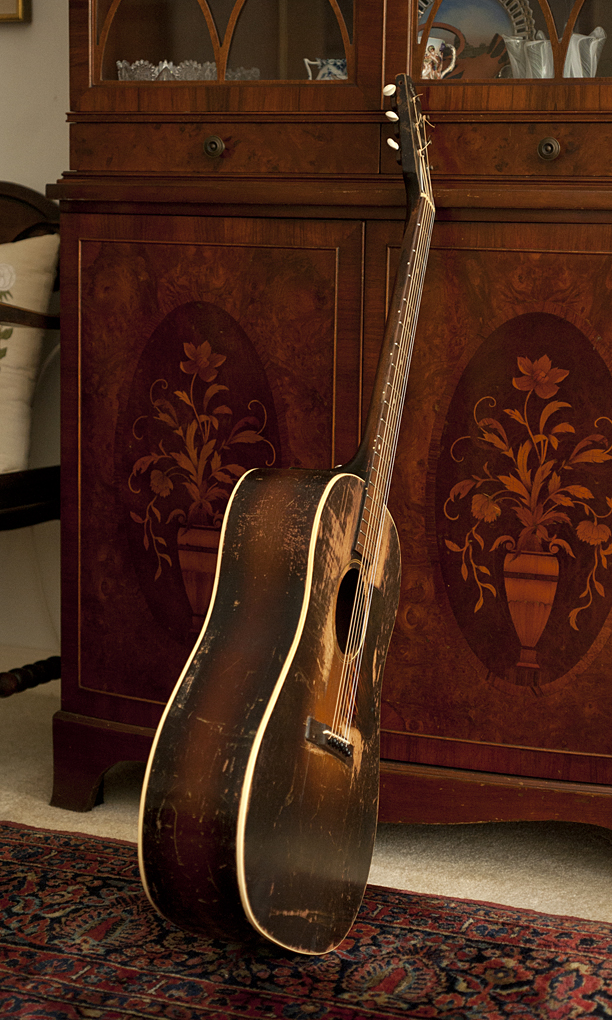
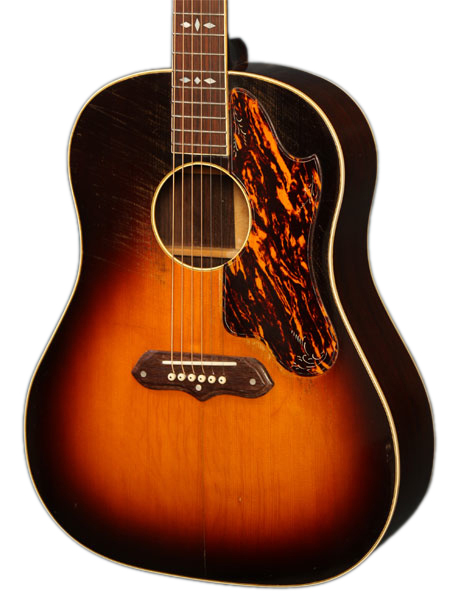
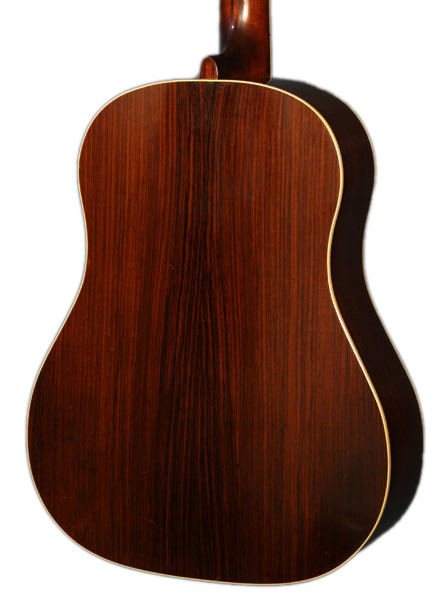
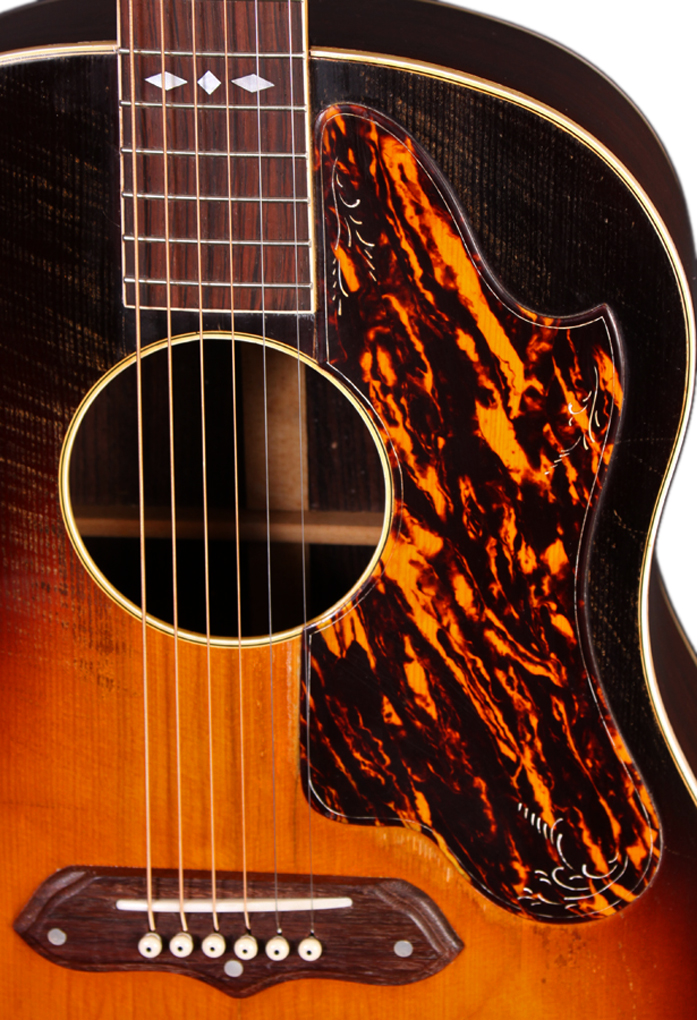
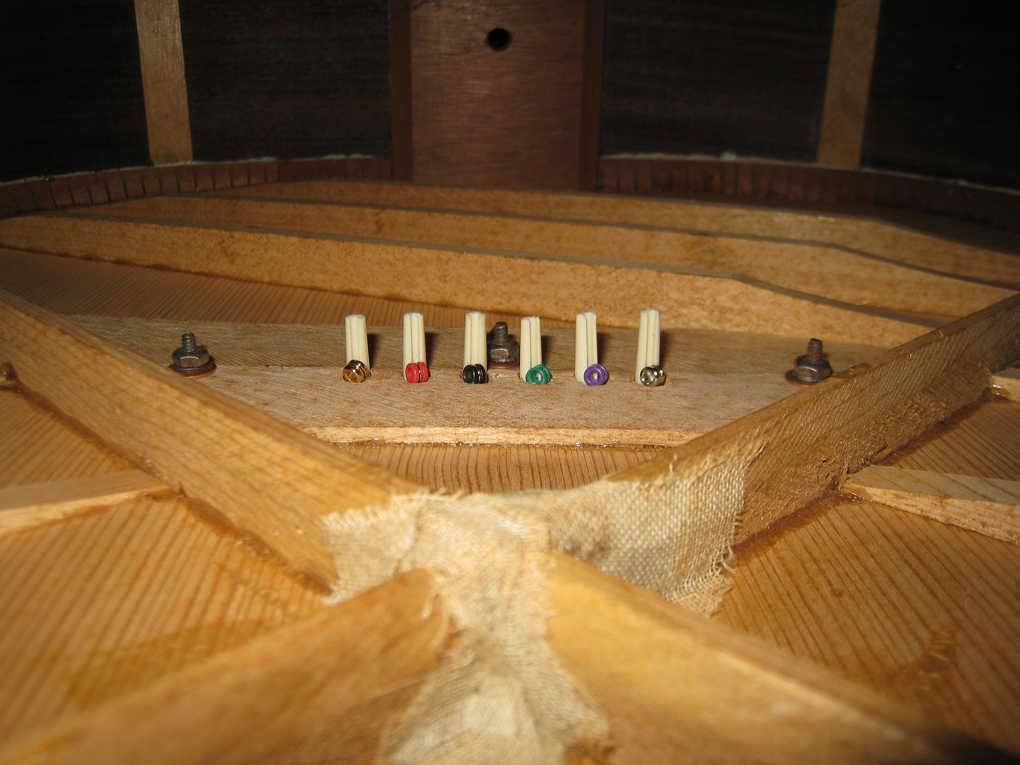
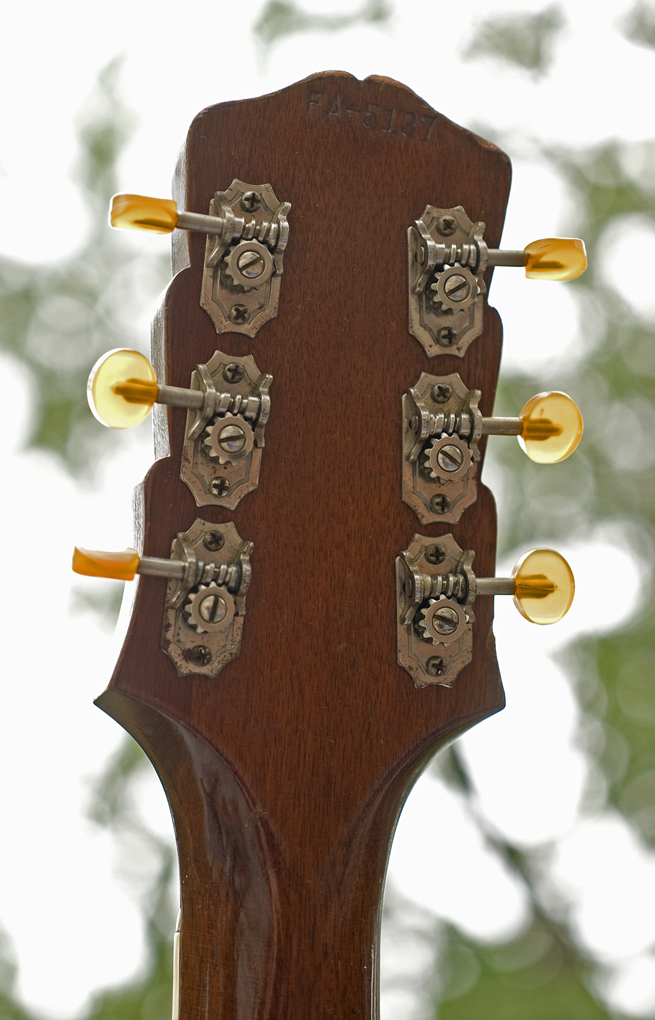
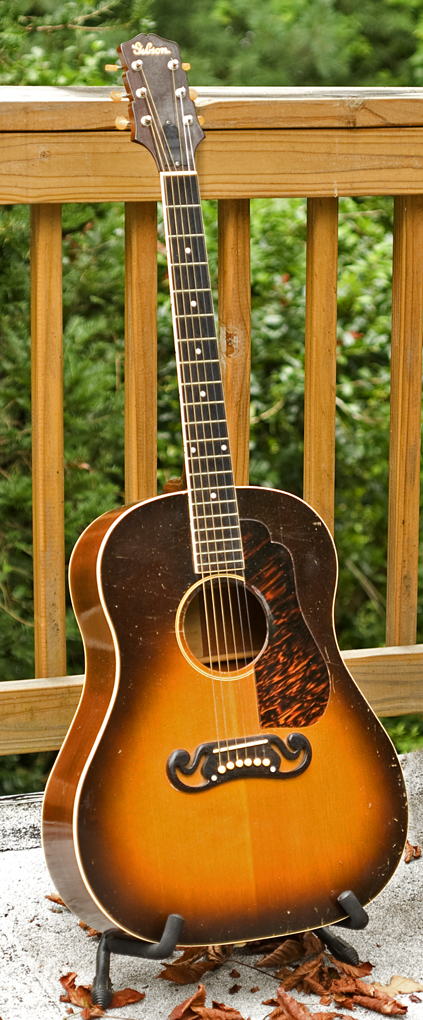
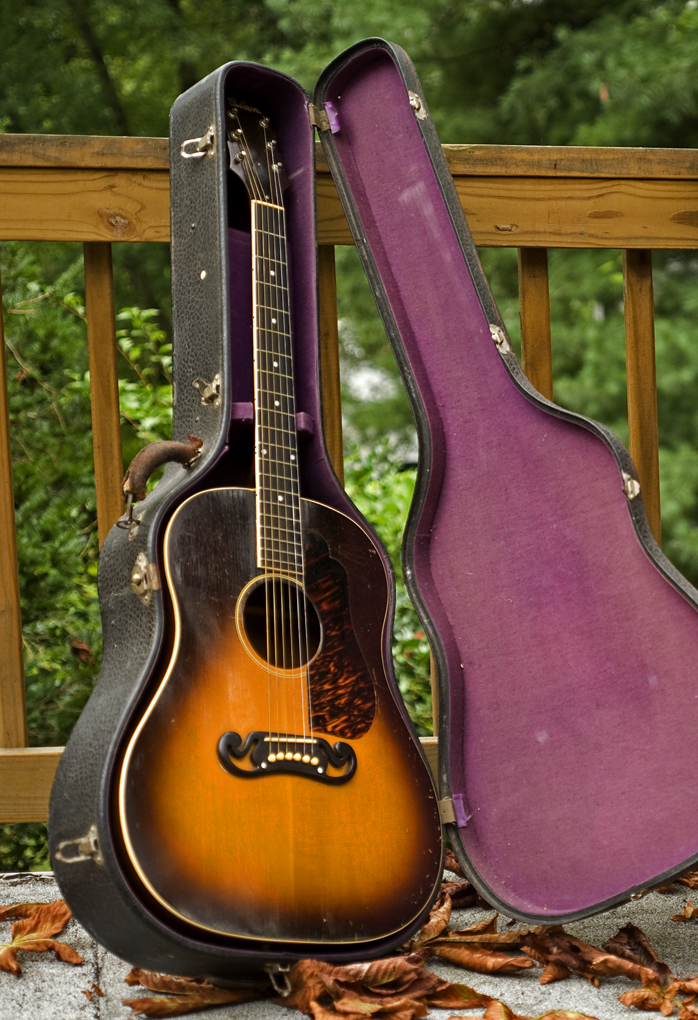
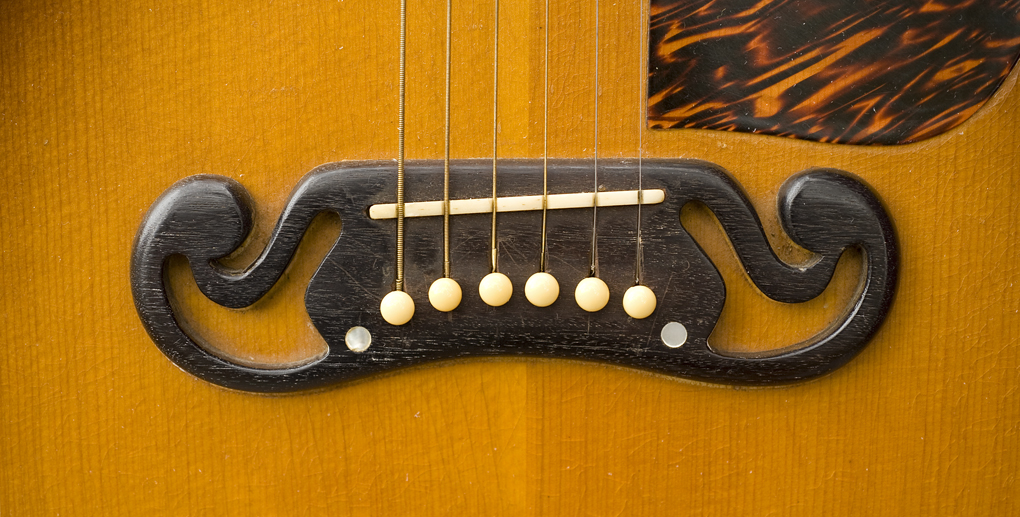
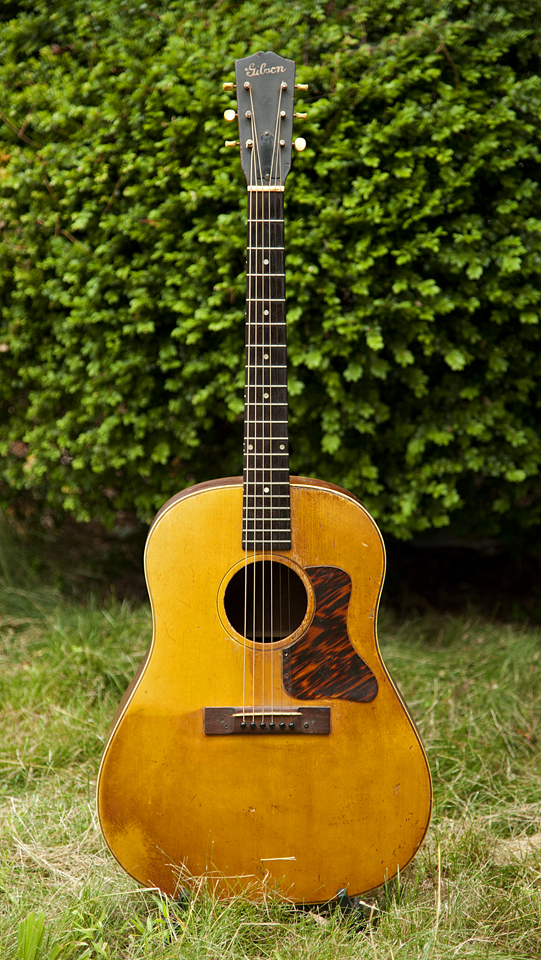
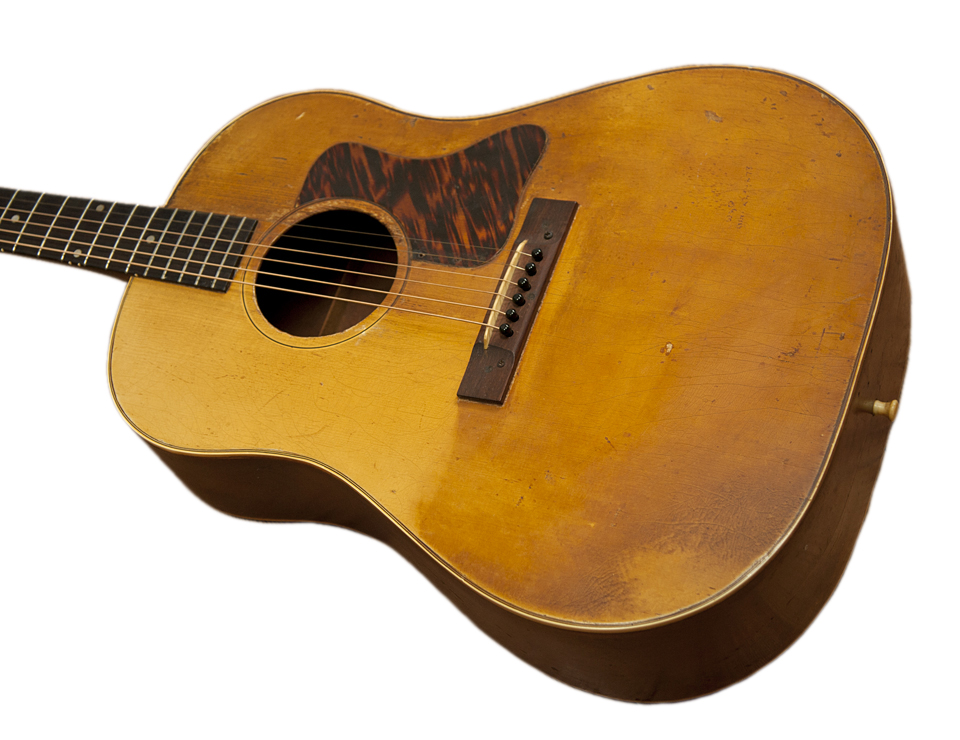
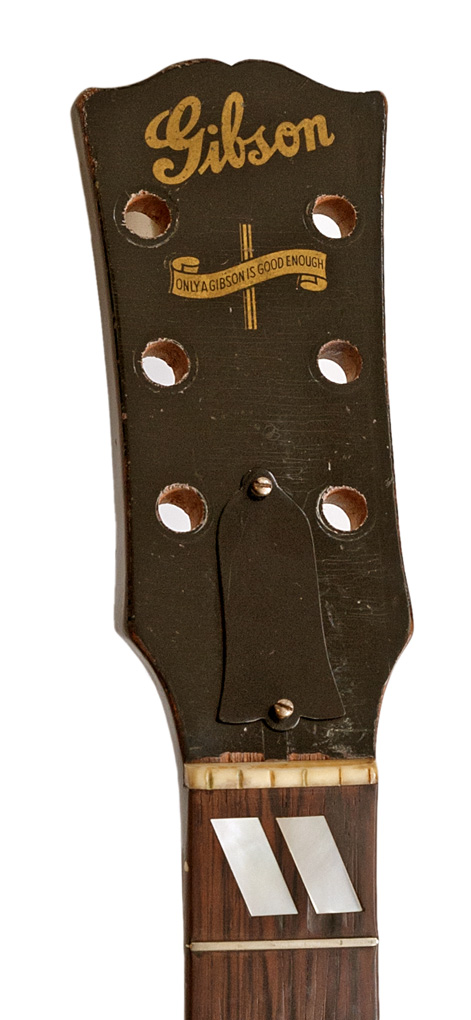
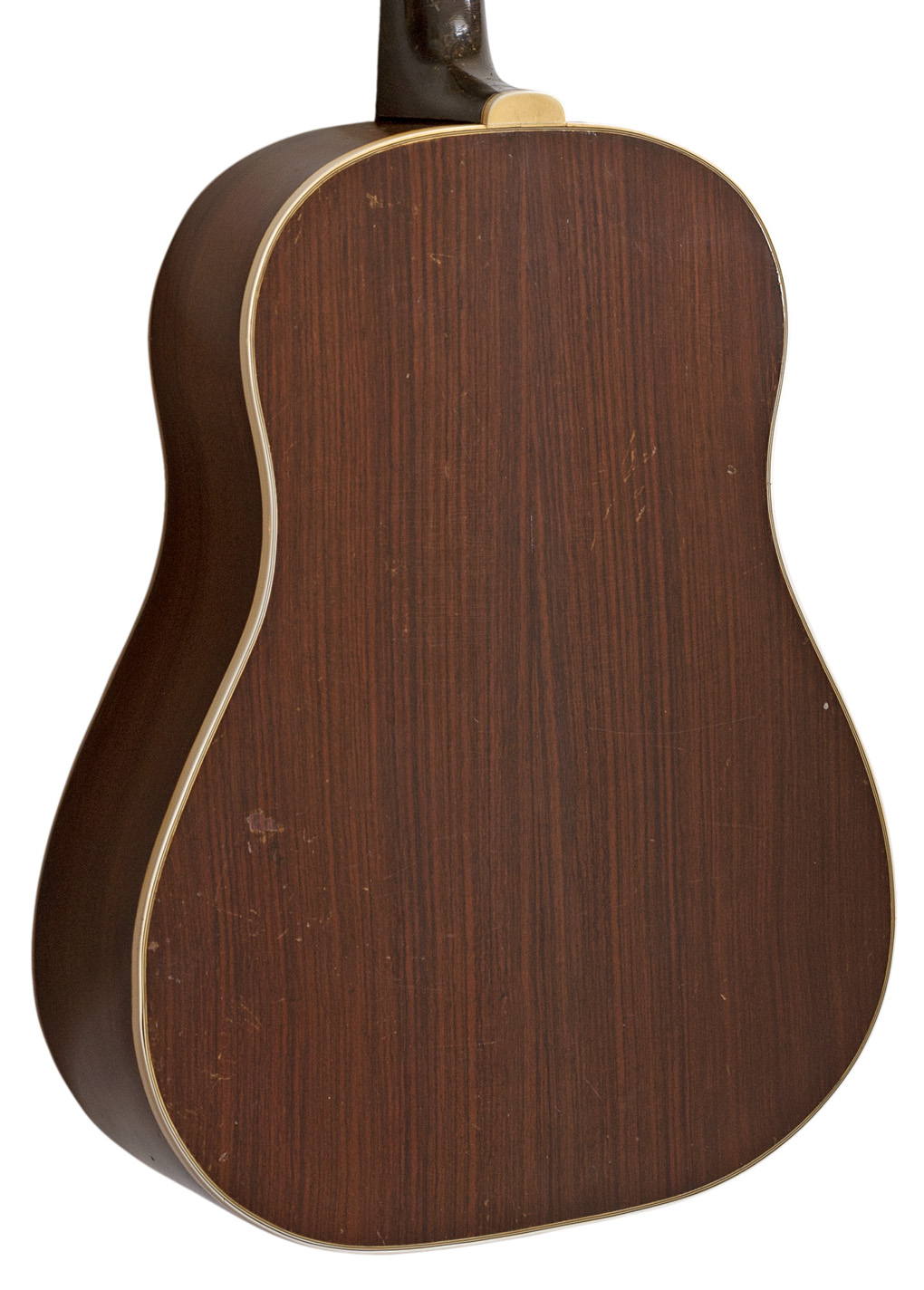
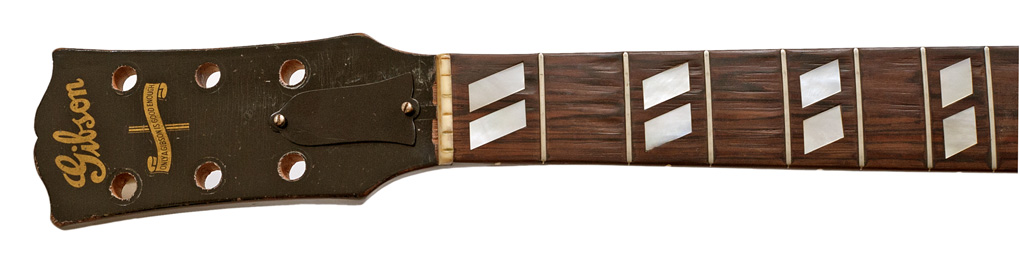
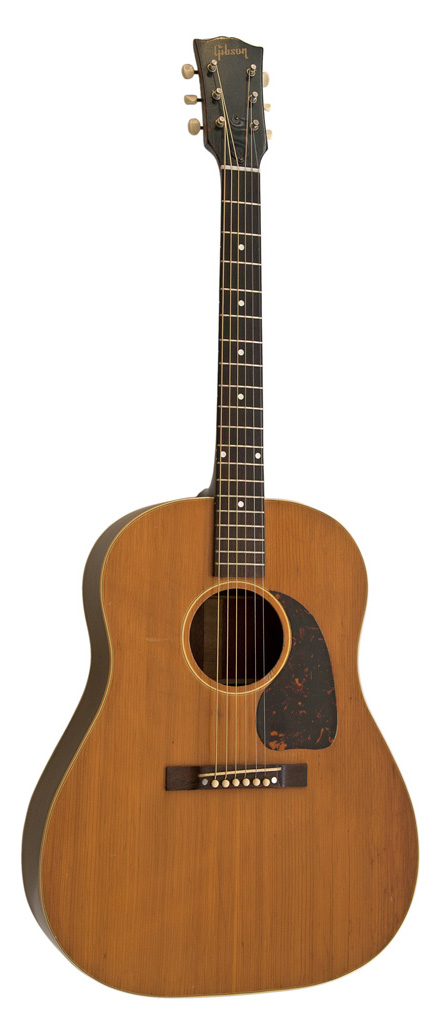
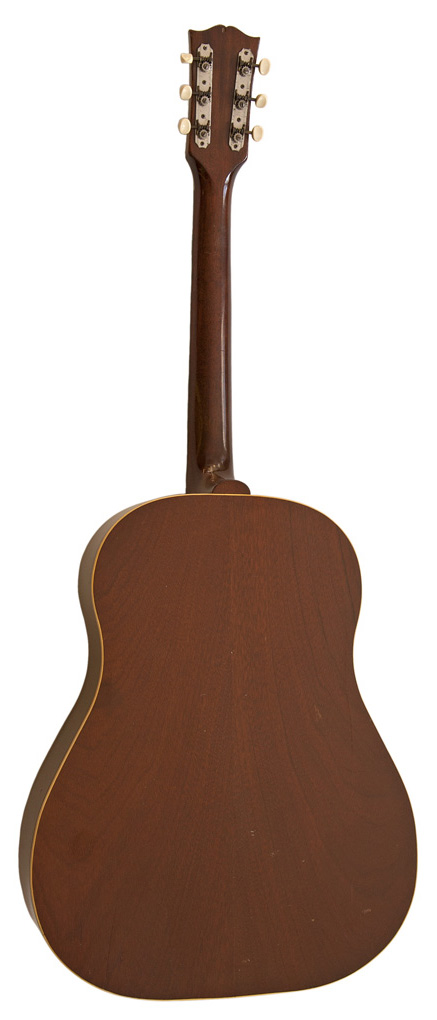
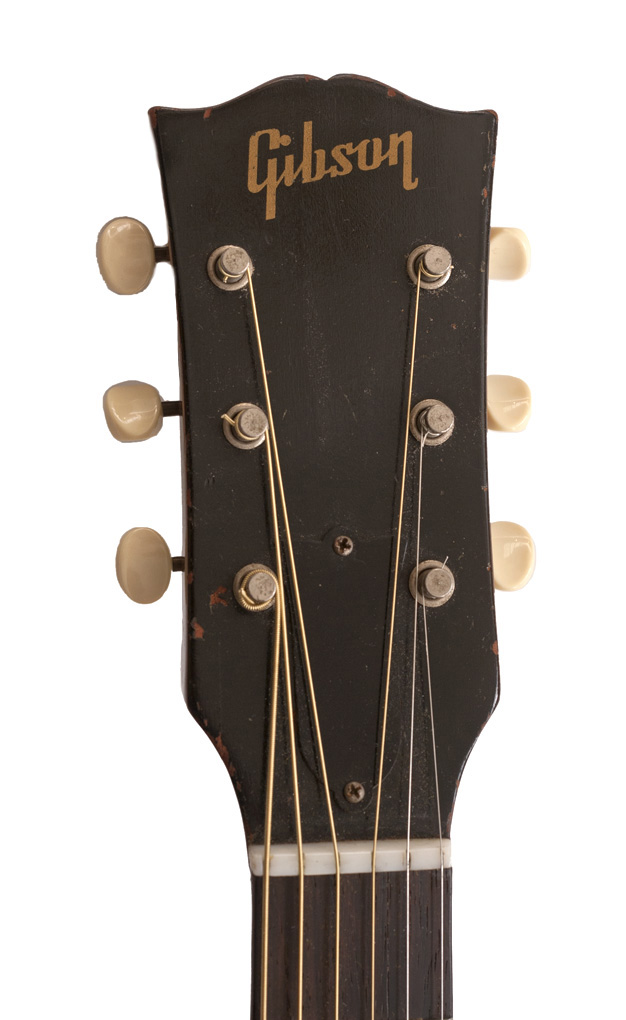
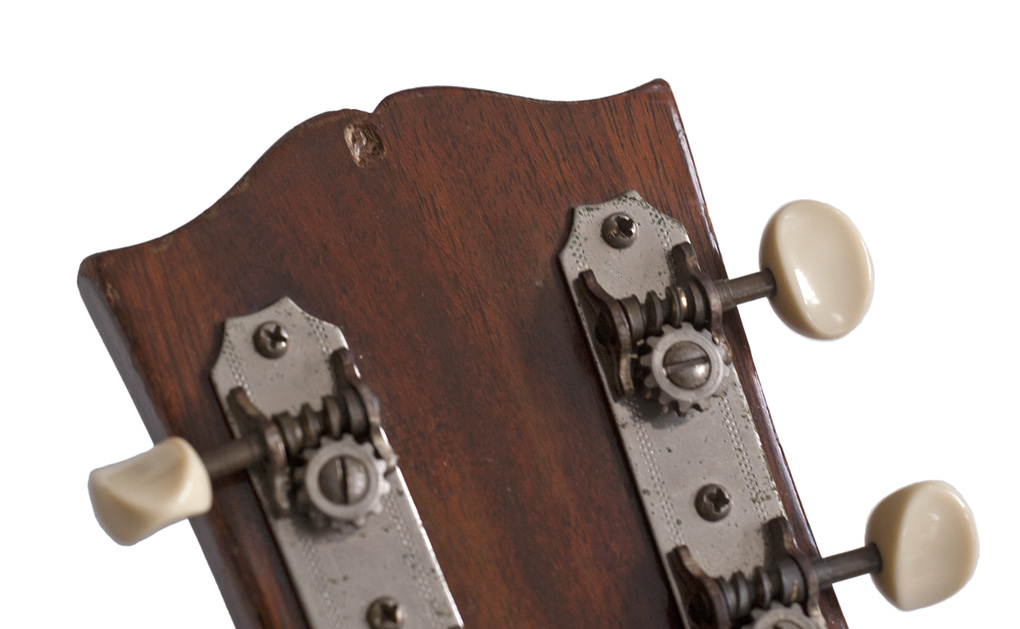
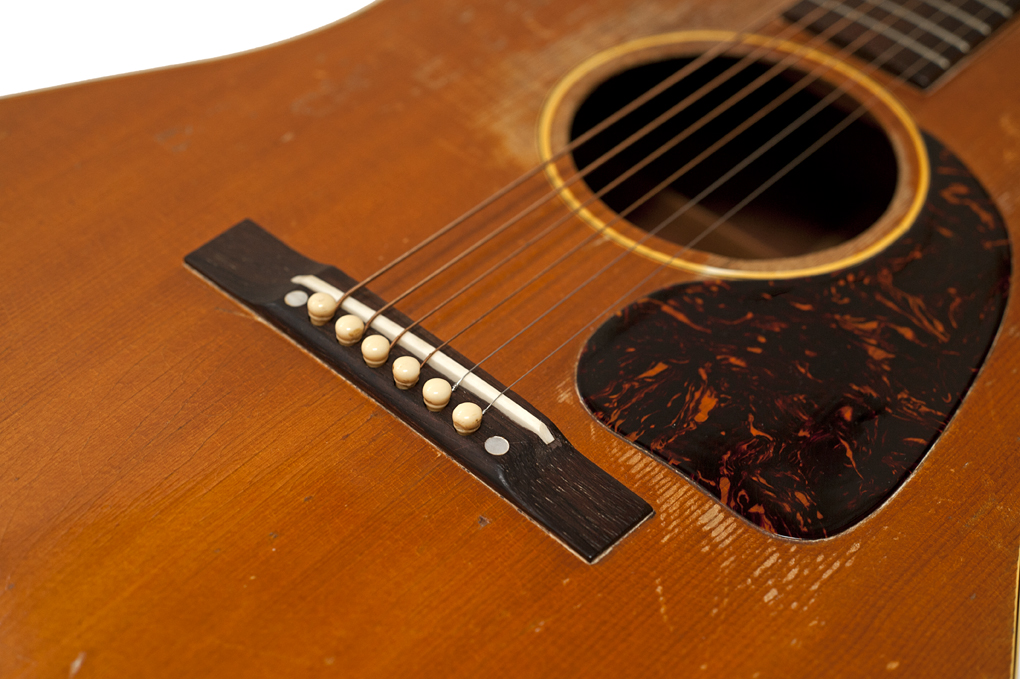
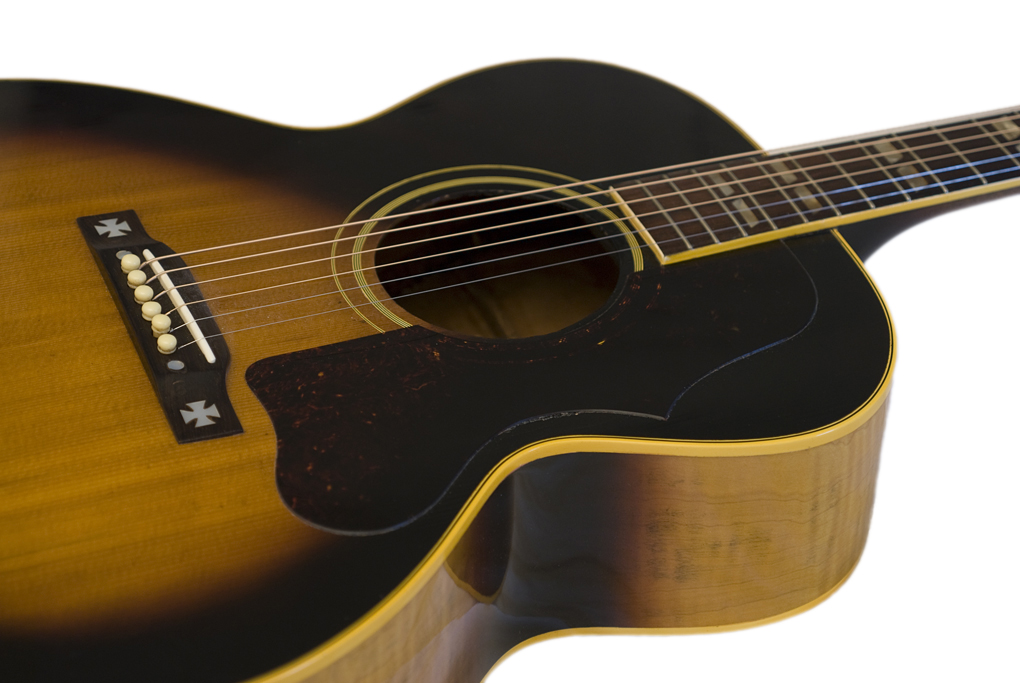
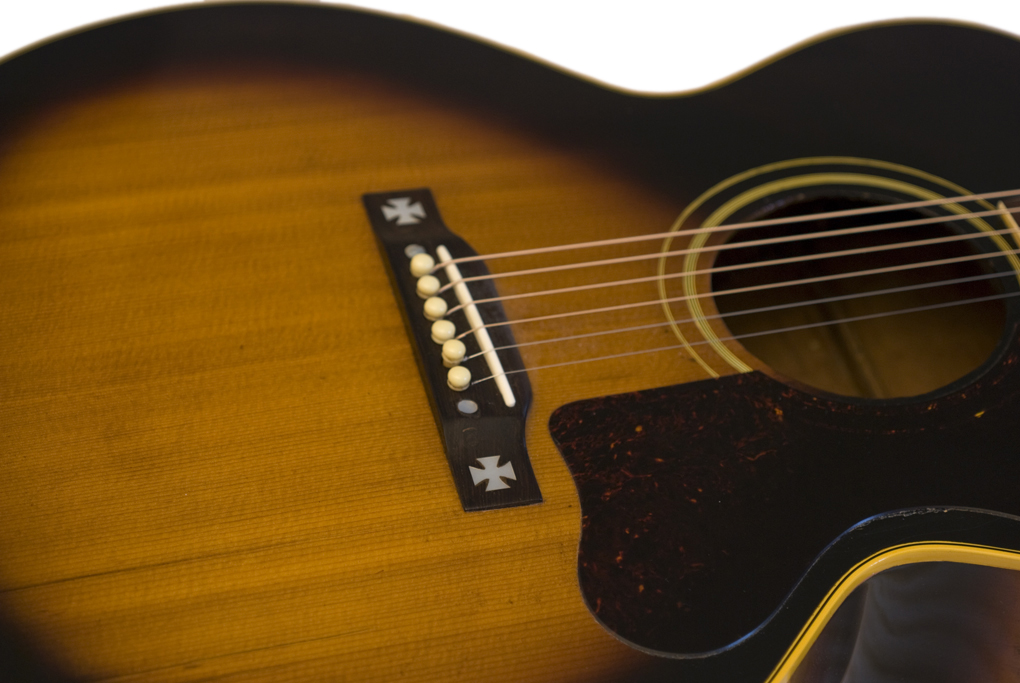
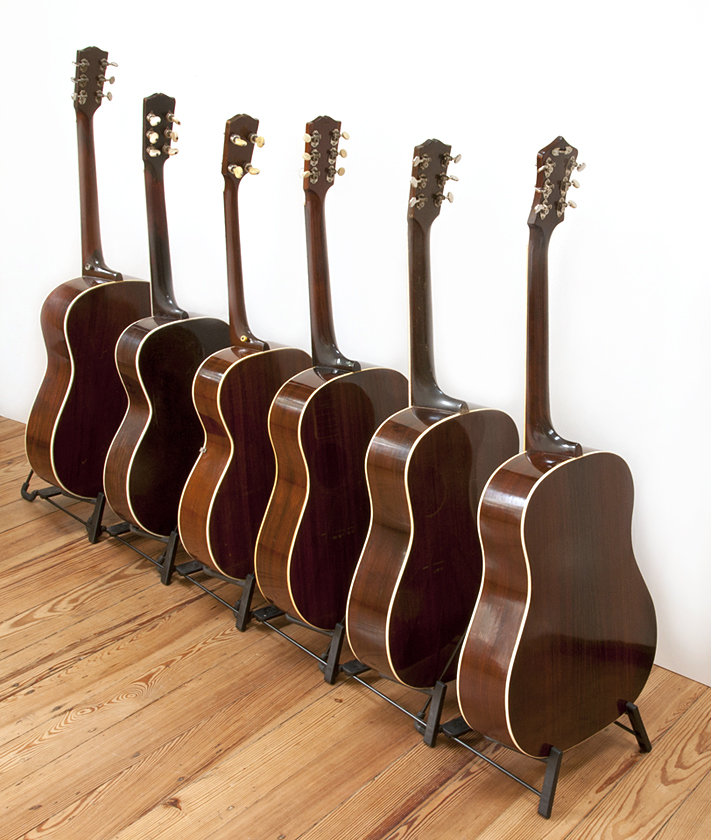
1940 Gibson J-55 and Roy Smeck Stage Deluxe Guitars
Please note: This web site is a work in progress, still with holes and place holders.
Not all sections are complete - many have not even been started yet. Not all links work. If you've stumbled on this site,
feel free to enjoy what's here, and check back for further additions if you wish, knowing it will take some time before the site is finished.
And, for the time being, let's please keep this web site our little secret, between you and me!
December, 2017
` ` ` ` ` ` ` ` ` ` ` ` ` ` ` `
HOLIDAY PRESENTS AND FREEBIES!!!
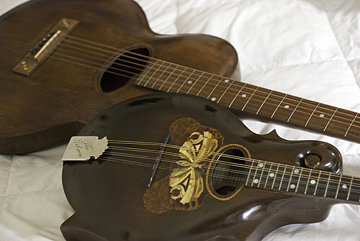
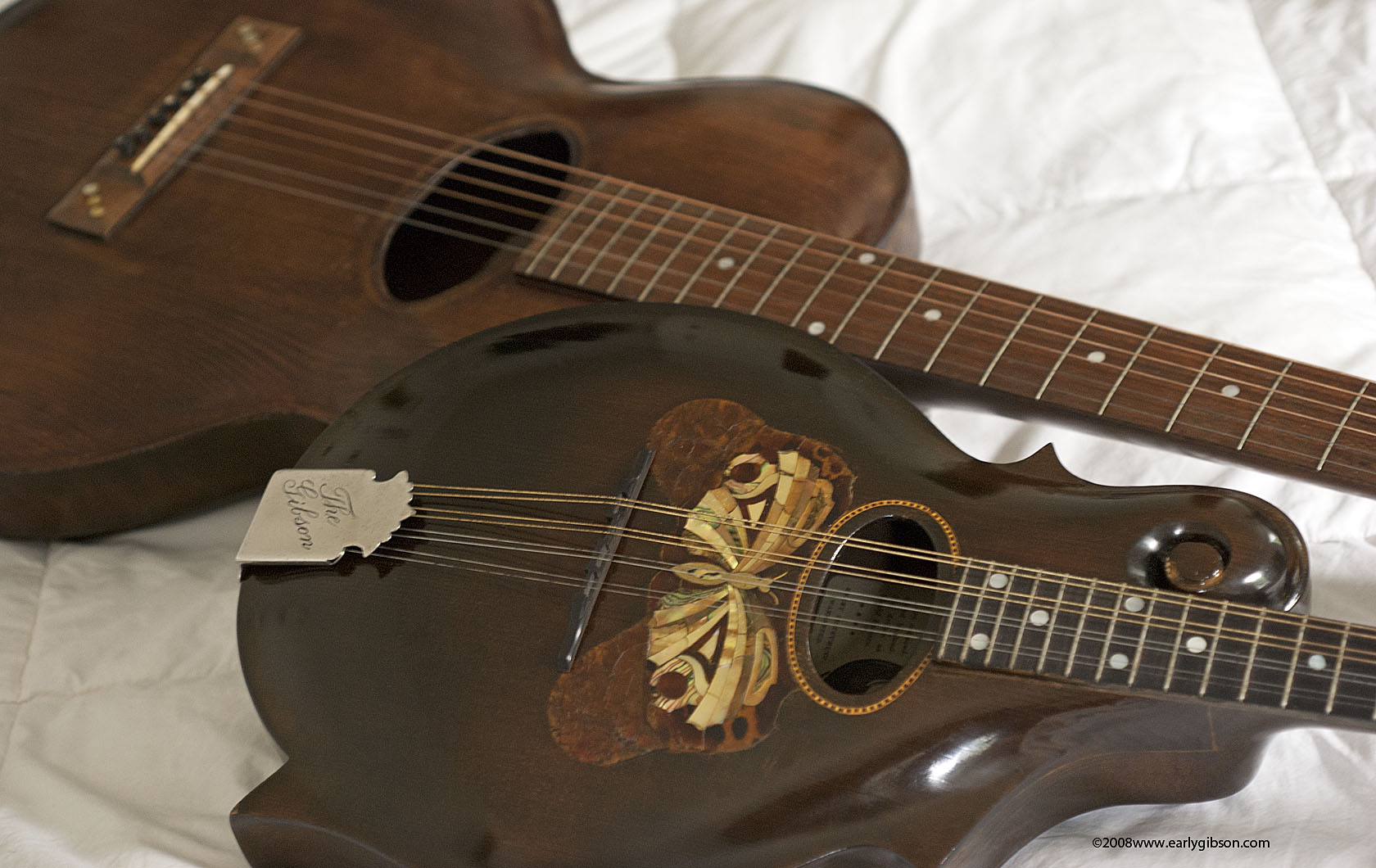
Download my Orville guitar and mandolin image as a 1680 pixel Screensaver, free for your personal use as my gift to you!
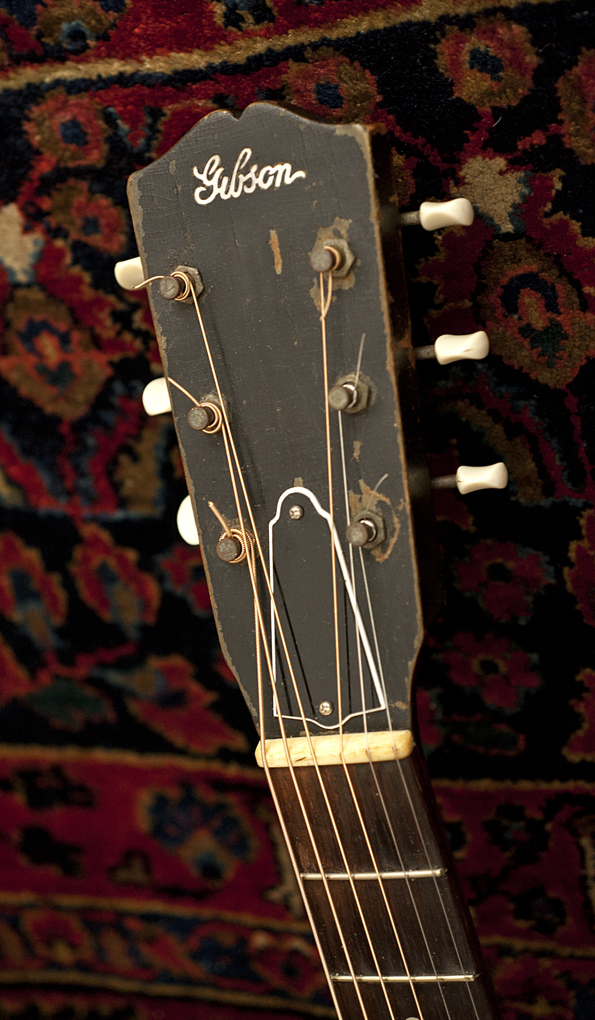
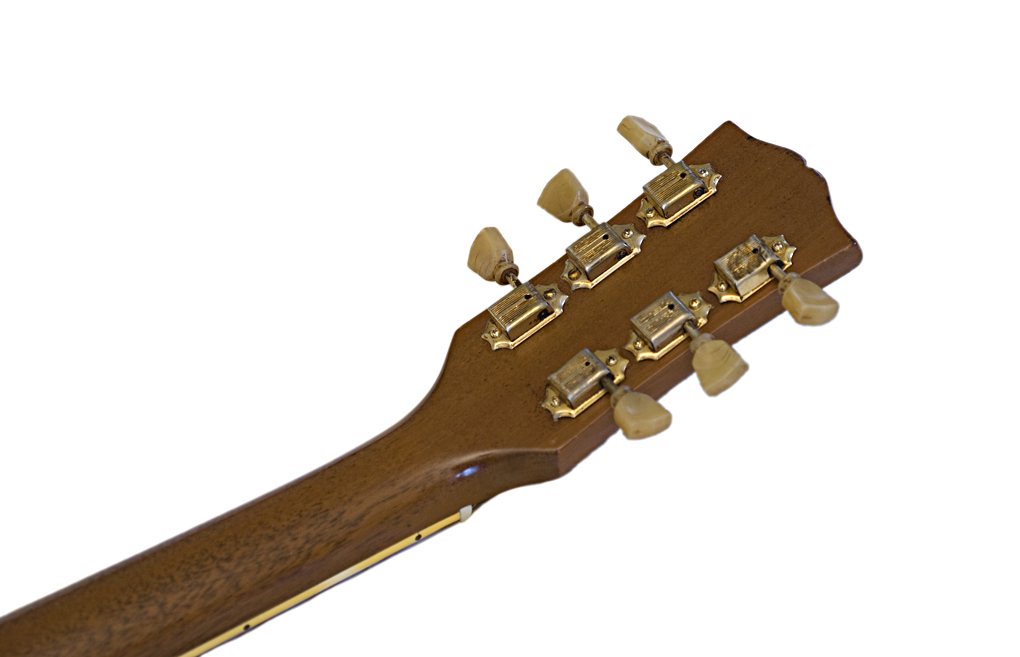
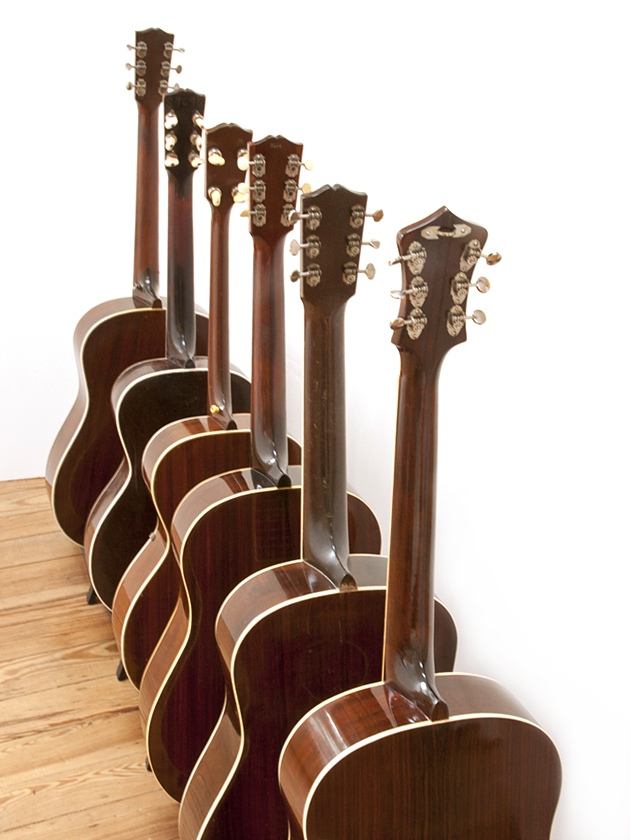
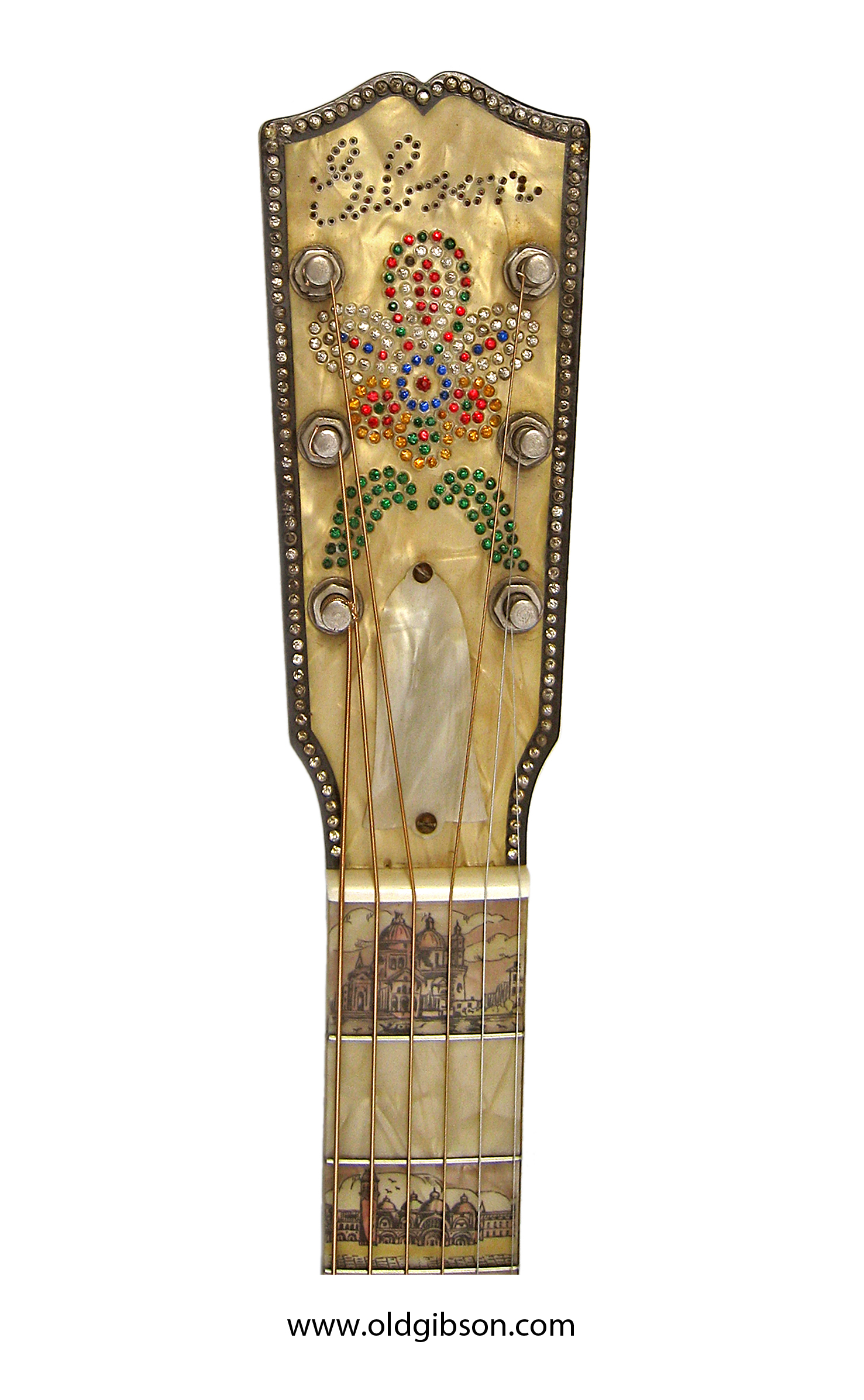
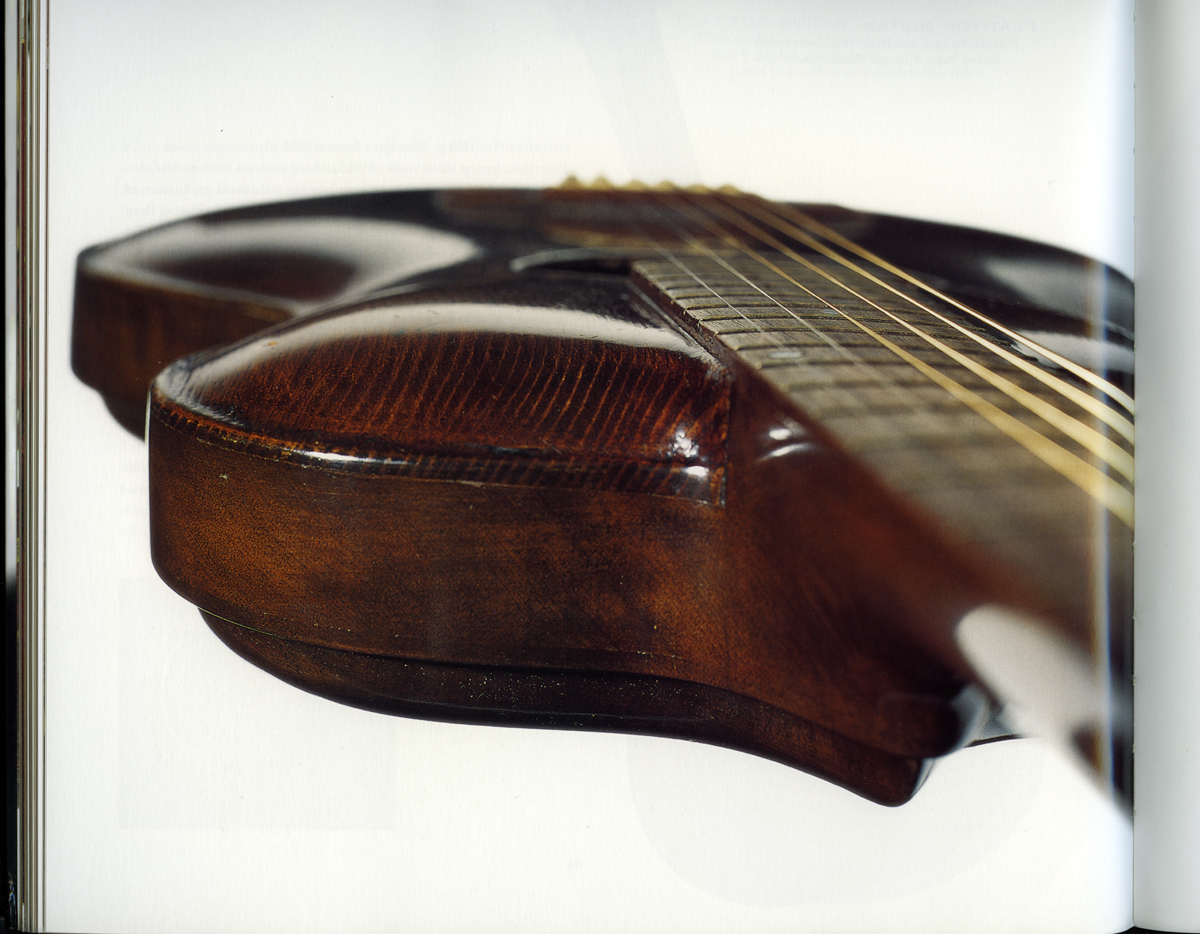
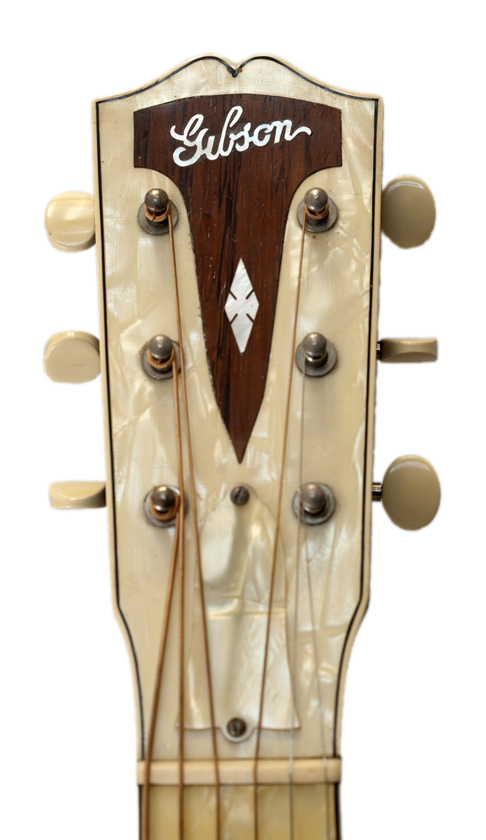
~ Click on the headstock image below and download a hi-res file to create a high quality 11" x 14" photographic print, suitable for framing, free for your personal use as my gift to you! ~
` ` ` ` ` ` ` ` ` ` ` ` ` ` ` `
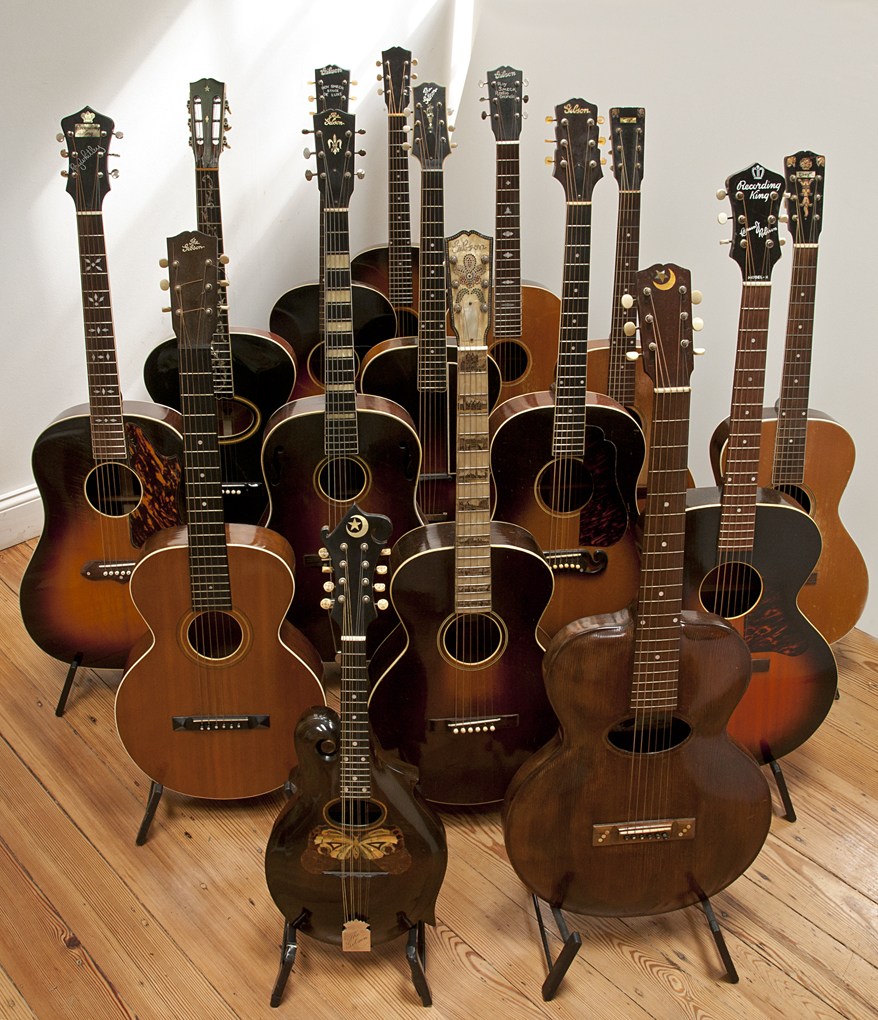
Orville H. Gibson Mandolins and Guitars
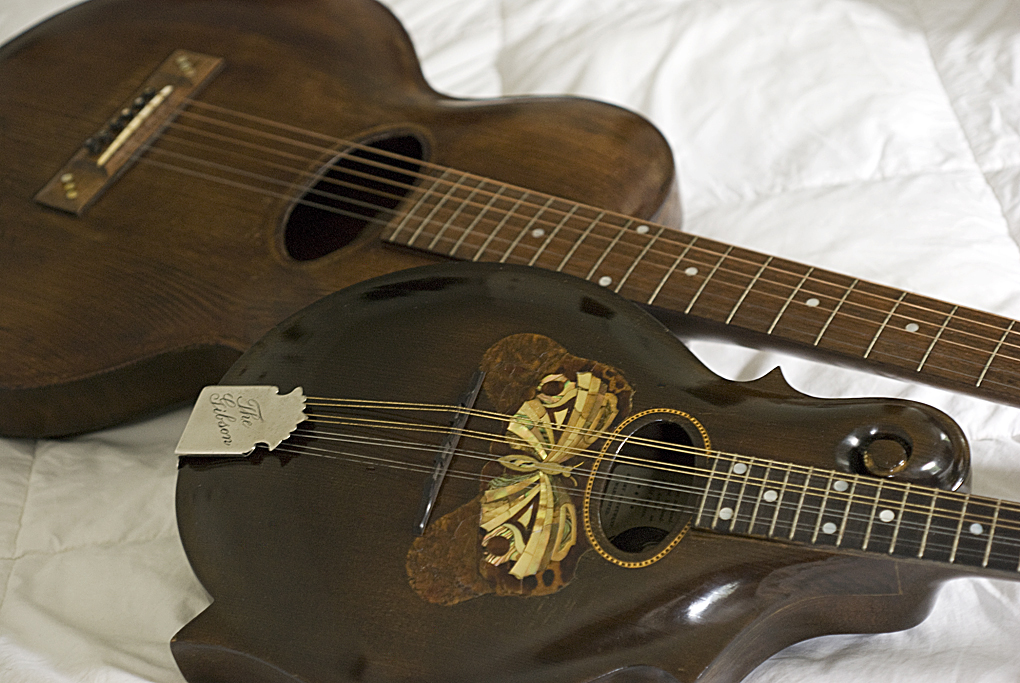
Arch Top Guitar and F Style Mandolin Hand carved by Orville H. Gibson
Download the above image as a 1680 pixel Screensaver, free for your personal use as my gift to you!
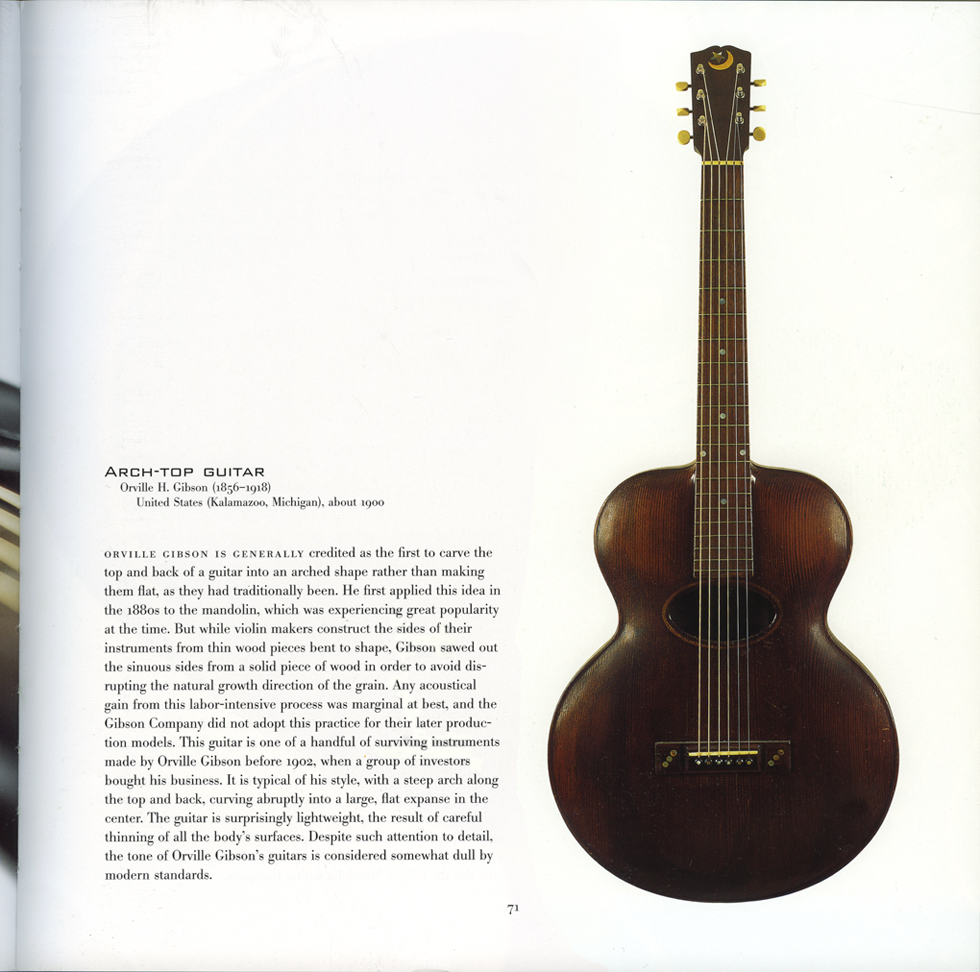
1898 Orville H. Gibson Archtop Guitar
Hand Carved by Orville H. Gibson
Formerly of the Chinery Collection
Illustrated on p. 14 of Chinery
Illustrated on p. 20, 70, 71 of Boston Museum of Fine Art "Dangerous Curves"
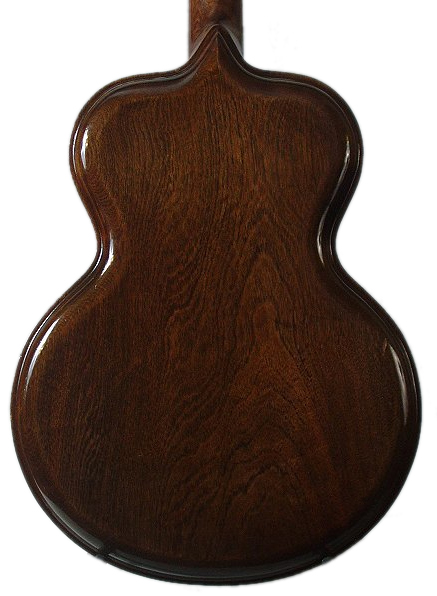
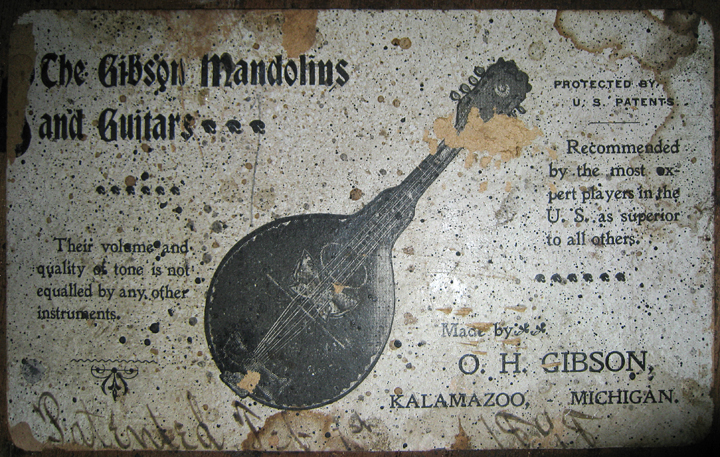
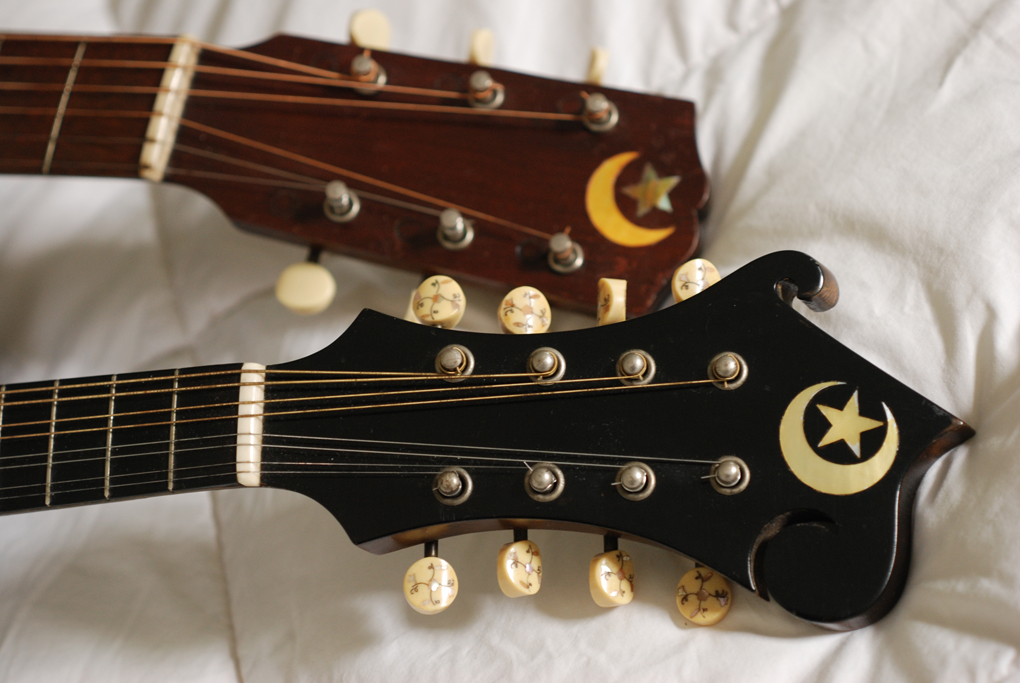
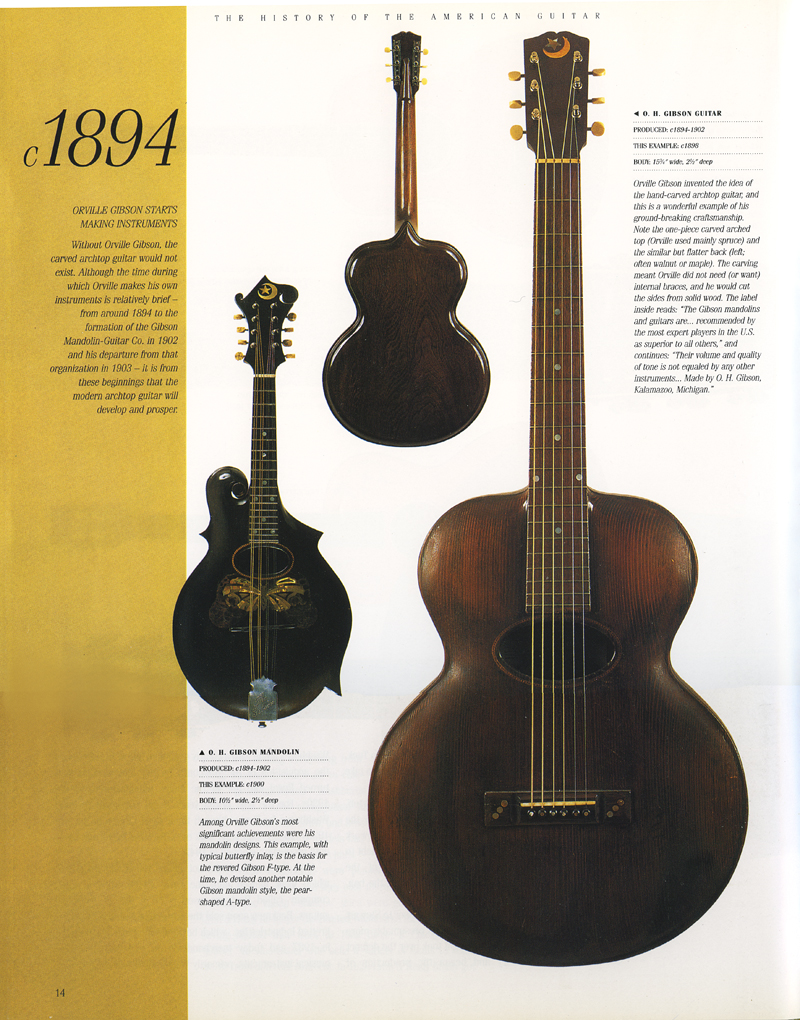
1900 Orville H. Gibson Model F Mandolin
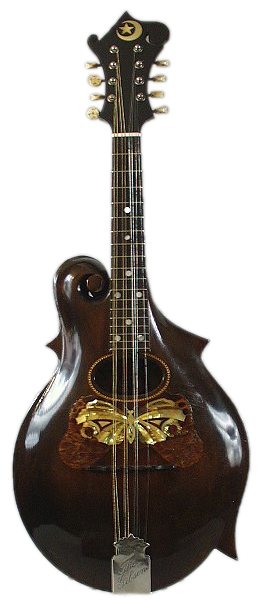
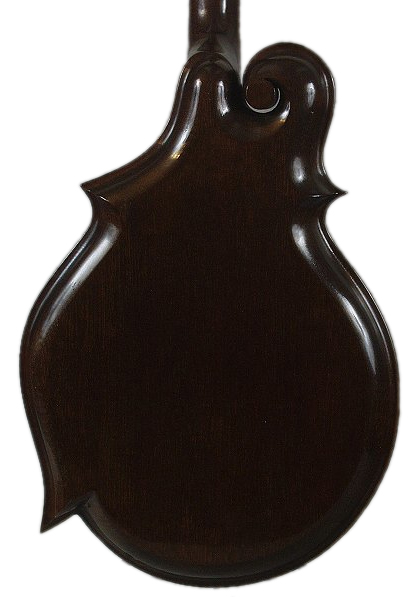
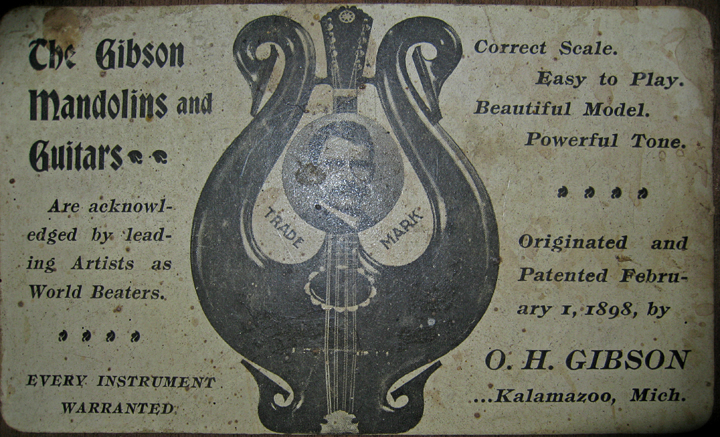
Illustrated in Bacon, "The History of the American Guitar"
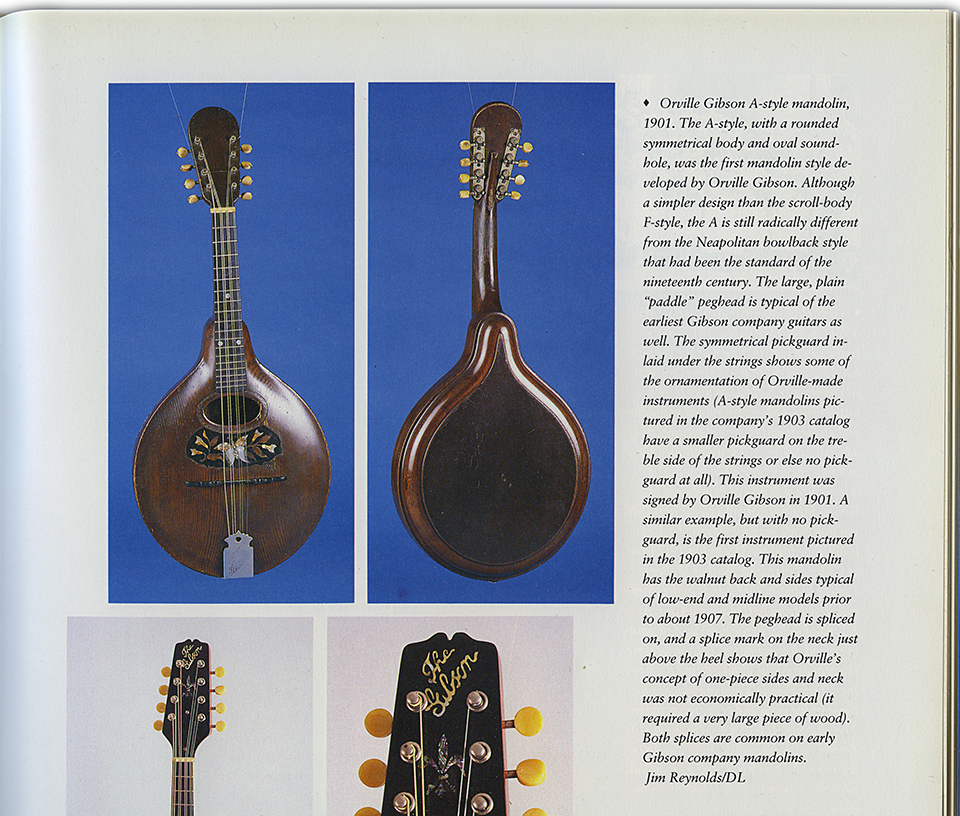
1901 Orville H. Gibson Model A Mandolin
Besides the archtop guitar and "F style" mandolin, the third basic style of instrument designed by Orville Gibson in the earliest years, the Style A mandolin, also endured as a mainstay of the Gibson line for many years to come.
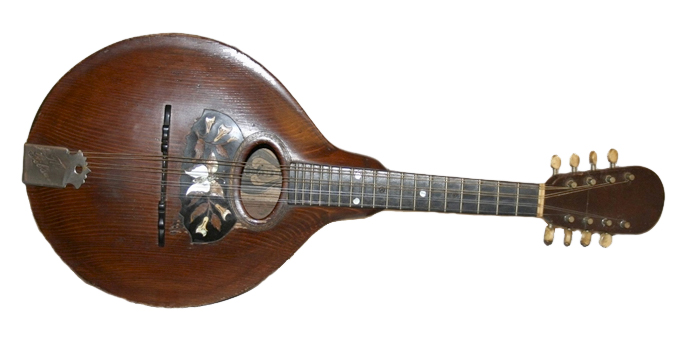
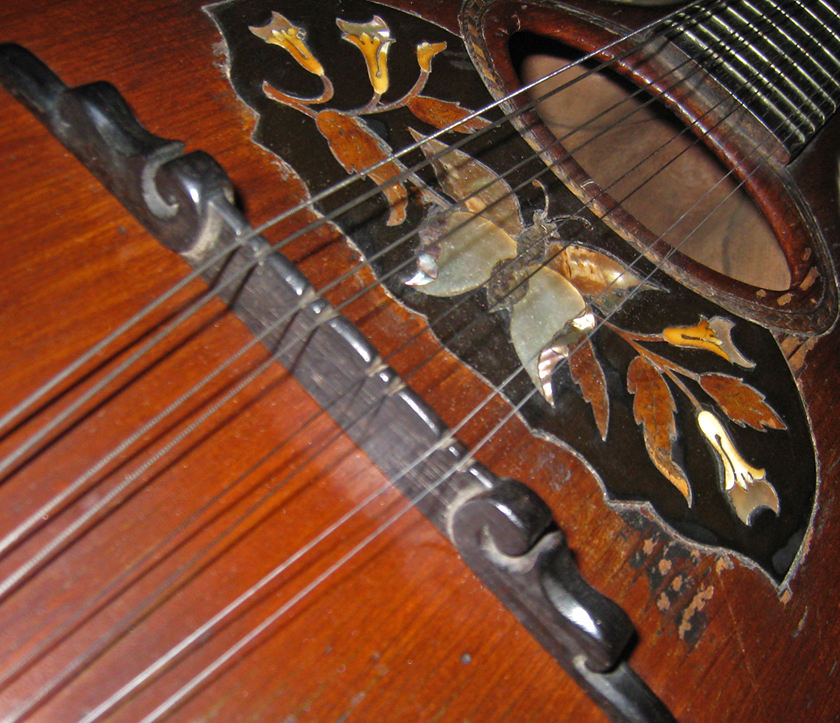
Illustrated in Gruhn and Carter, "Acoustic Guitars, a Photographic History"
From Mandolin Brothers:
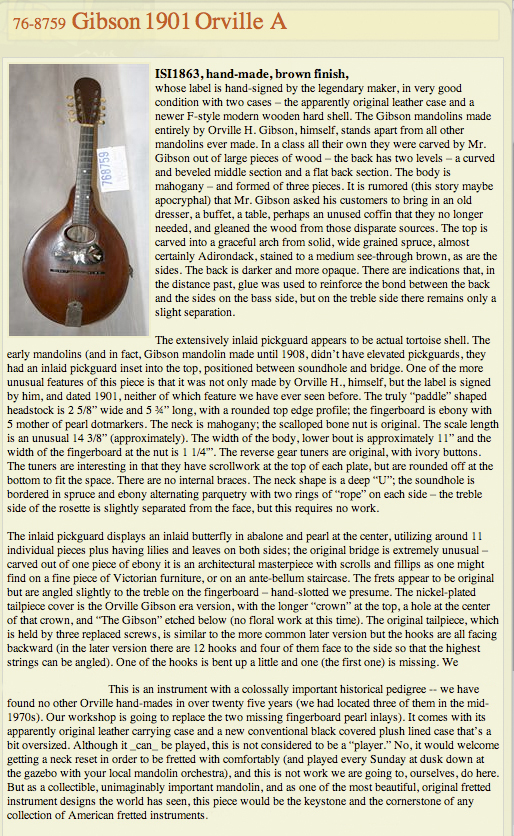
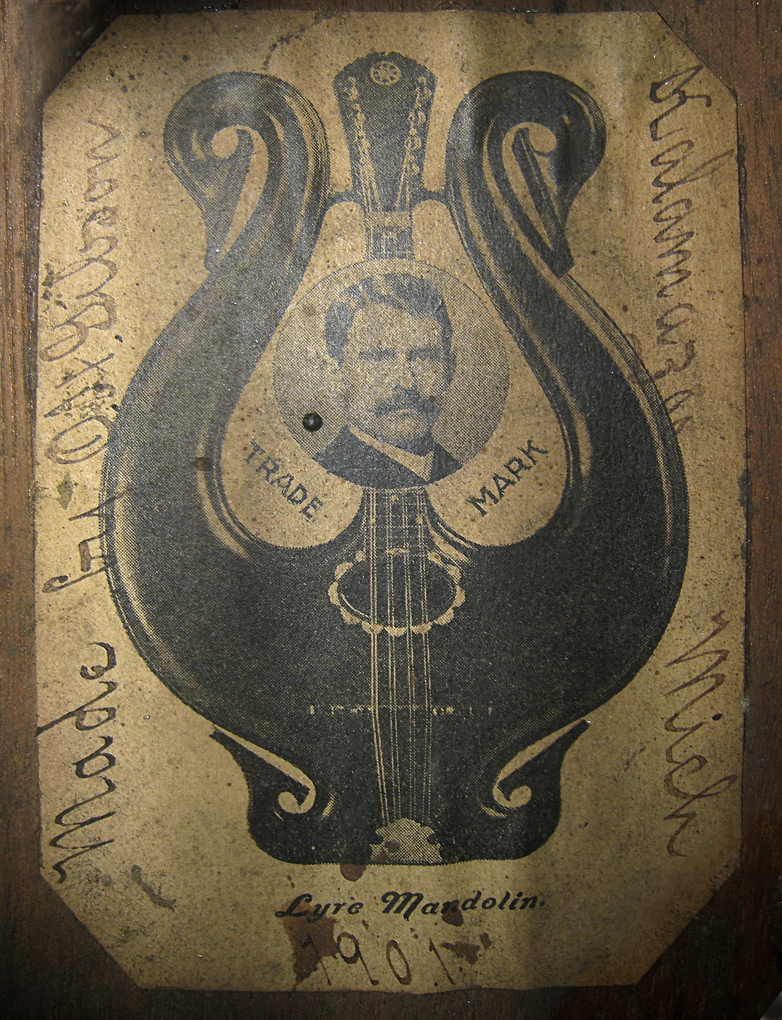
This "A Style" mandolin is the only instrument from the pre-Gibson Company era known to have a hand made label signed by Orville Gibson.
Instruments Made by
Gibson Mandolin - Guitar Mfg. Co. Ltd.
The Gibson Mandolin - Guitar Mfg. Company was born when a group of investors purchased the business from Orville Gibson in 1902.
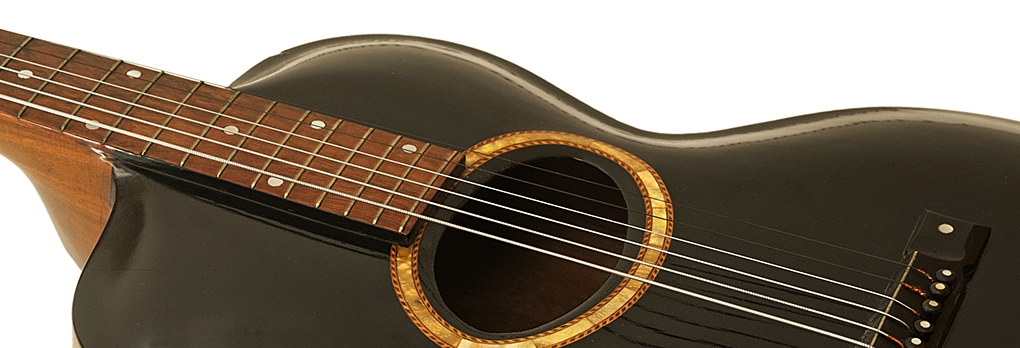
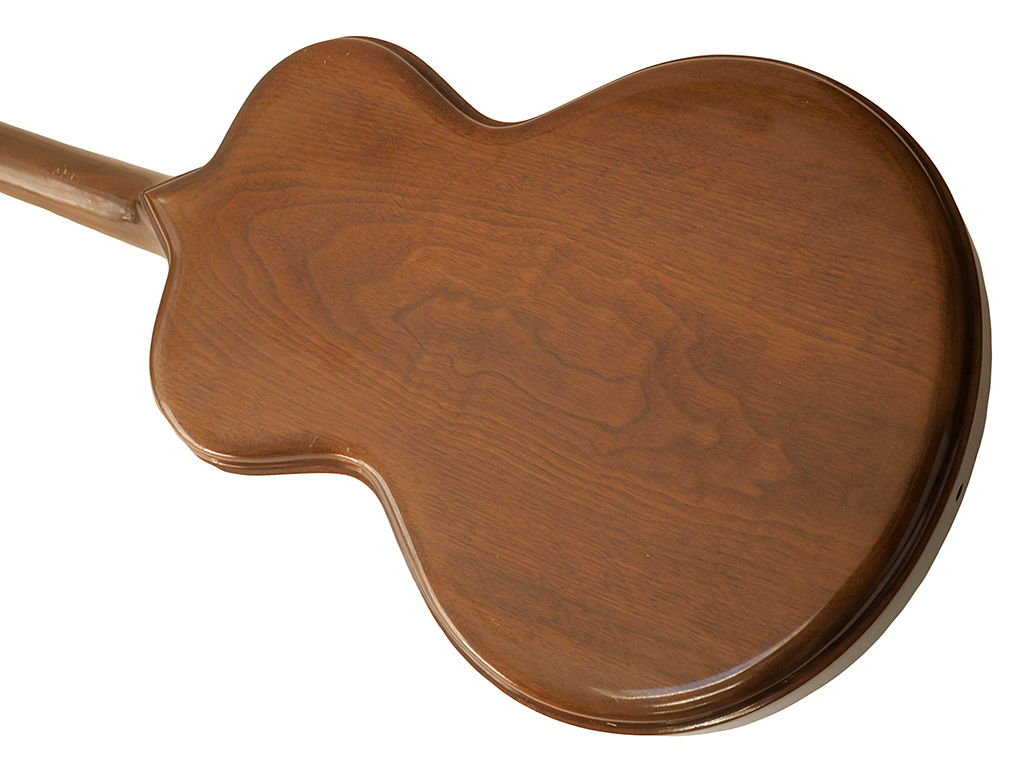
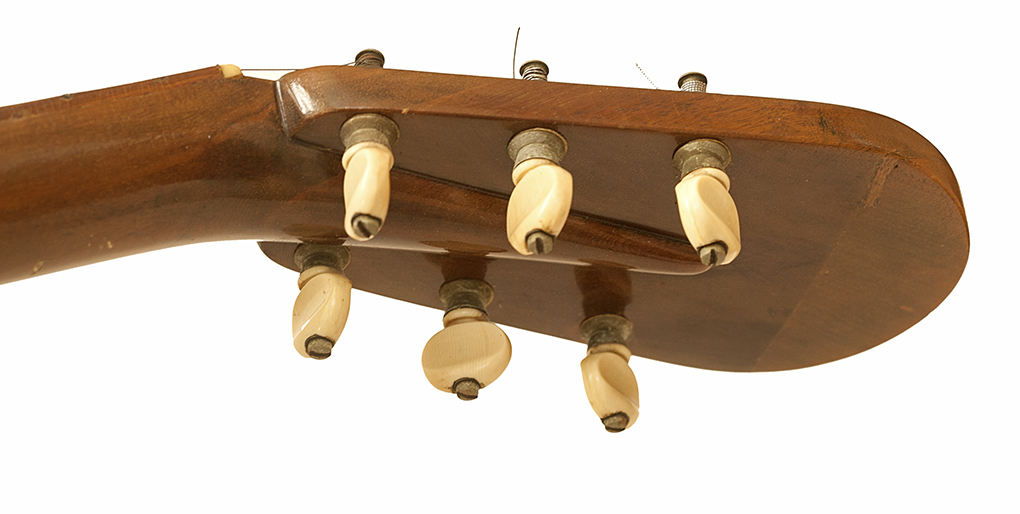
1904 Gibson Style O
This early Gibson Company version of the Style O guitar was most likely built by Orville himself, or built under his supervision while he was training the new workers to follow his designs.
Still with carved back and sides with no braces, and rims constructed from one solid piece of walnut.
Serial Number 2625
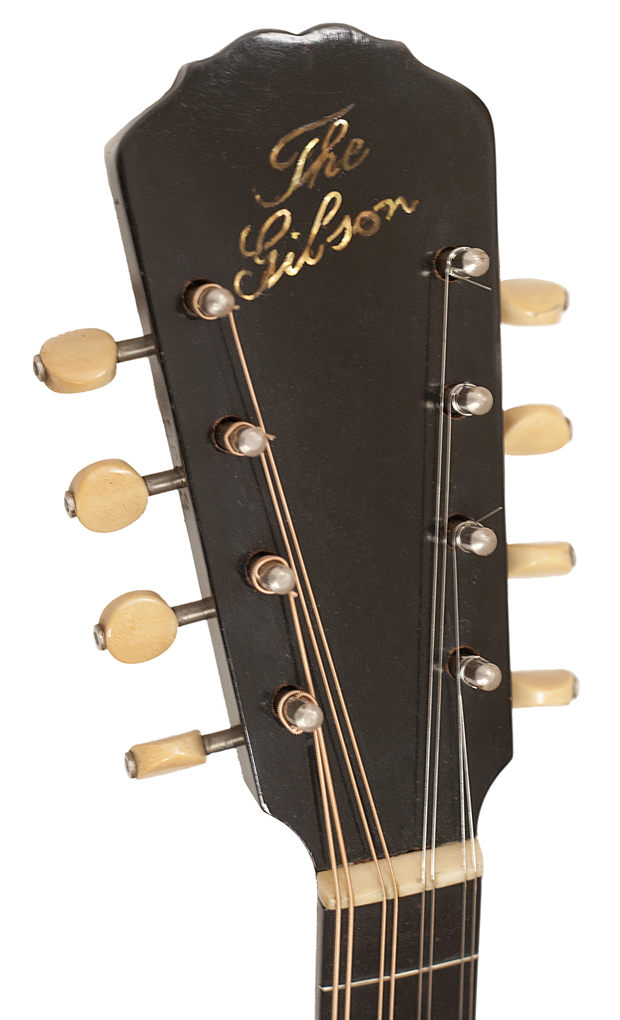
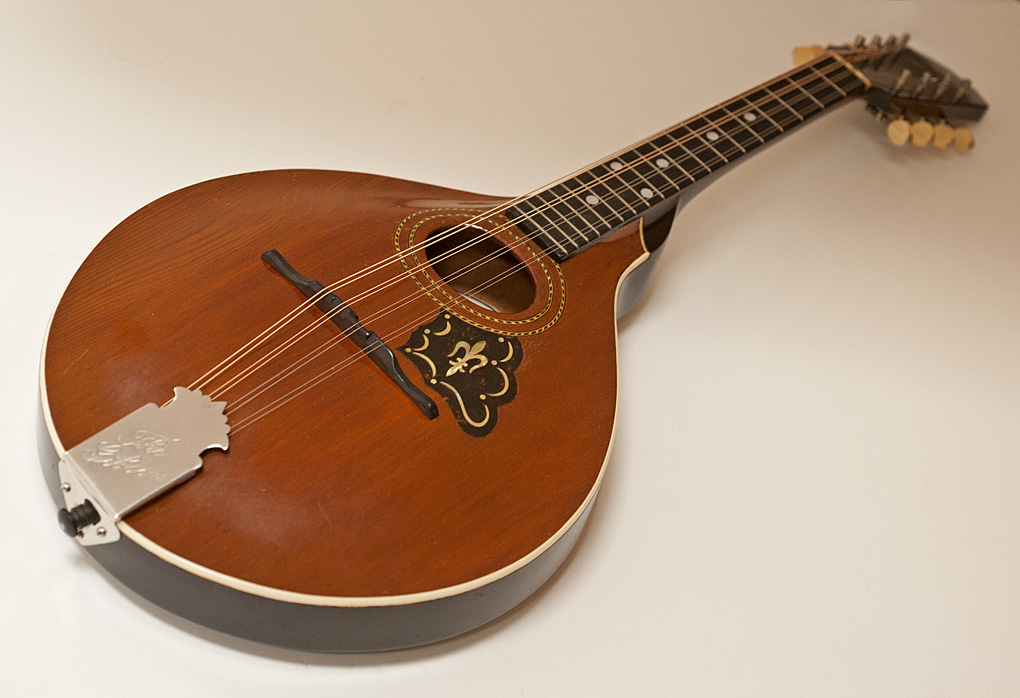
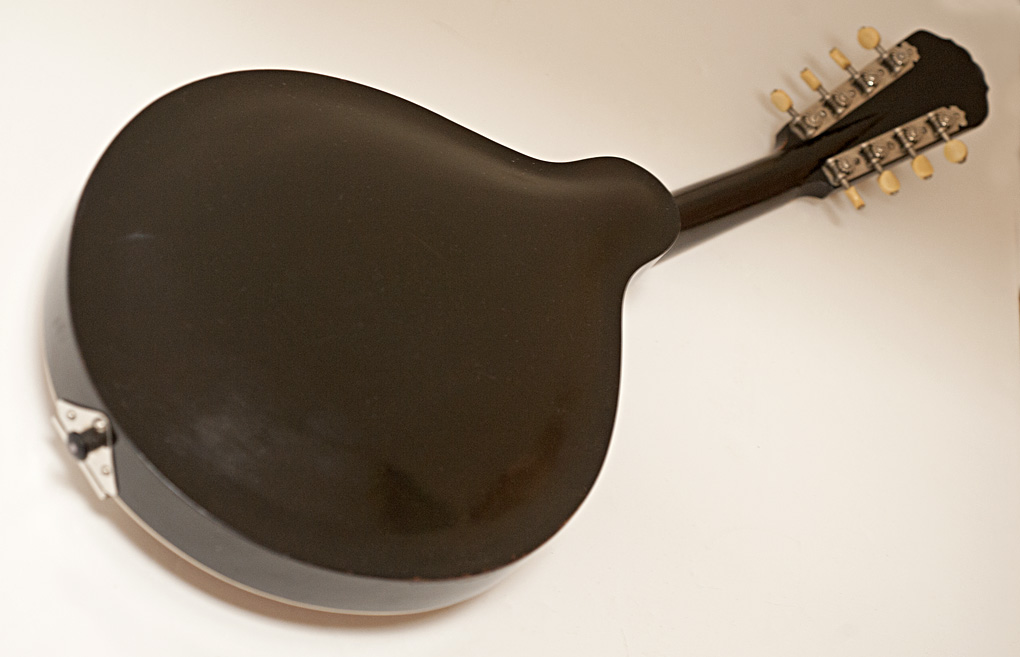
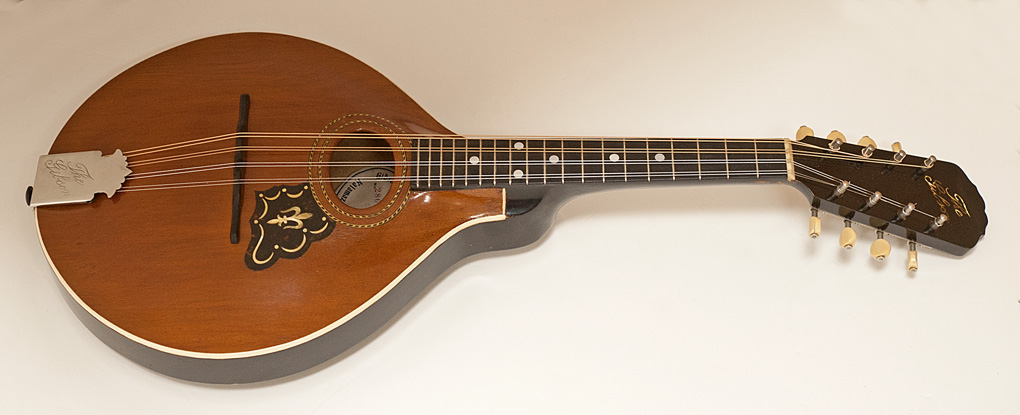
1904 Gibson Style A Mandolin
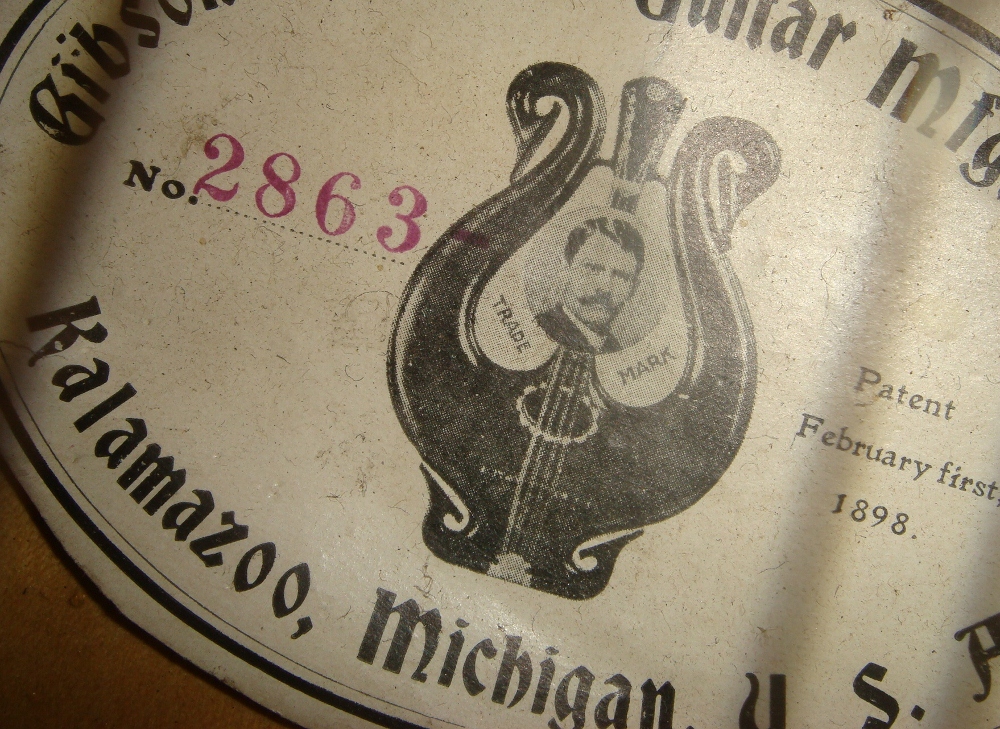
Early Gibson Company version of the Style A Mandolin.
Serial Number 2863
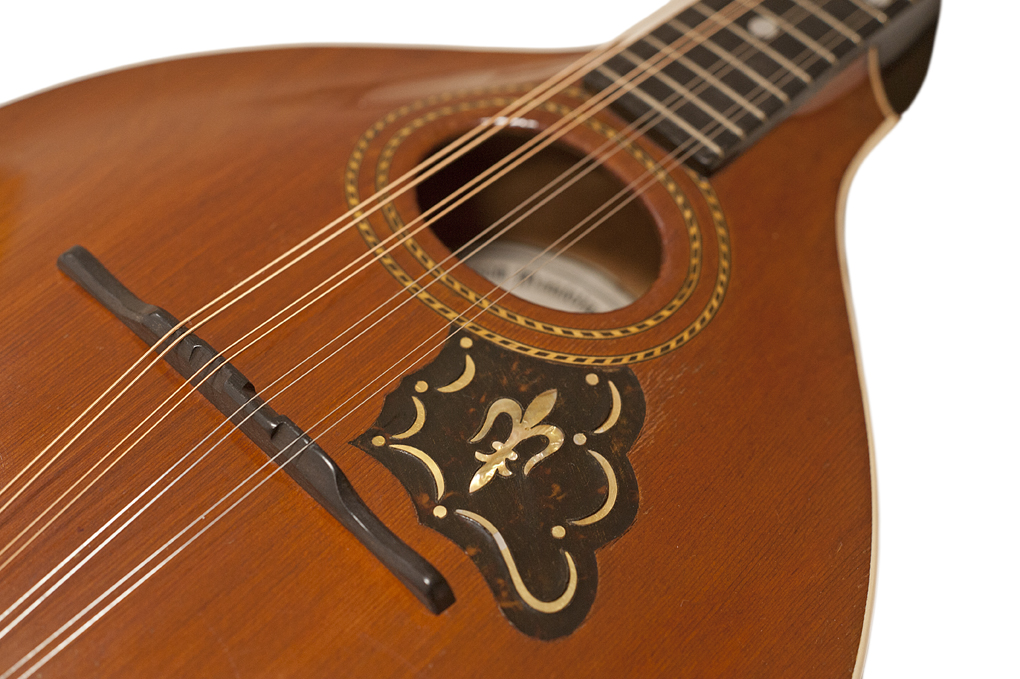
The slanted "The Gibson" logo appeared on some early Gibson Company instruments, while many had a blank headstock or a star.
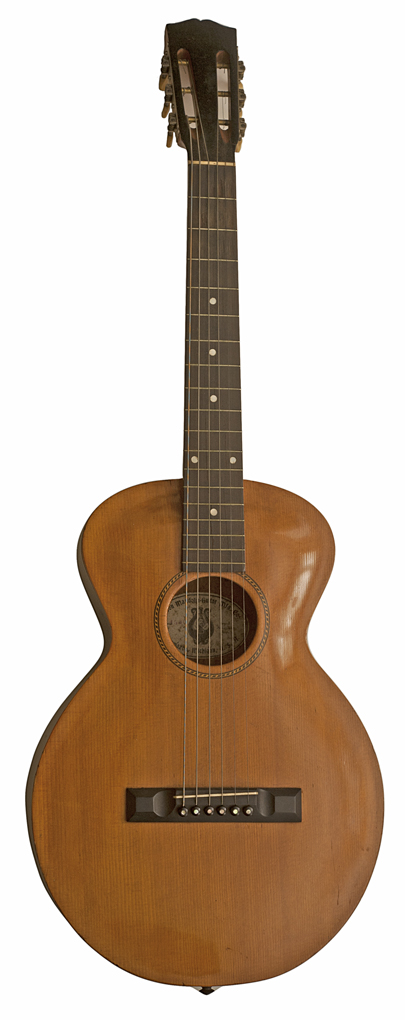
1905 Gibson Style L1 Guitar
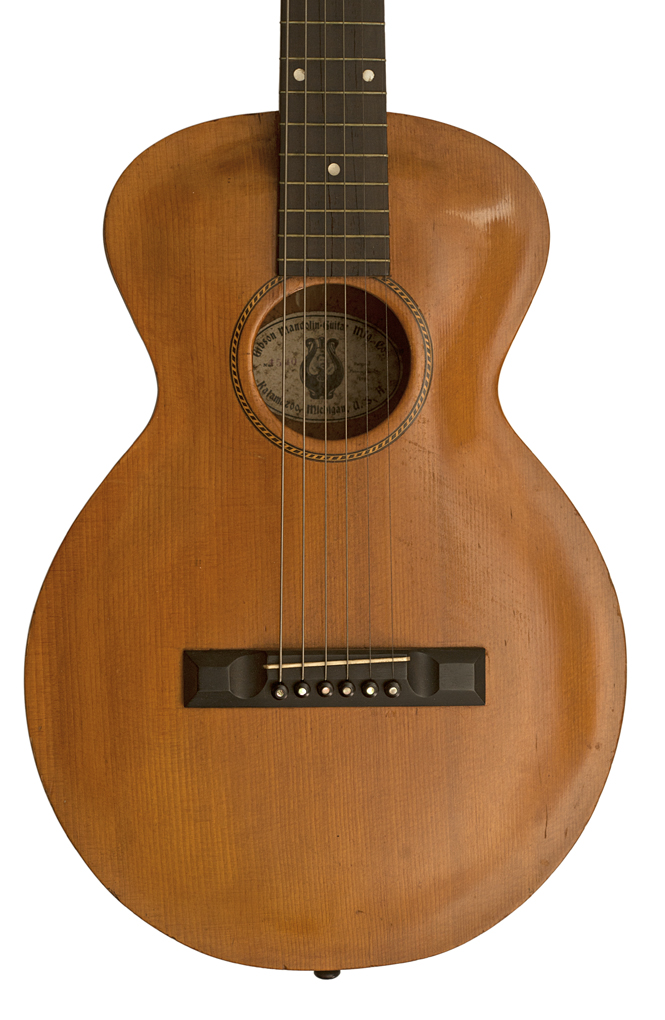
Early Gibson Company version of the Style L-1 Guitar
` ` ` ` ` ` ` ` ` ` ` ` ` ` ` `
12 1/2" Wide
22 3/4" Scale
2lbs. 12.6 oz.
` ` ` ` ` ` ` ` ` ` ` ` ` ` ` `
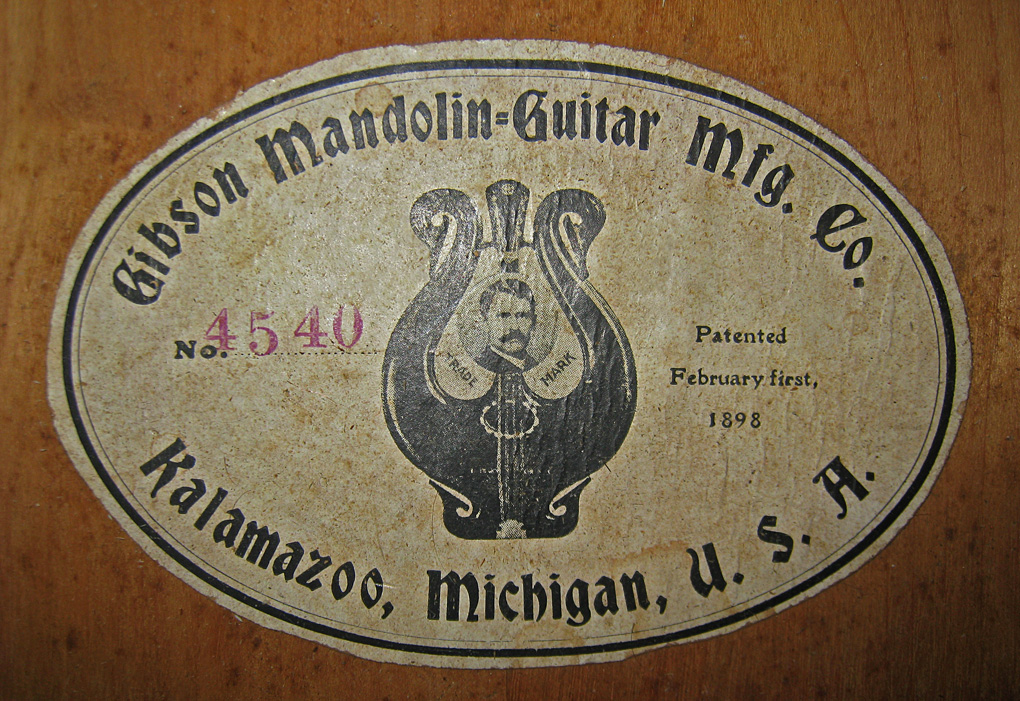
Serial Number 4540
Order Number 240
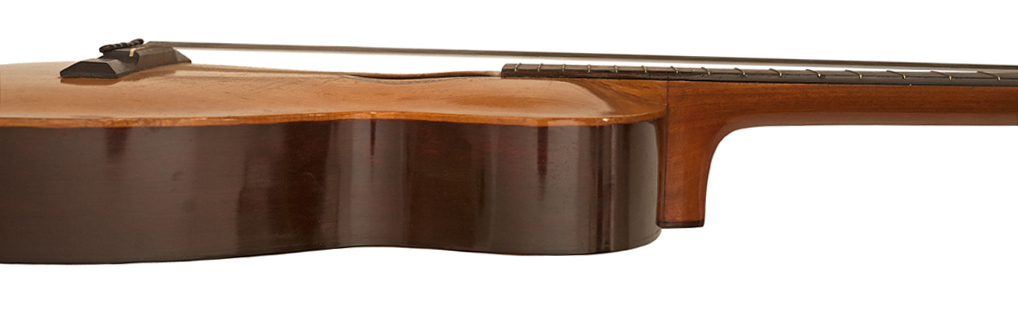
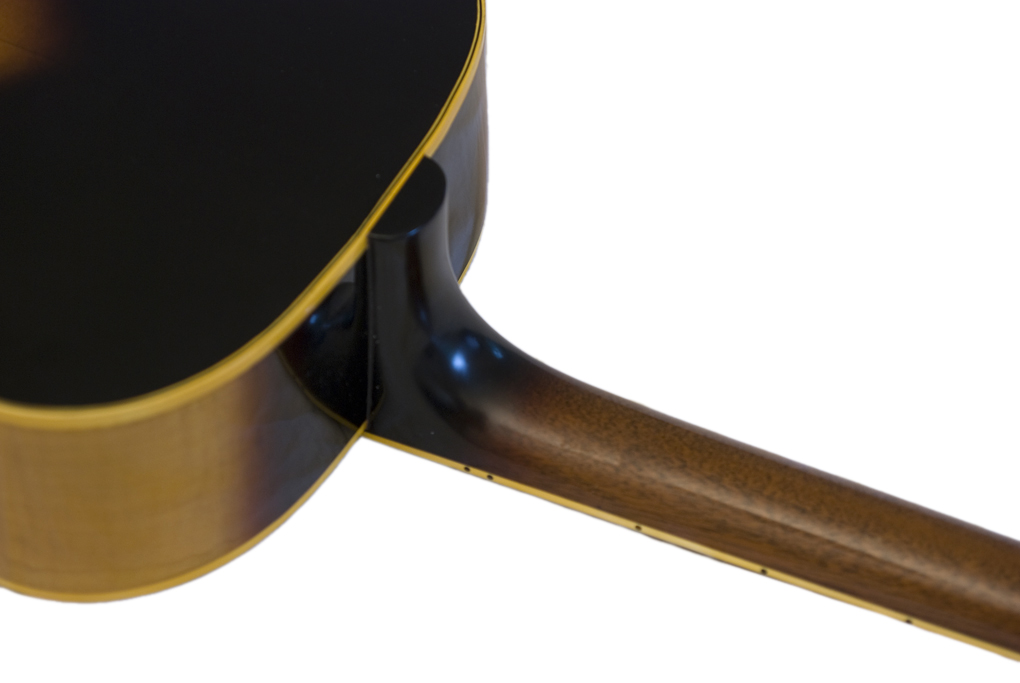
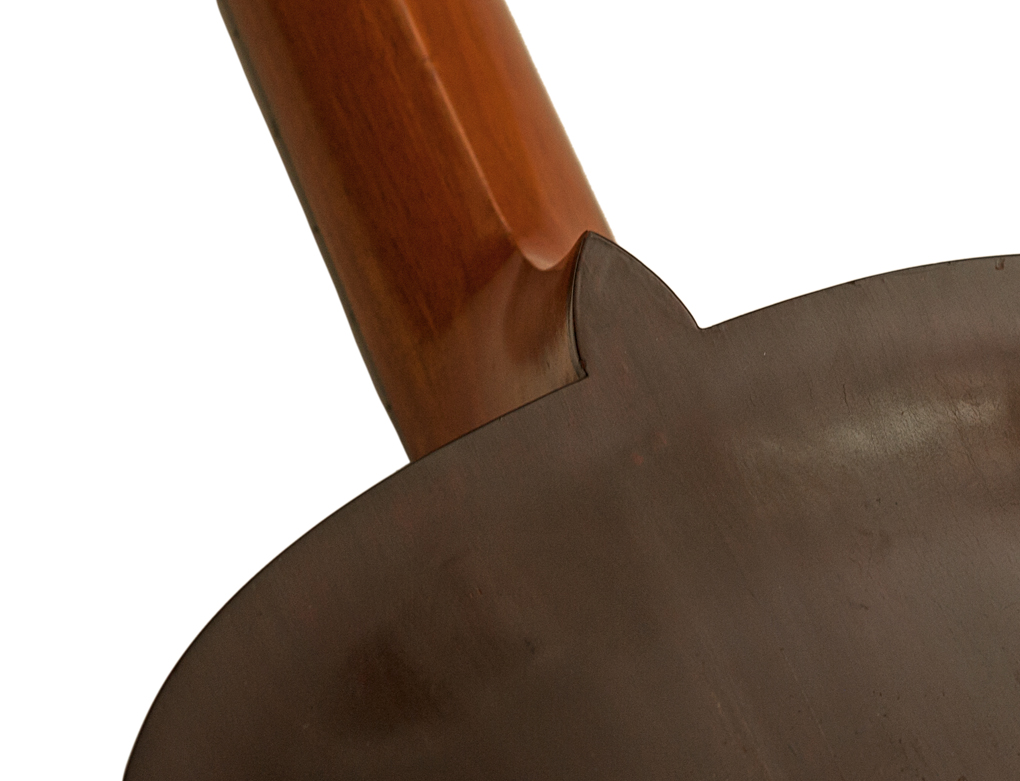
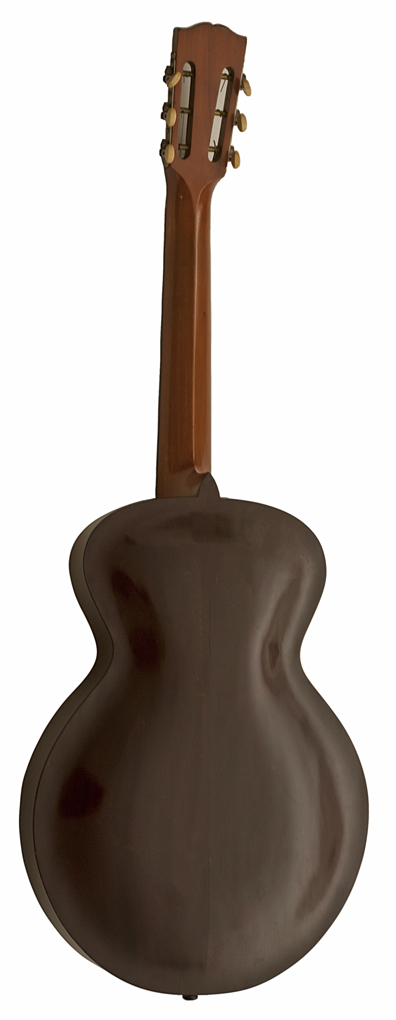
Note that the heel cap is an extension of the back, as it is on Orville's guitars.
And note the large bridge, with the thick, rounded lower bout and square, raised wings, similar to that used by Orville, and nearly identical to that used on the 1904 Style O above, but for the compensated ivory saddle replacing the straight fretwire saddle.
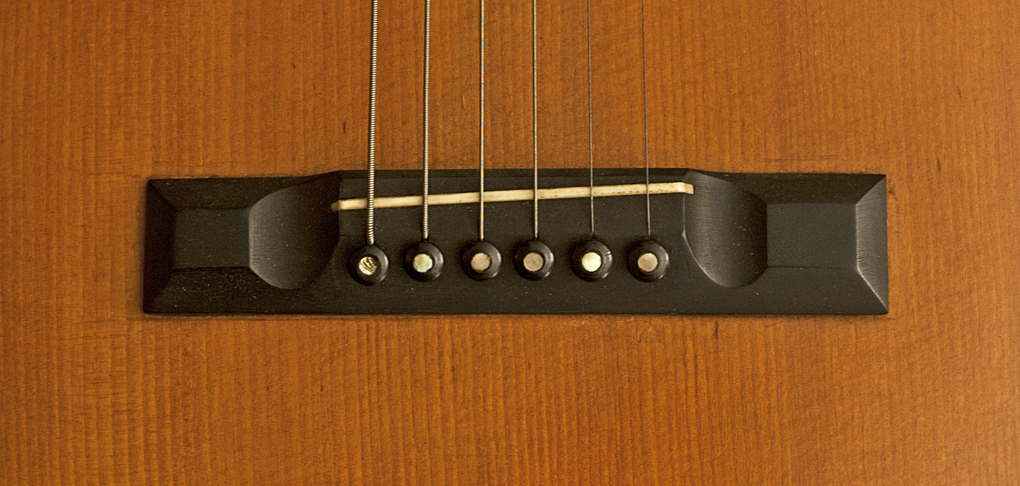
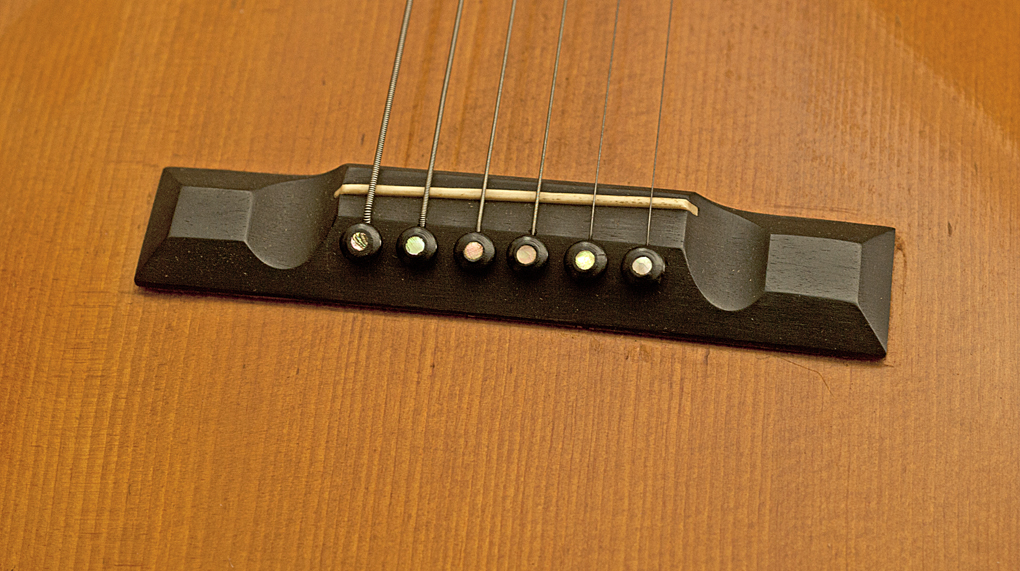
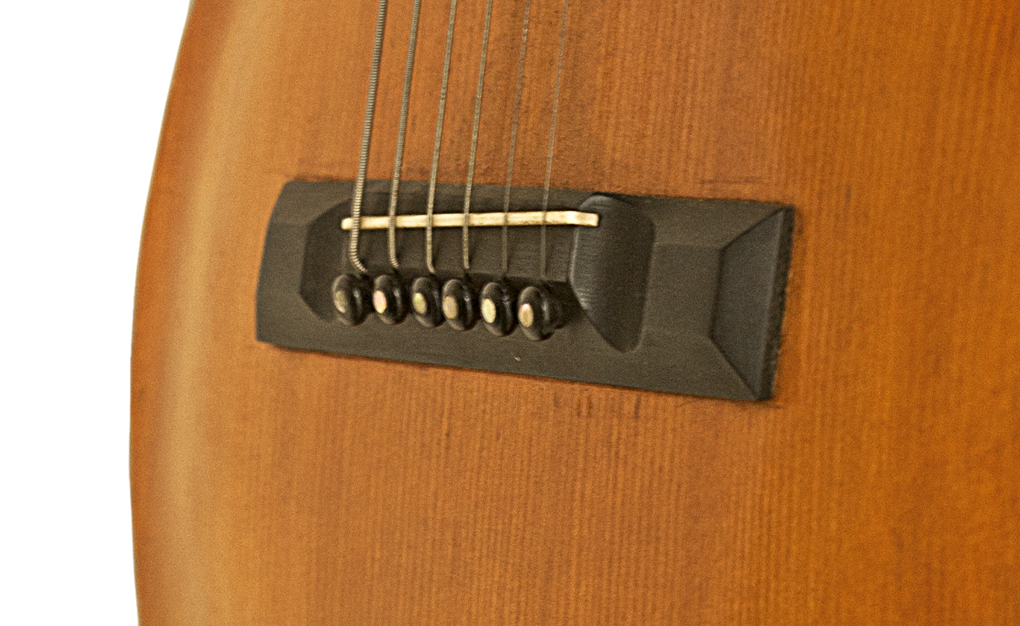
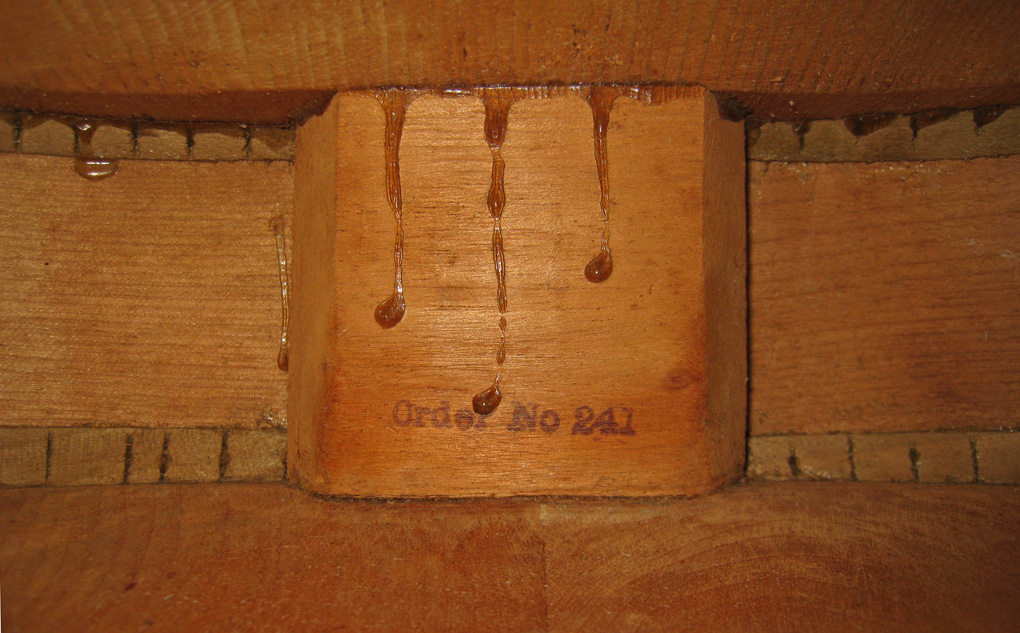
This early Gibson Company guitar is the first I've seen that includes the words "Order No" on the neck block. If ever proof were needed that the number stamped on the neck block of Gibson Guitars is the Factory Order Number, and the serial number is stamped on the interior label, this guitar provides that proof.
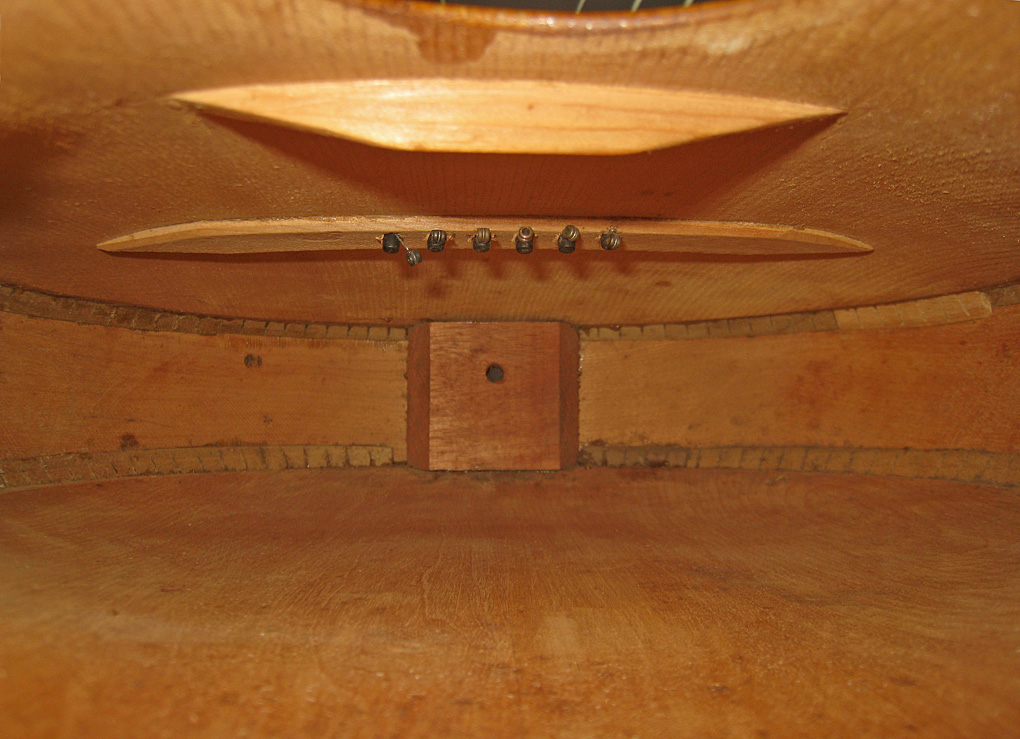
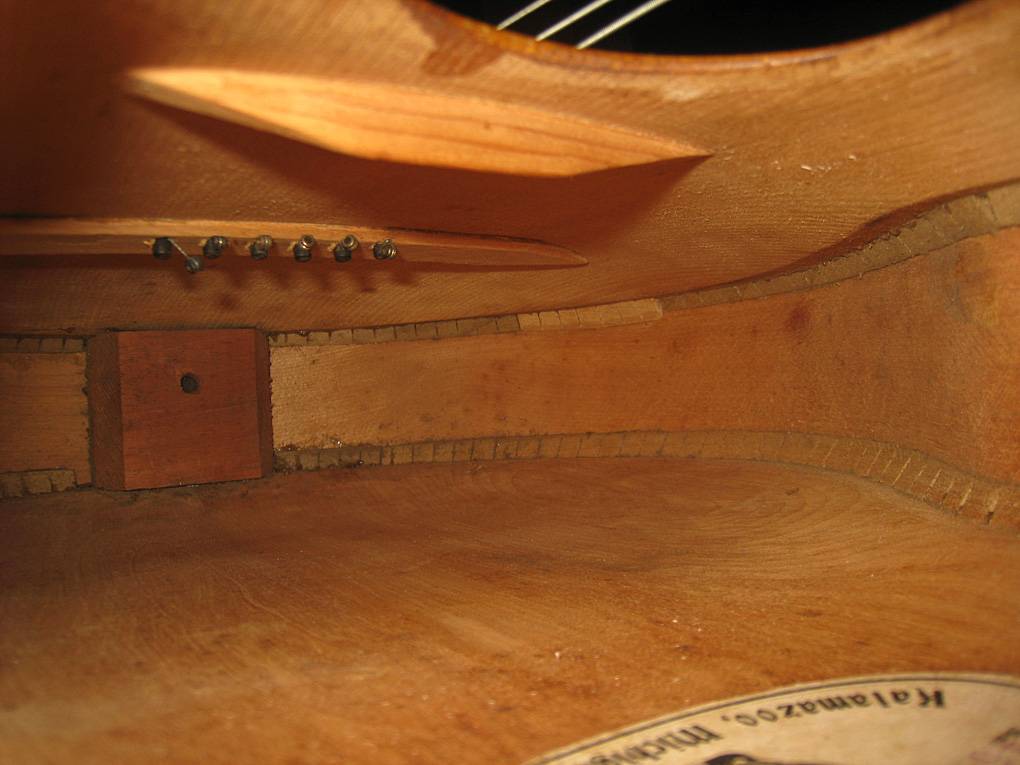
This early Gibson Company guitar has a single 3 1/2" brace under the carved top, below the sound hole, and not a single brace on the back.
1906 Gibson Style F2 Artist Mandolin
Early Gibson Company version of the Style F Mandolin.
Serial Number 3959
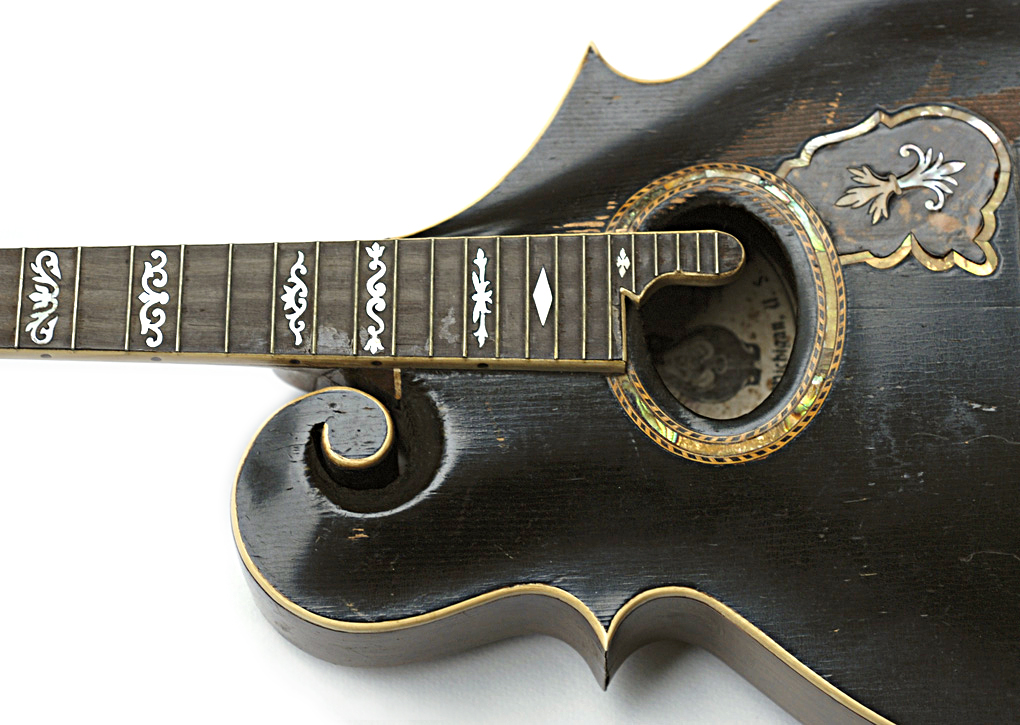
Early Gibson "3 point" F Style mandolins were built with an added point on the bass side that disappeared in the early teens.
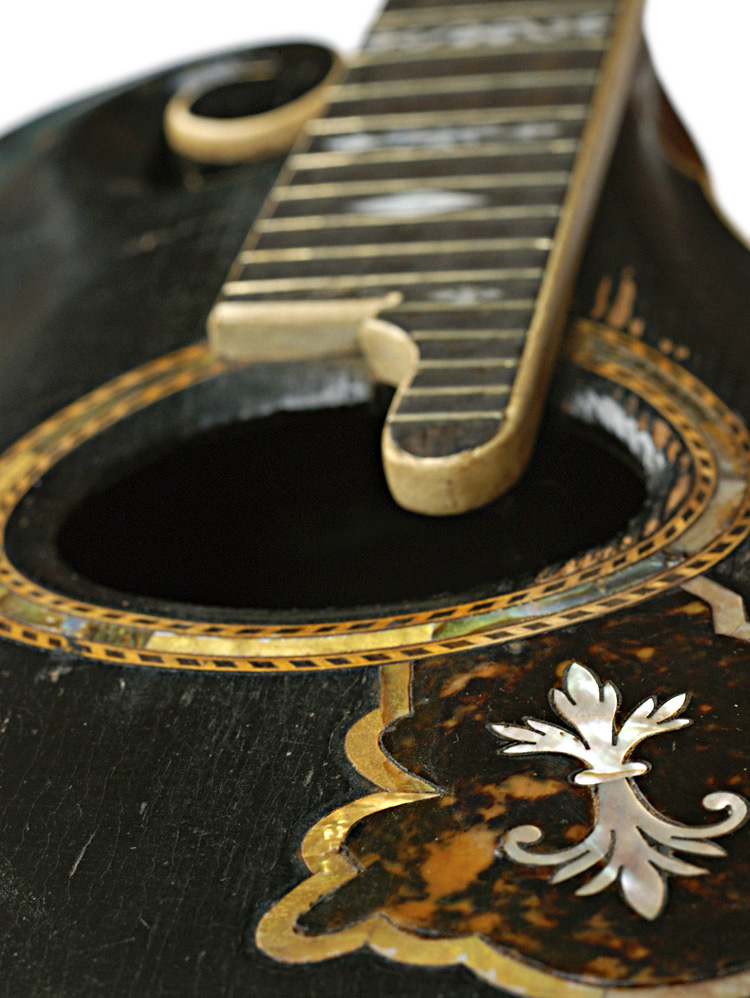
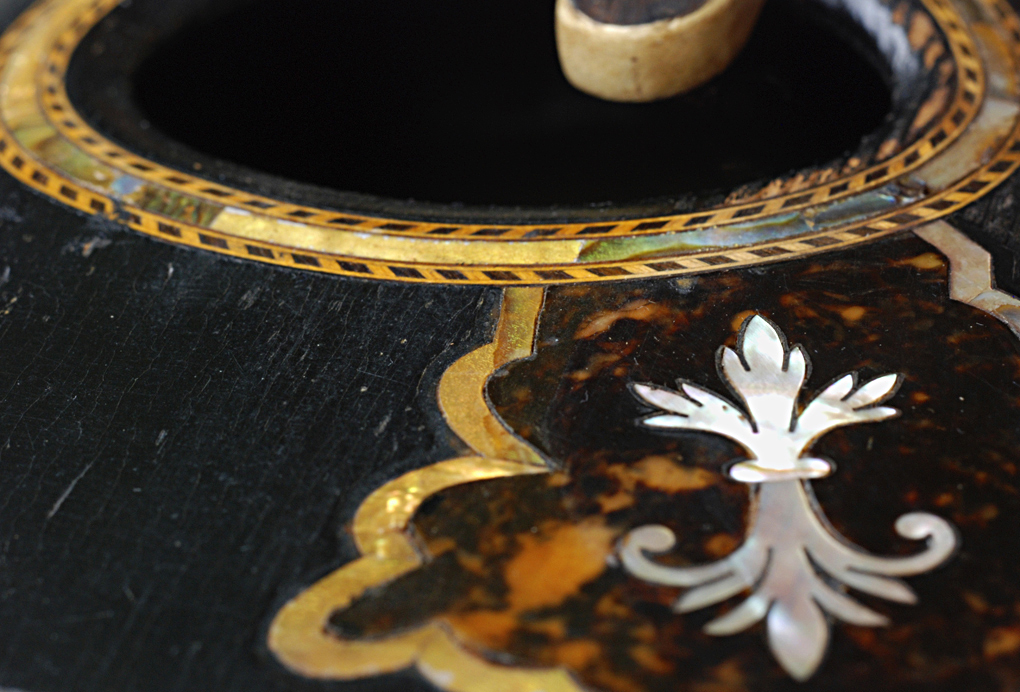
The early Gibson mandolins had an inlaid pickguard that was replaced by a raised pickguard by 1907.
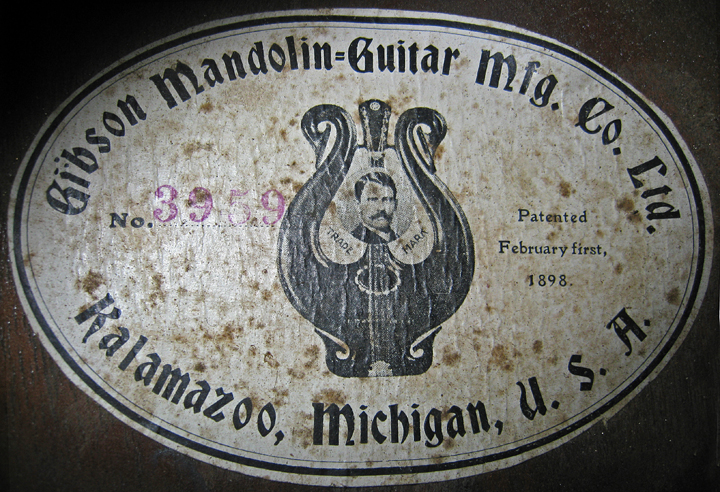
1906 Gibson Style L1 Guitar
Early Gibson carved arched top and arched back Style L1 guitar with slotted headstock.
Serial Number 5486
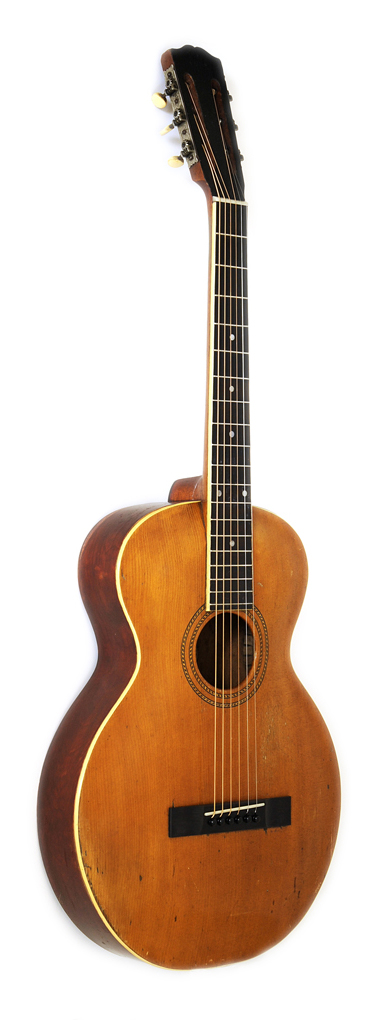
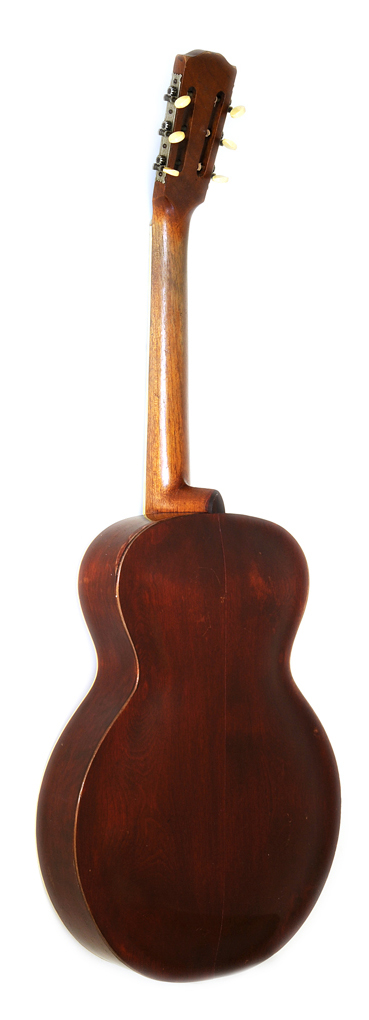
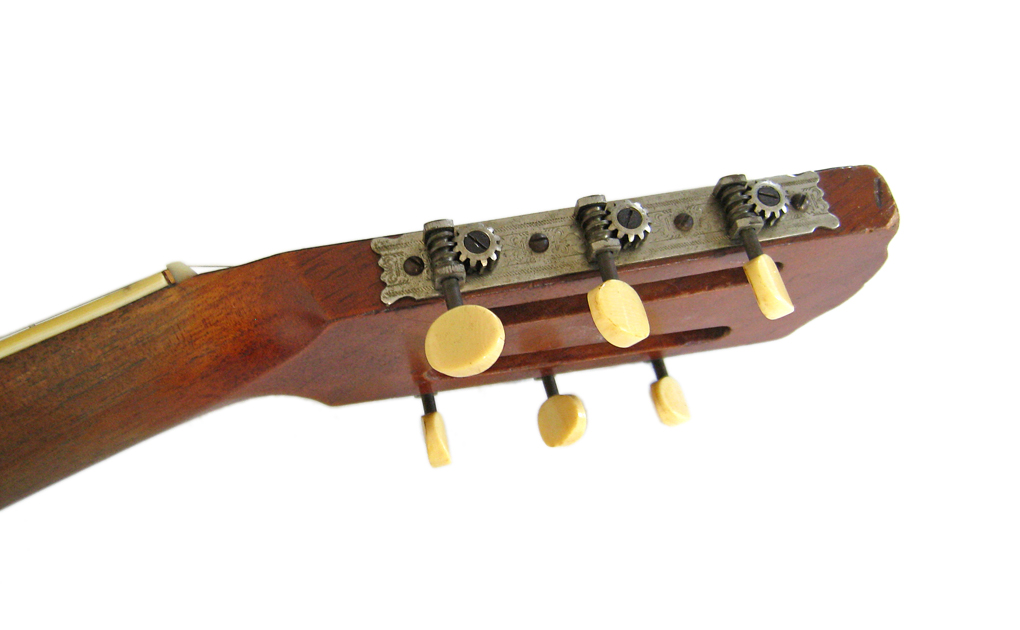
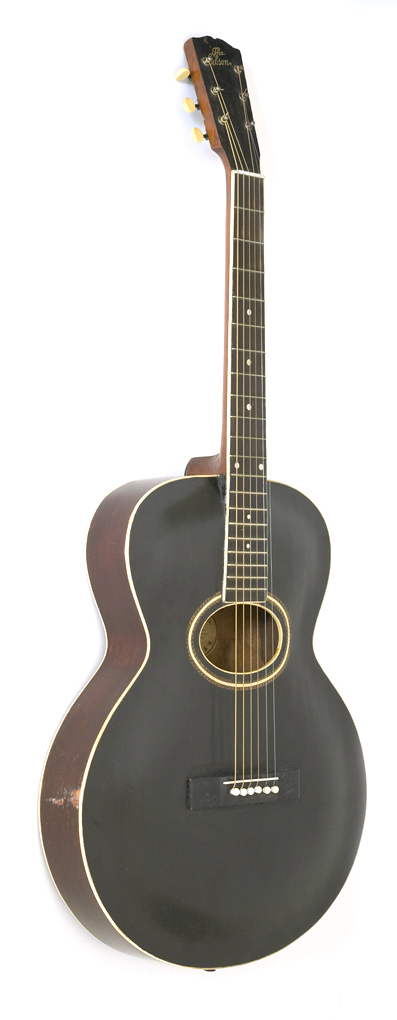
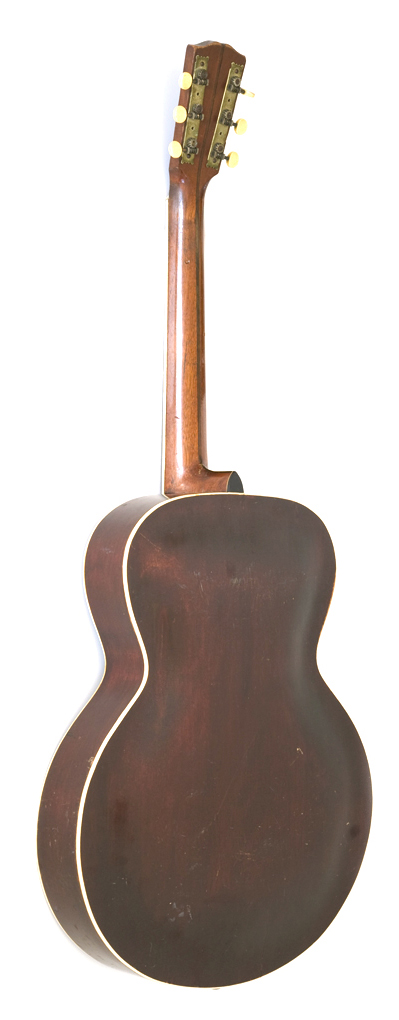
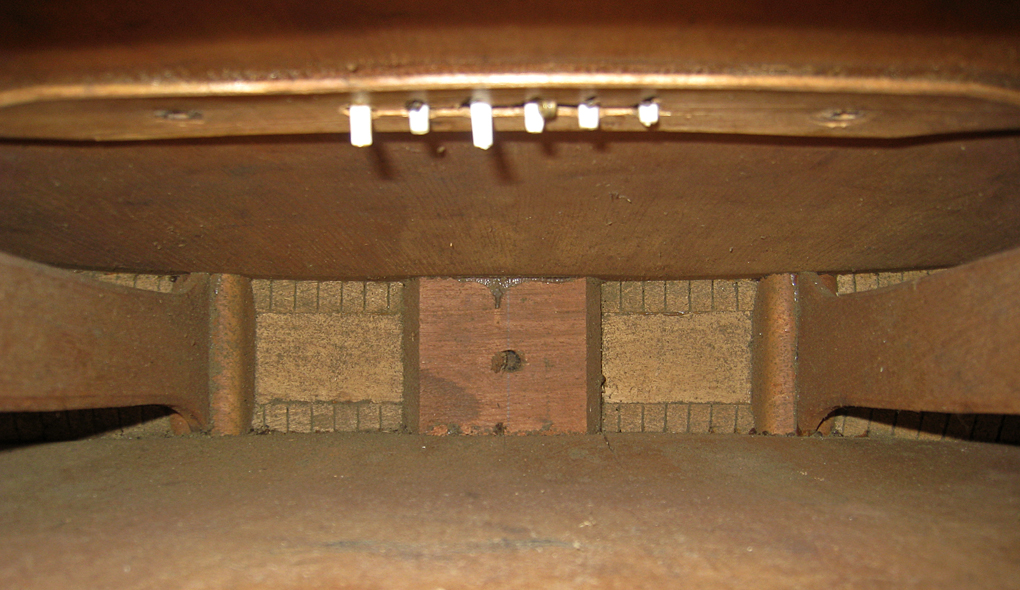
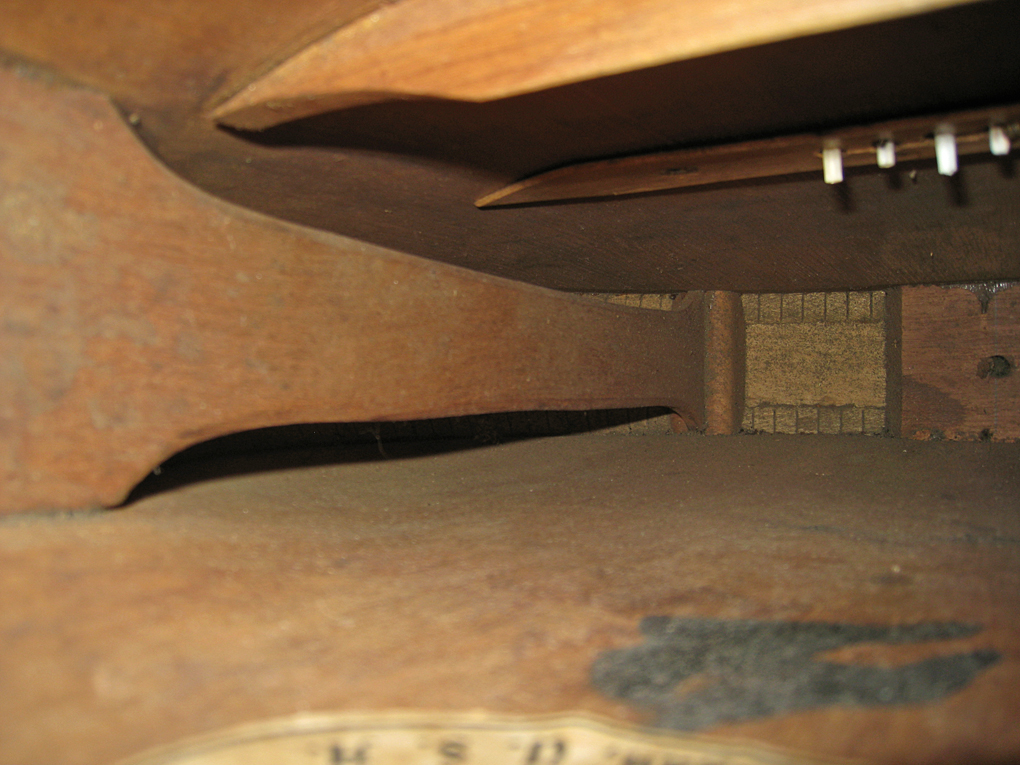
1907 Gibson Style O Guitar
Serial Number 5779
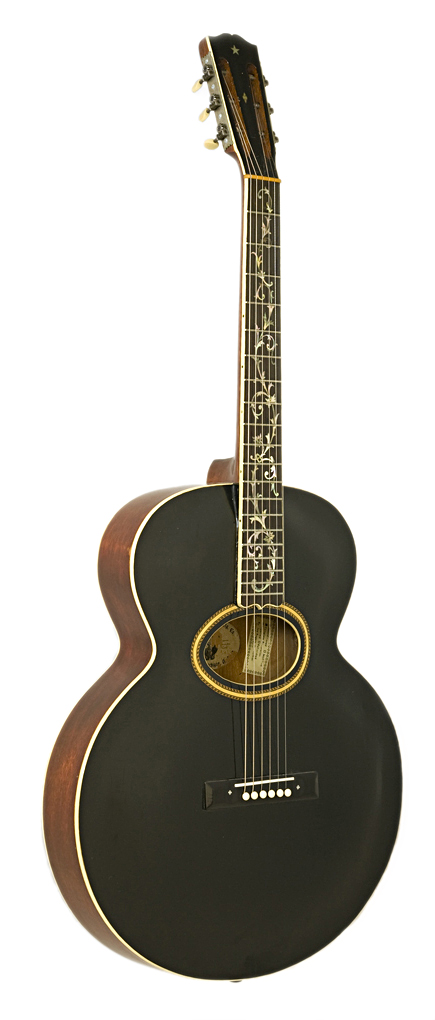
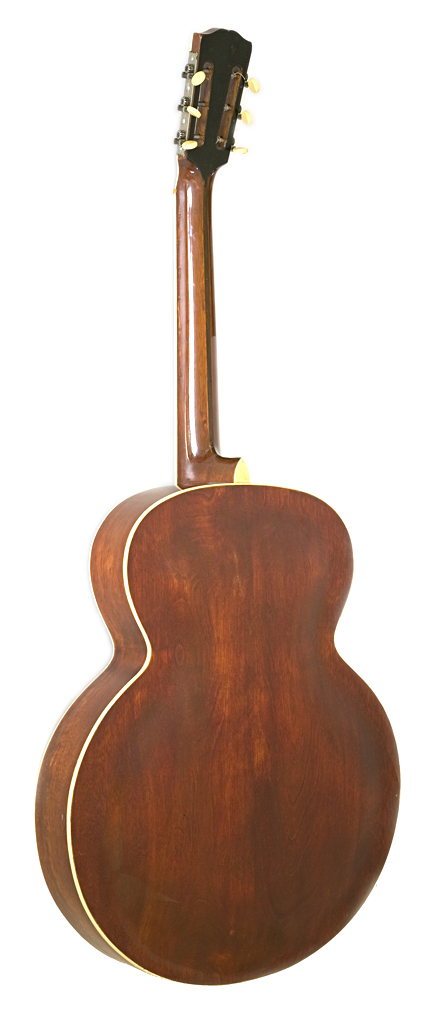
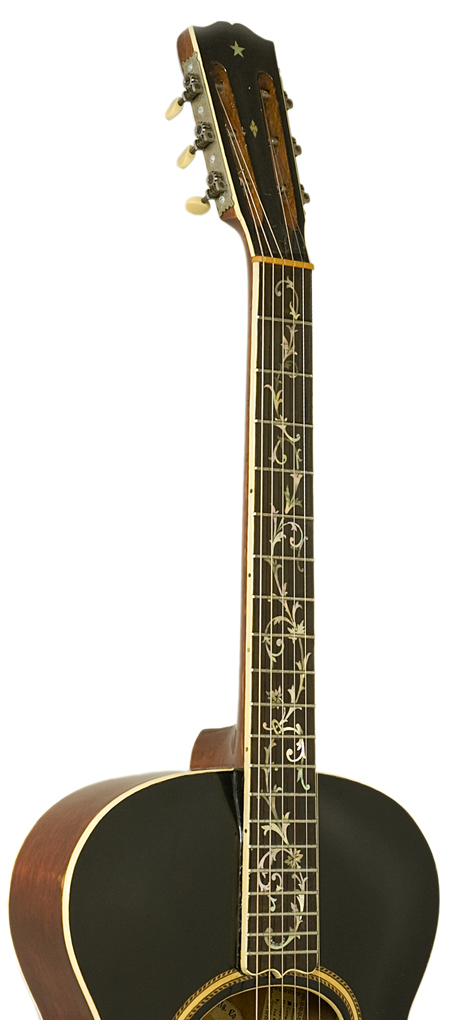
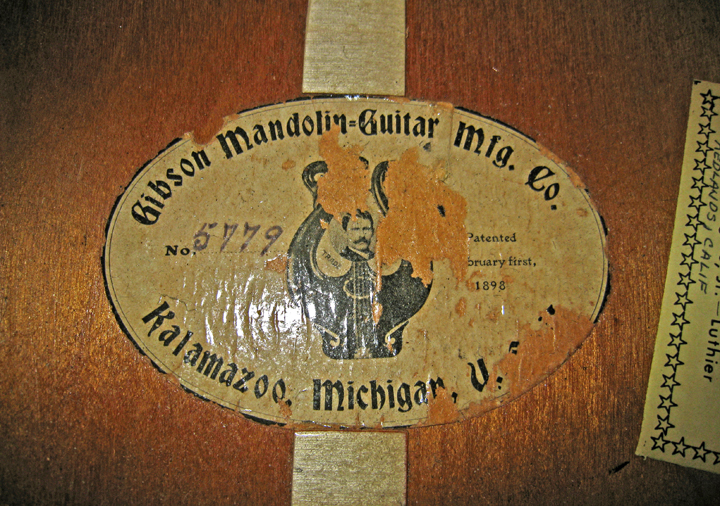
1907 Gibson Style O Guitar
Serial Number 7872
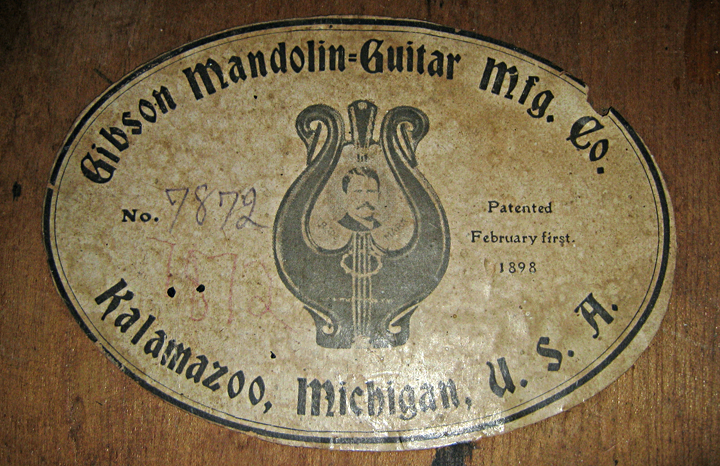
Instruments Made by
Gibson Mandolin - Guitar Co.
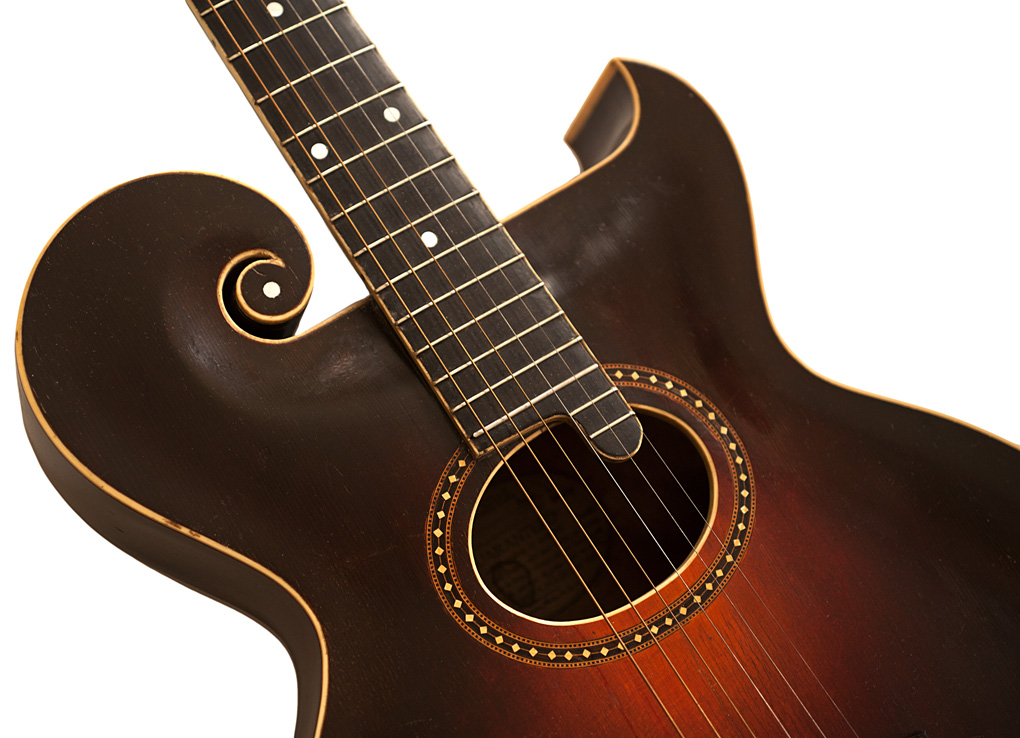
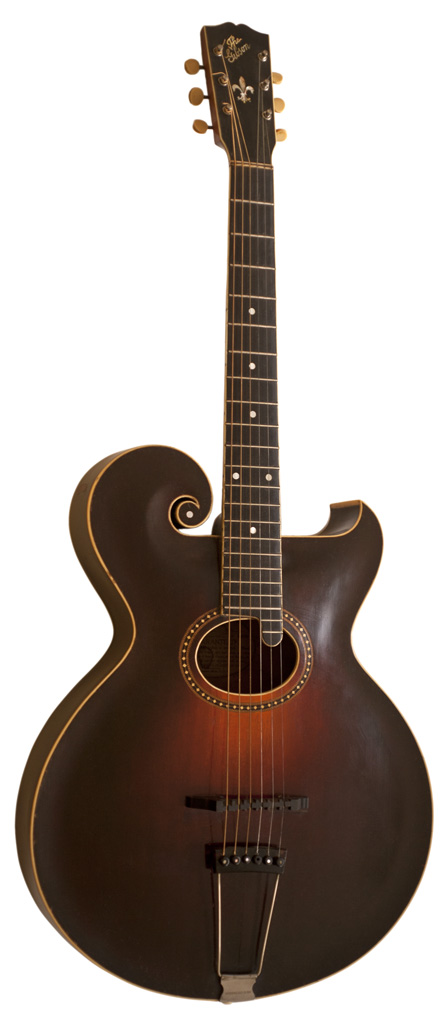
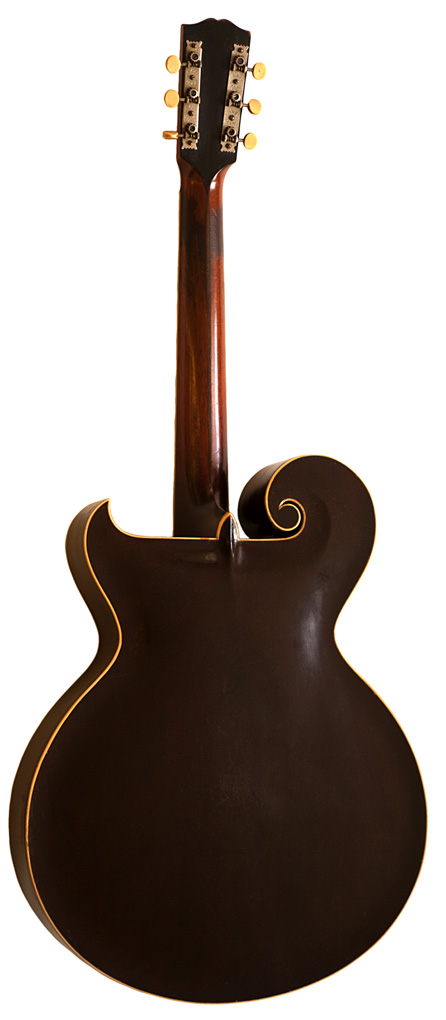
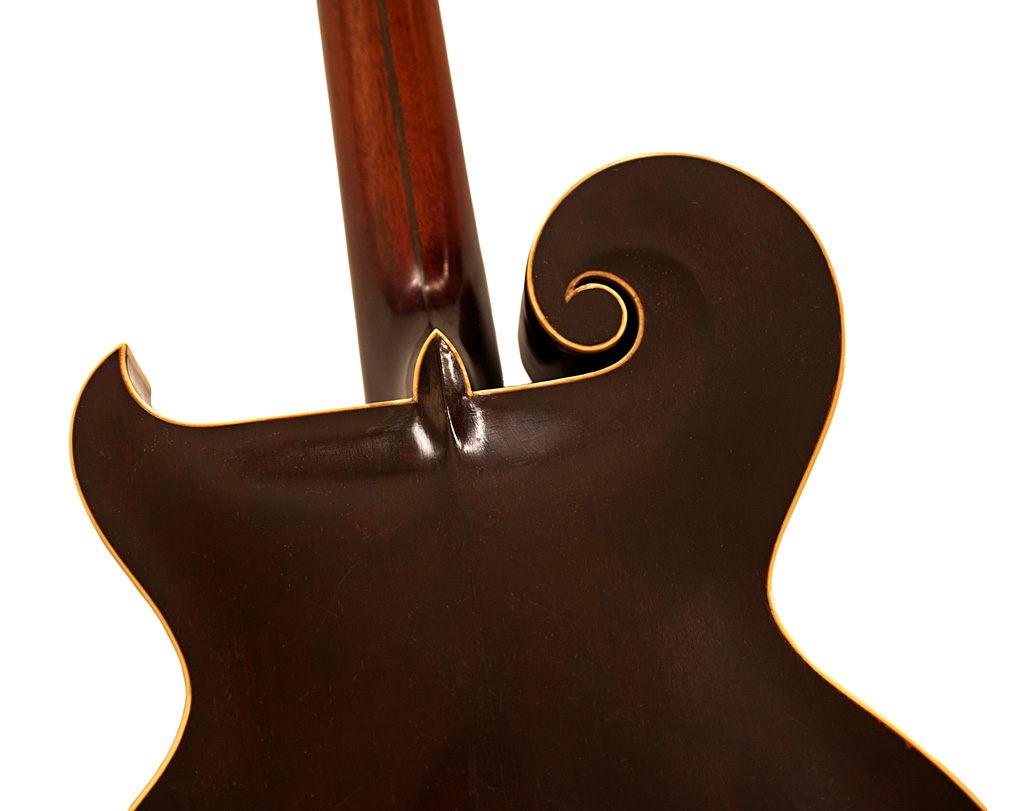
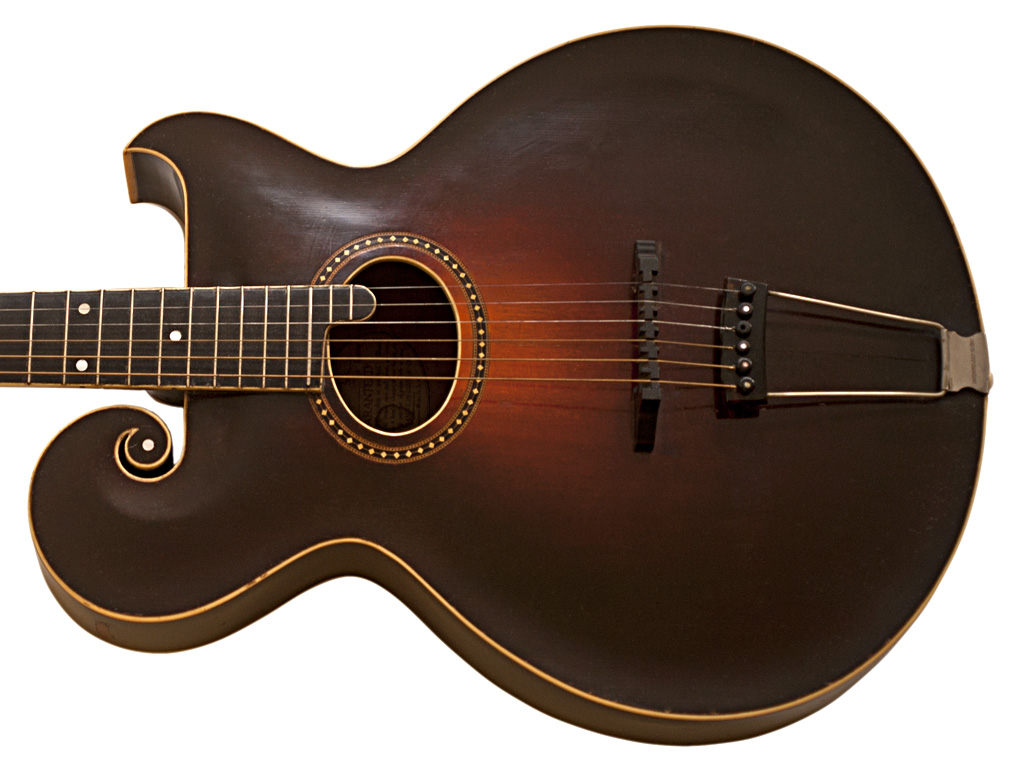
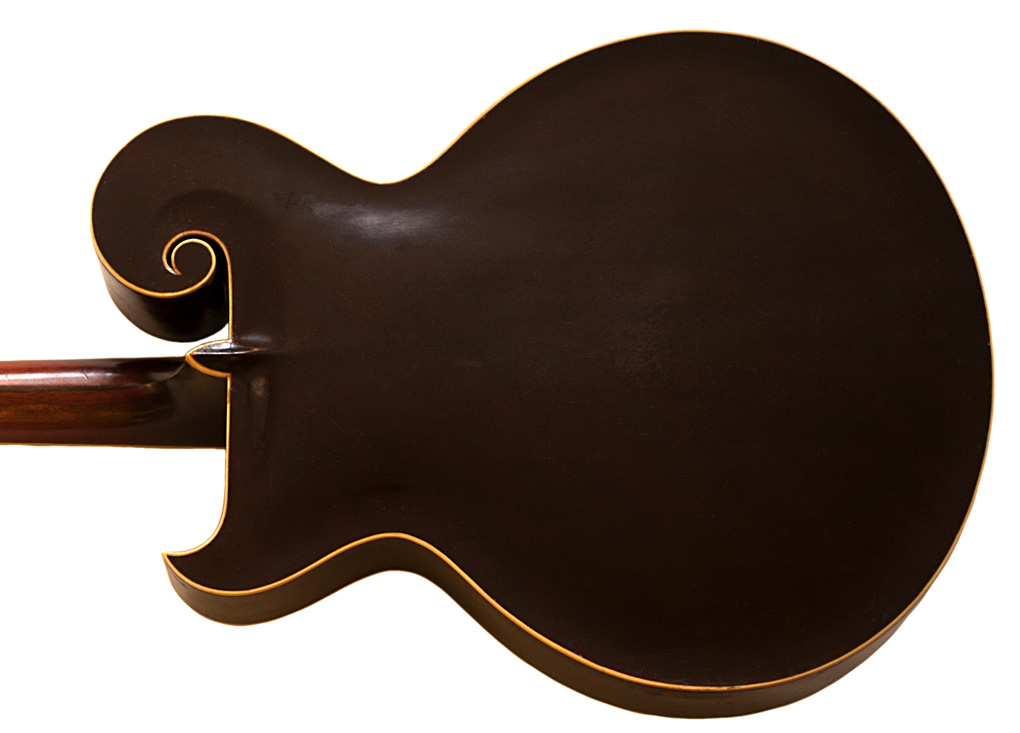
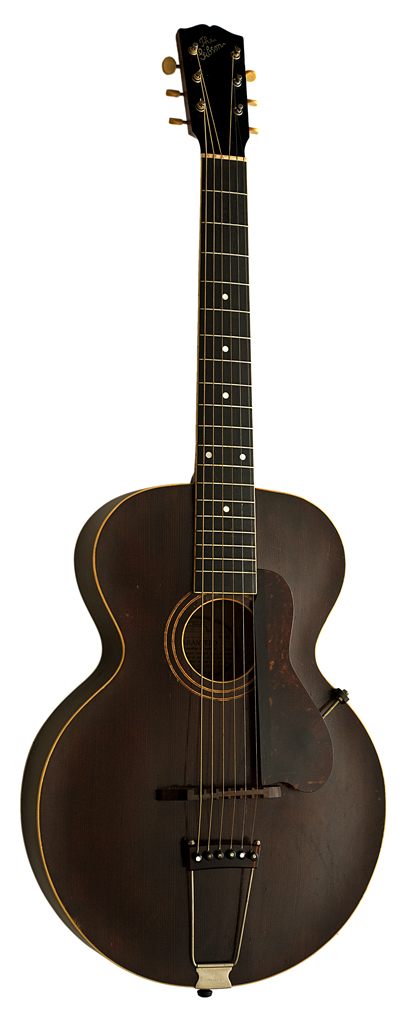
1916 Gibson Style O "Artist" Guitar
The "Artist" version of the Style O, with the scroll design, was produced from 1914 to 1921.
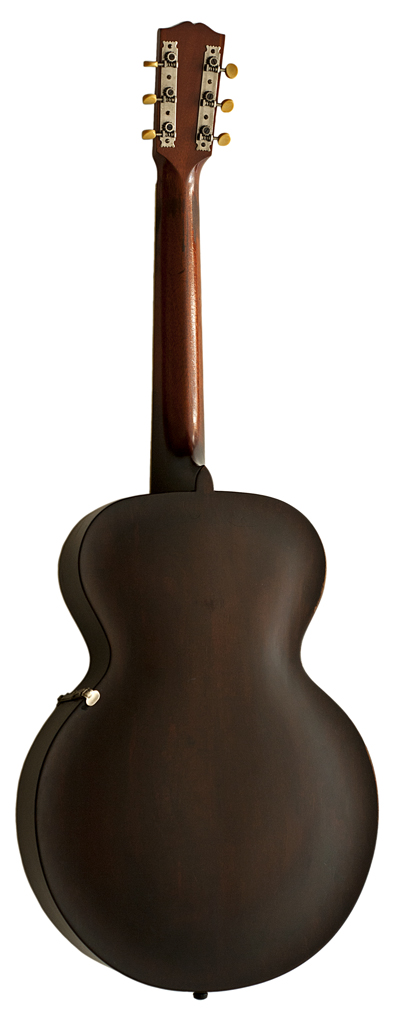
1921 Gibson Style L1 Guitar
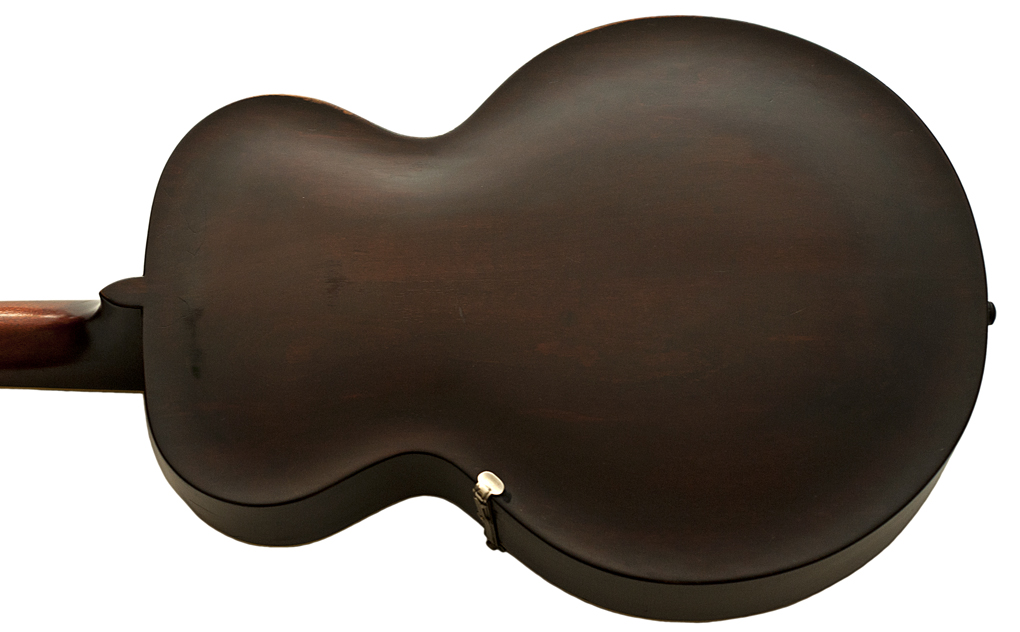
From 1908 to 1925, the small body, 13 1/2" narrow waist L Style Gibson guitars, the mainstay of the Gibson line, were archtop guitars
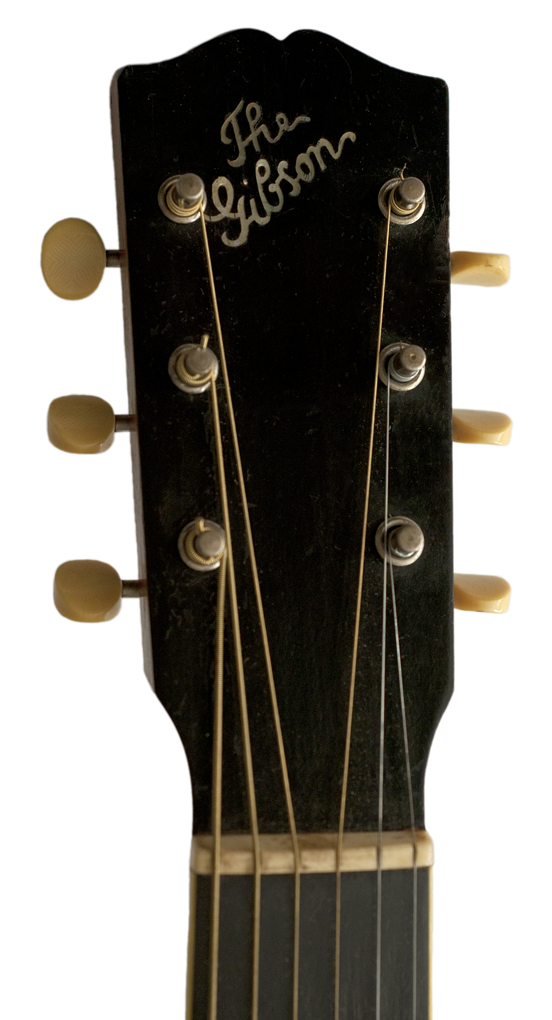
with a round hole, tailpiece with pins set in a Celluloid block, raised pickguard, 13 frets clear of the body, and a slanted "The Gibson" logo.
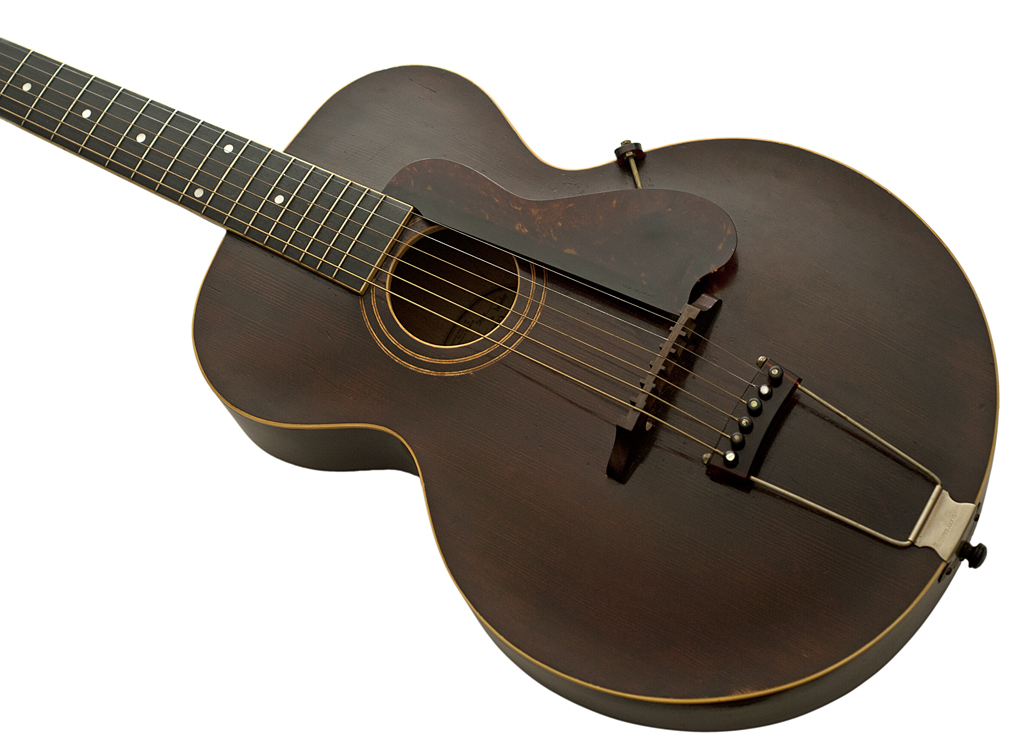
13 1/2" narrow waist
Arched top and back
Round sound hole
Tailpiece with pins set in a Celluloid block
Raised pickguard
13 frets clear of the body
Slanted "The Gibson" logo.
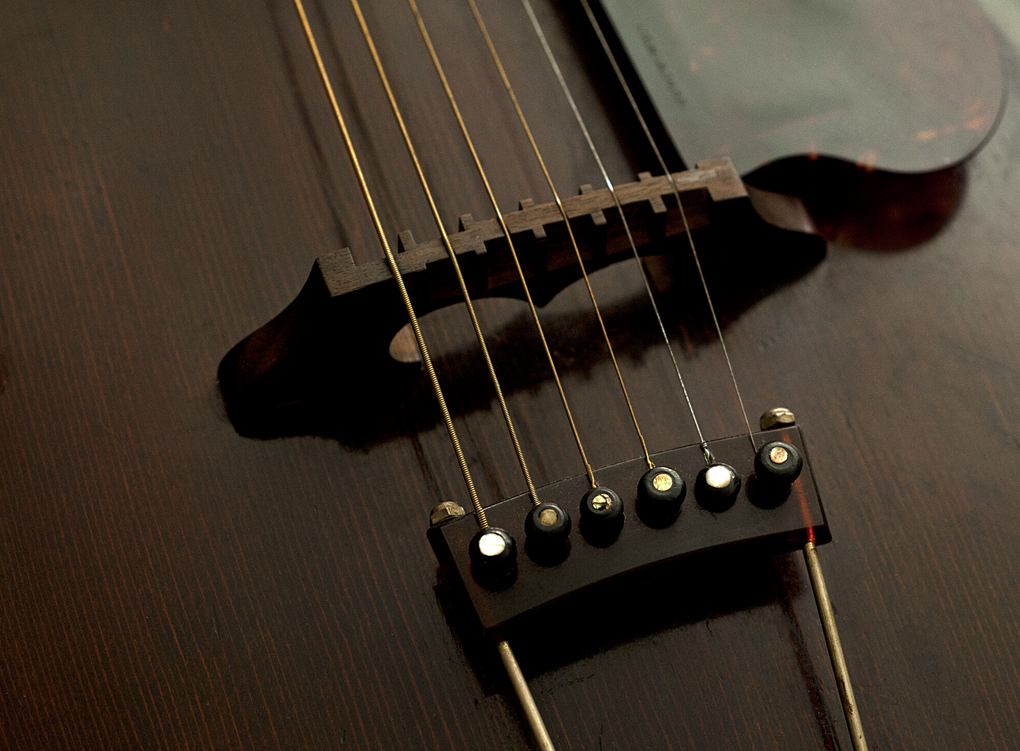
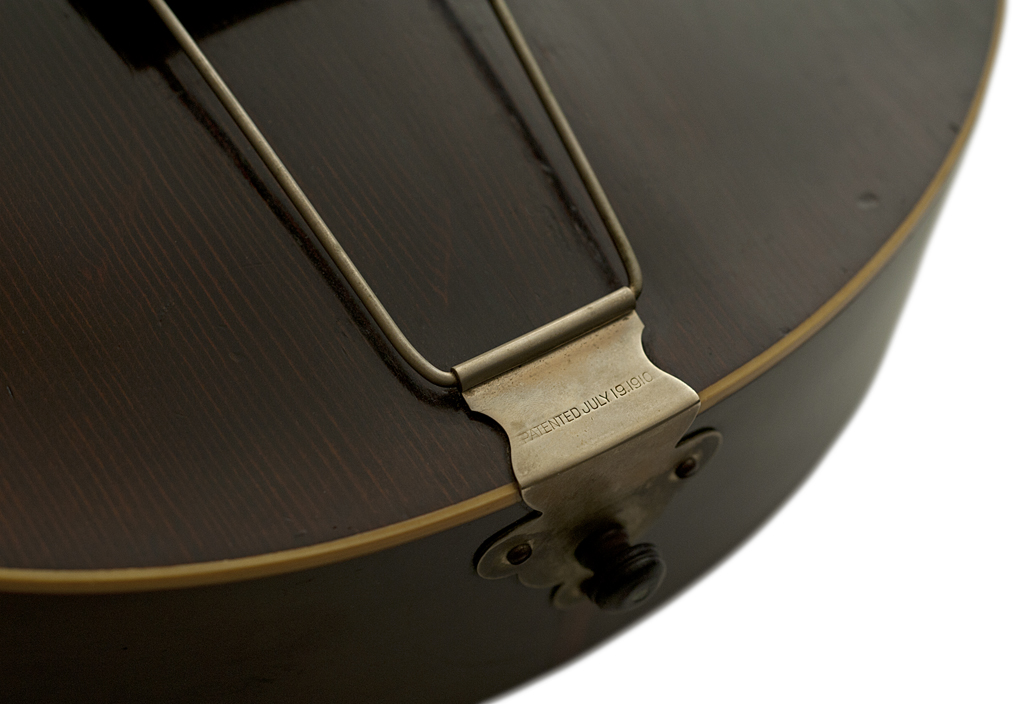
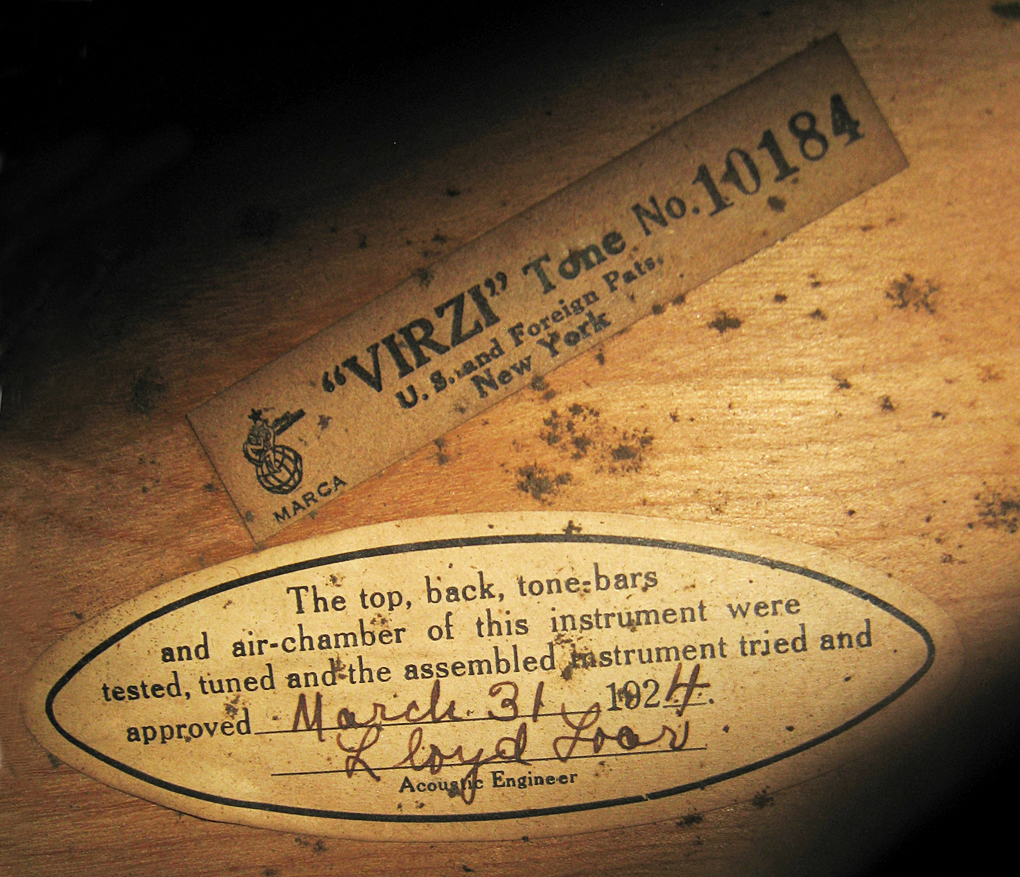
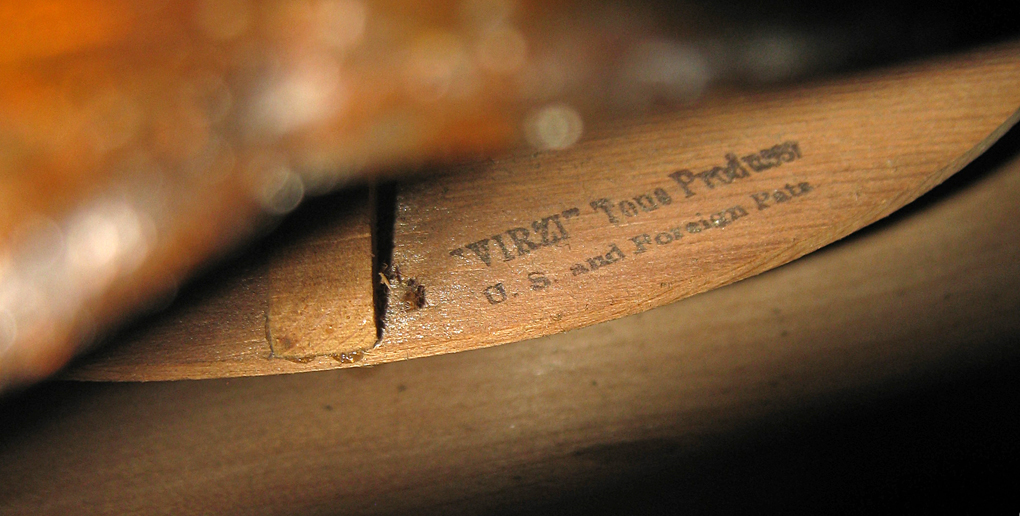
Gibson "Master Model" L-5 Guitar with "Virzi Tone Producer"
signed by Gibson's "Acoustic Engineer" Lloyd Loar, March 31, 1924
Serial Number 76710
Virzi #10184
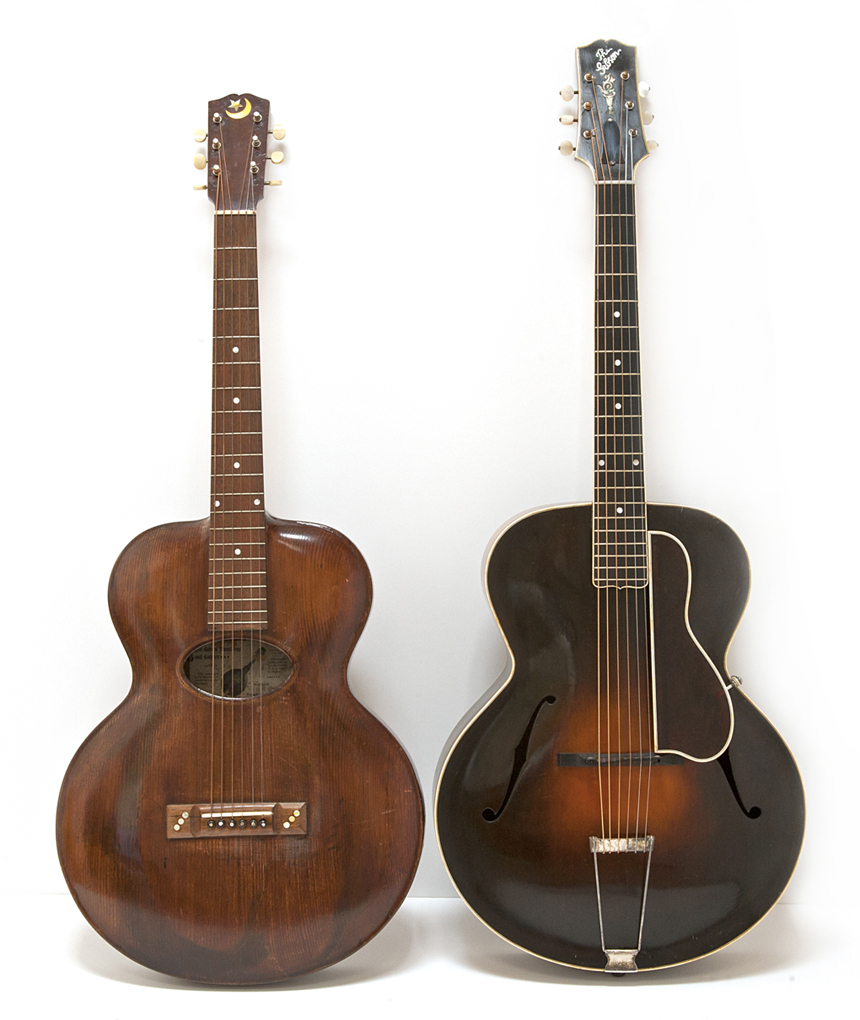
The 1898 Orville Gibson archtop, the first arch top guitar built by Orville Gibson, this example exhibited in the Boston Museum of Fine Arts "Dangerous Curves" exhibit, with the 1924 "Lloyd Loar" L-5, the first "modern" archtop guitar, built with "F" holes, this example formerly owned by David Grisman, both built with the identical body size and shape.
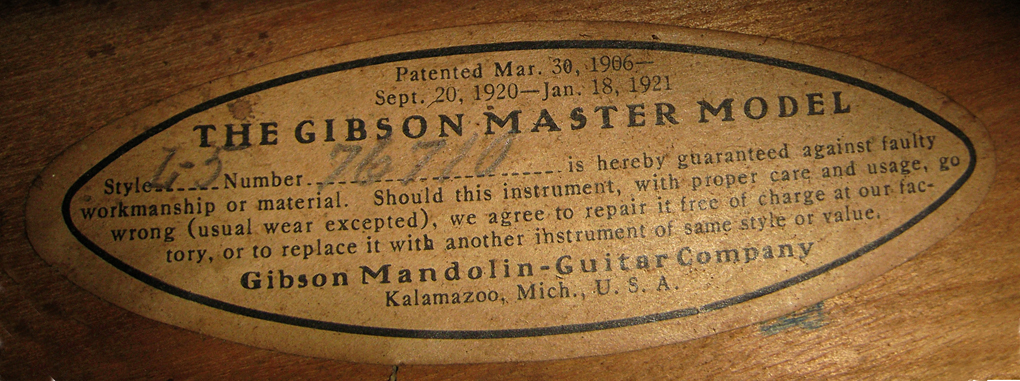
The top, back, tone-bars and air chamber of this instrument were tested, tuned and the assembled instrument tried and approved
March 31, 1924.
Lloyd Loar, Acoustic Engineer.
1926 Gibson L1 Guitar
The first flat top Gibson, still with arched back, often made of local Northern Michigan Beech.
After 1926, Gibson flat top guitars had a flat back as well.
The Gibson Company did not think highly of flat top guitars for many years. In fact, while Martin had been making flat top guitars in America since 1833, Gibson built their first flat top guitar some 93 years later.
Gibson did not change body shapes often. The shape of Orville Gibson's first archtop was used for their jazz guitars decades later, and the form of the L-1 archtop was kept for the first flat tops, and remained the primary small body shape until the 14 3/4" body was introduced as the 1920's came to an end.
The first examples had H-pattern top bracing as well.
By 1928, the L-1 had an unbound soundhole, belly bridge, and sunburst top finish.
Note the pyramid style bridge, similar to that used on early Martin guitars.
The slanted logo remained in use until it was replaced by a straight logo briefly in the late 1920's, before transitioning from "The Gibson" to "Gibson".
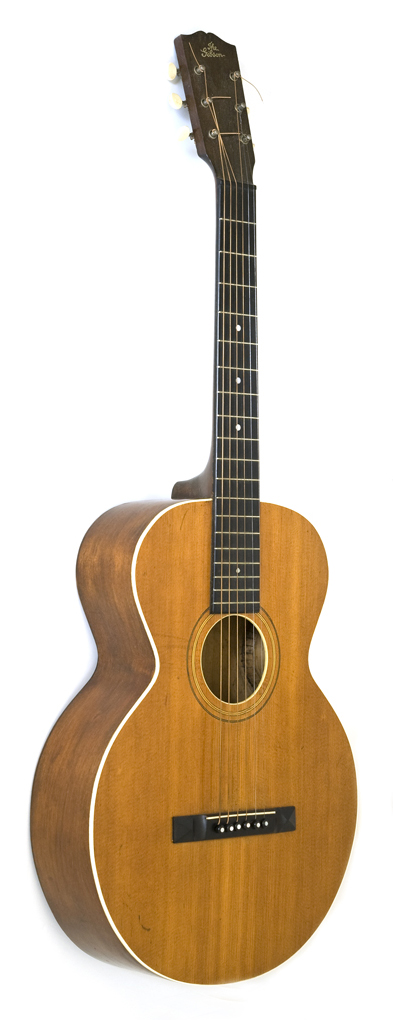
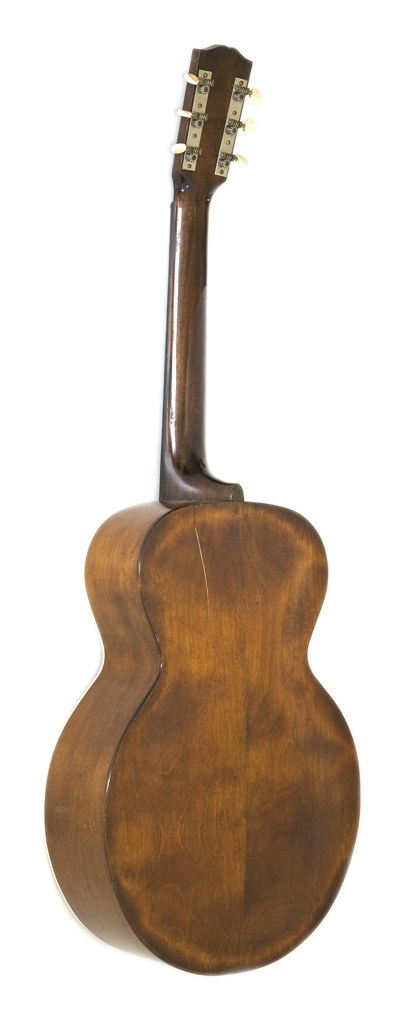
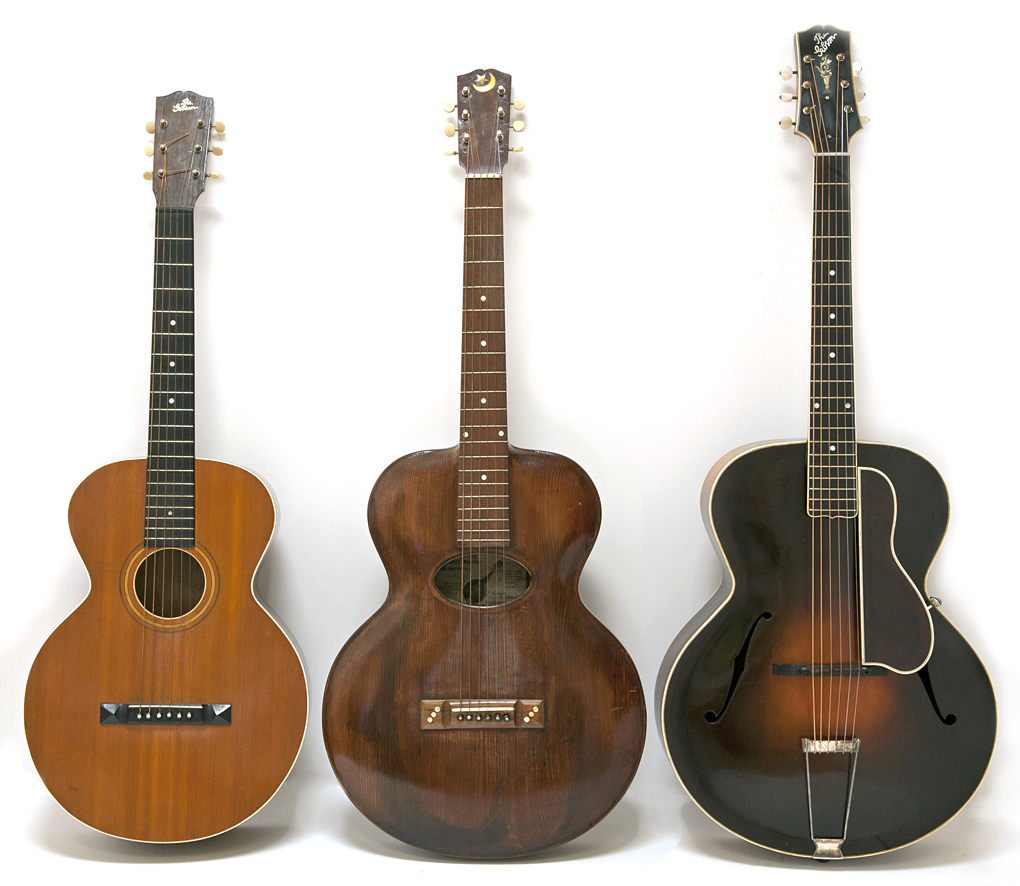
The 1926 Gibson L-1, Gibson's first "flat top" guitar, the 1898 Orville Gibson archtop, the first guitar built by Orville Gibson, and first arch top guitar produced by any maker, and the 1924 "Lloyd Loar" L-5, the first "modern" archtop guitar, built with "F" holes.
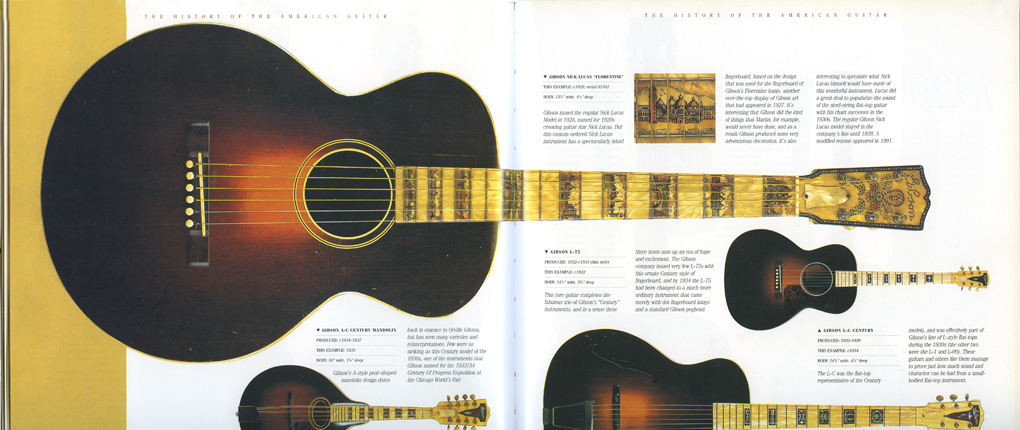
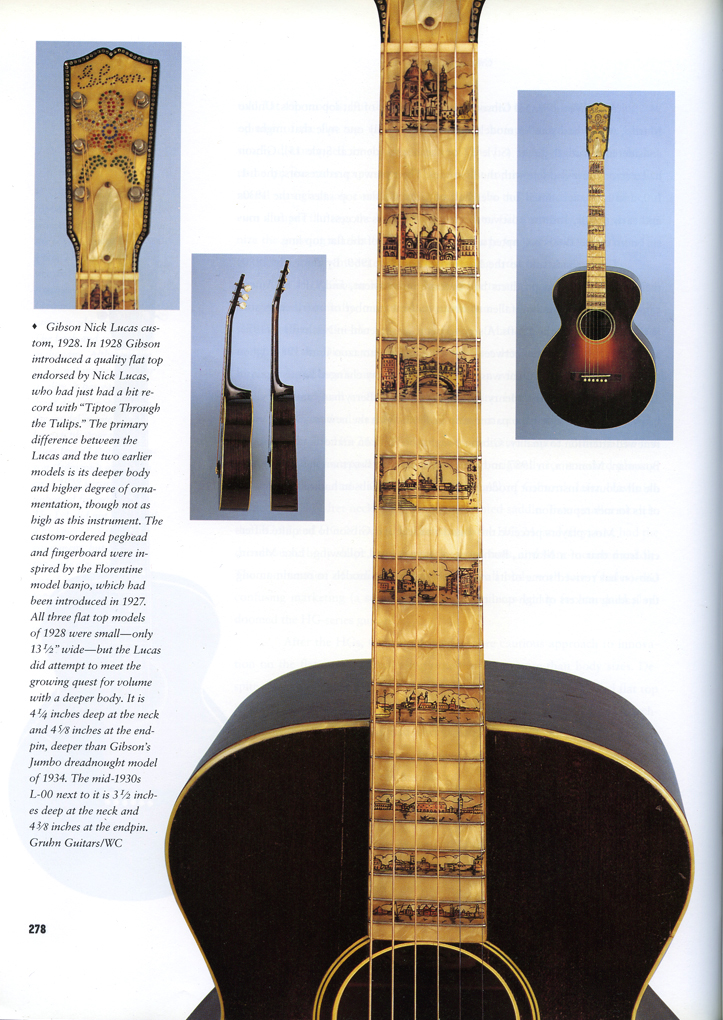
1929 Gibson "Florentine" Nick Lucas Special Guitar
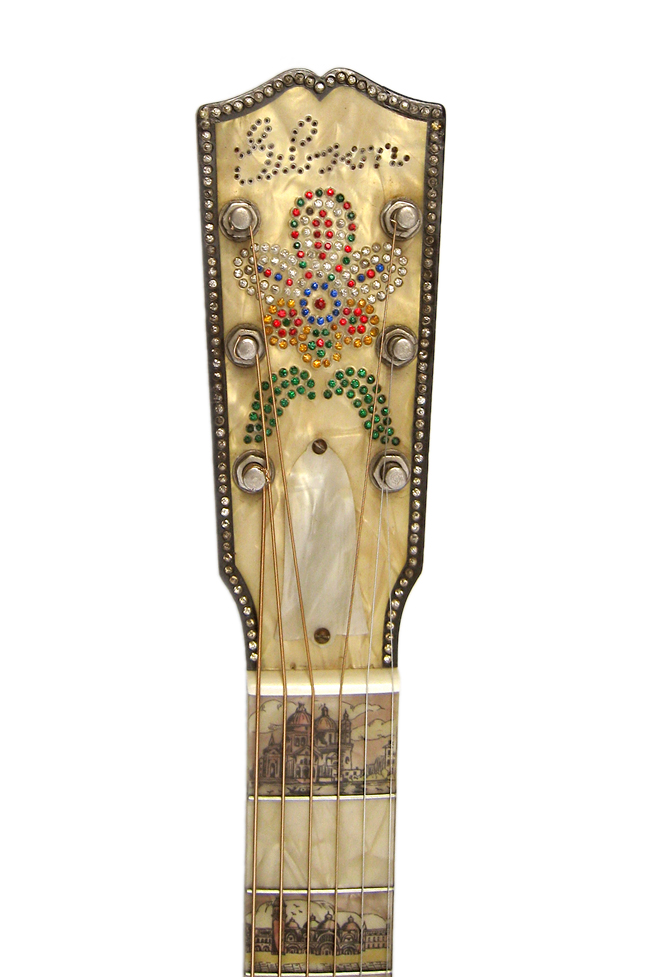
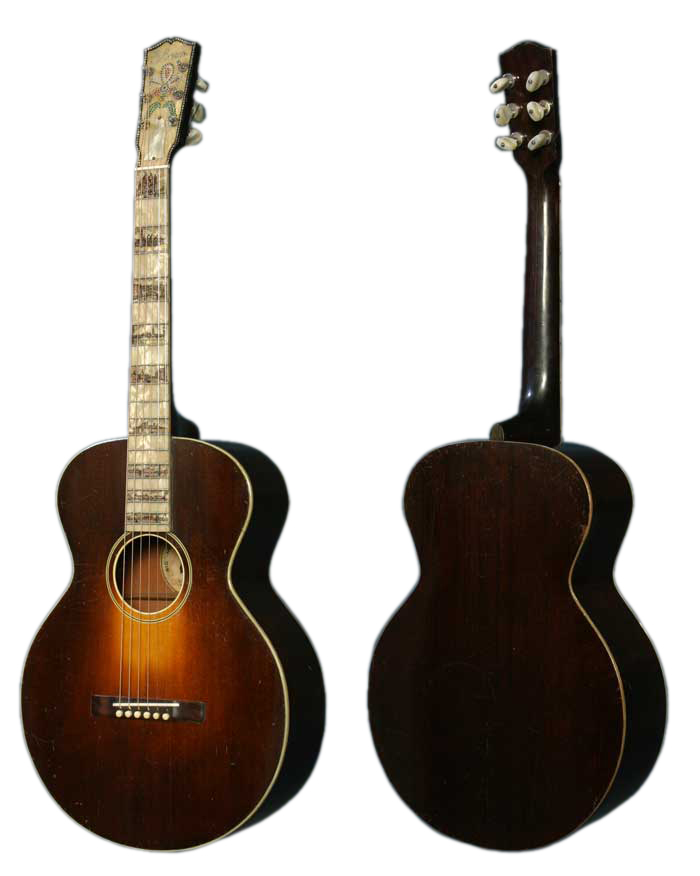
The early Nick Lucas Special was made with the same basic body shape as the first L1, such as the 1906 seen above, and the first flat top, the 1926 seen above. The Nick Lucas is distinguished by a body with extra depth.
Those who study vintage Gibson guitars have come to the conclusion based on the uniqueness of the various examples that the Nick Lucas Special was made in extremely small quantities, most likely made one at a time on special order. The Lucas can be found in various combinations of 13 1/2" and 14 3/4" wide bodies, 12, 13, and 14 fret necks, mahogany, rosewood and maple bodies, with no pickguard, glued on pickguards, or raised pickguards, a large variety of bridge designs, with our without a trapeze tailpiece, and some with a raised fretboard extension.
Nick Lucas Gibsons can be hard to date by conventional means, as it appears that labels with with serial numbers already assigned were pre-printed, and applied to the guitars as they were built over a period of some years.
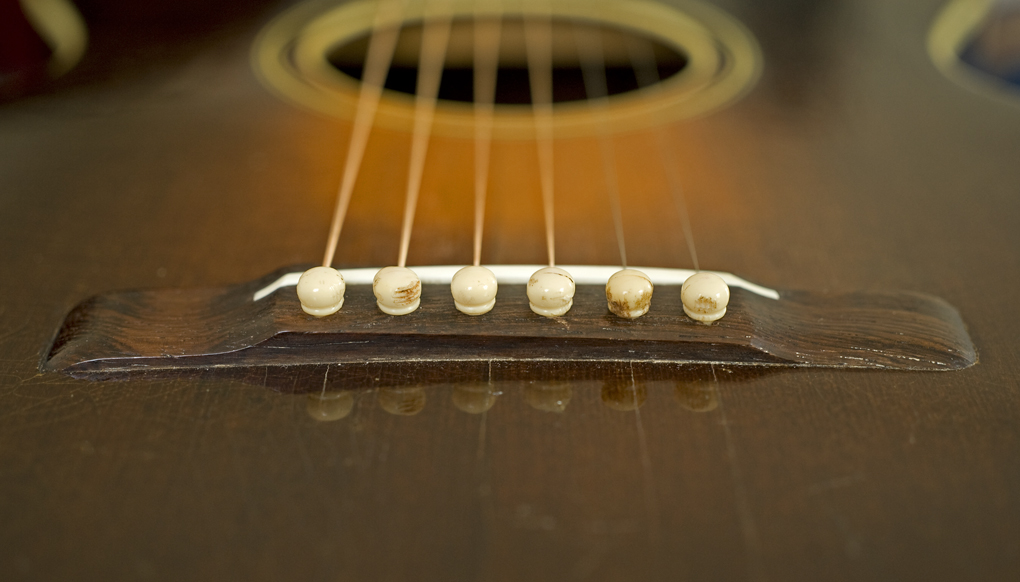
This one of a kind Nick Lucas Special is far more unusual than most, with painted scenes of Venice on the fretboard. What else would you expect of a Gibson "Florentine"? The build date remains a mystery, as it has the smaller body and banjo style tuners associated with Gibsons built in 1929 and earlier, but a bridge design that was introduced in 1932!
Serial Number 85102
Illustrated in Bacon, "The History of the American Guitar"
Illustrated in Gruhn and Carter, "Acoustic Guitars, a Photographic History"
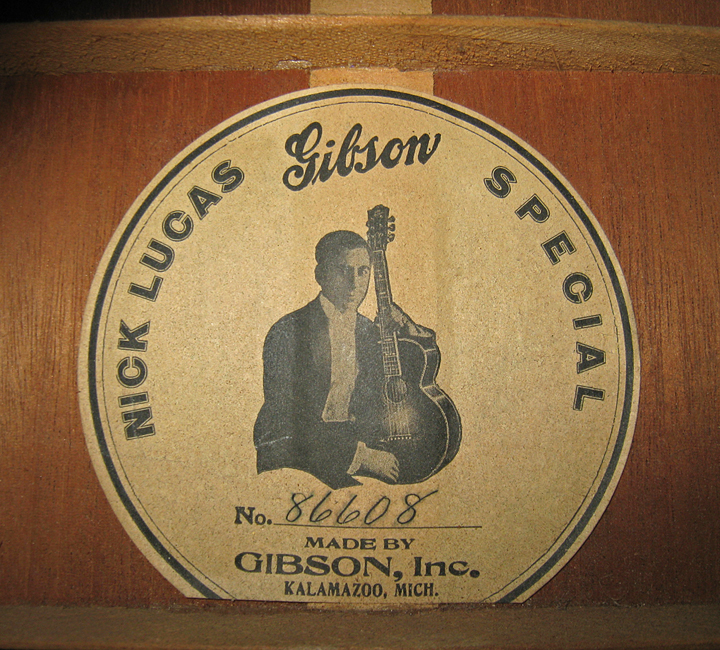
1930 Gibson Nick Lucas Special Guitar
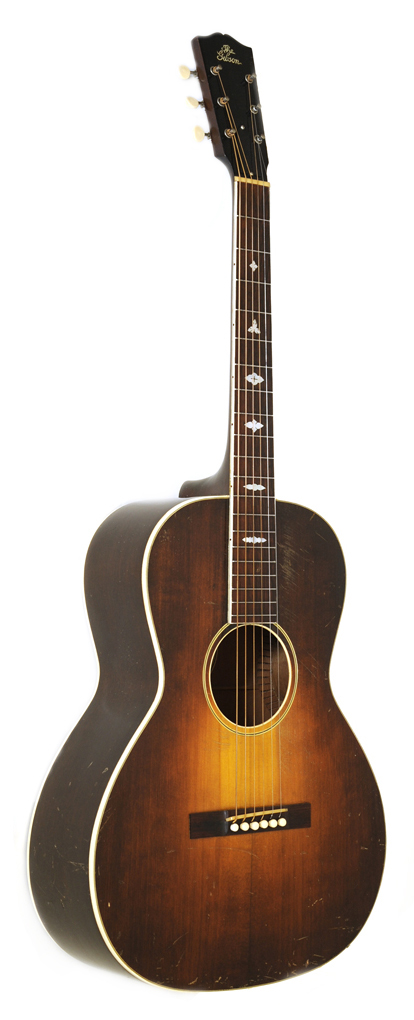
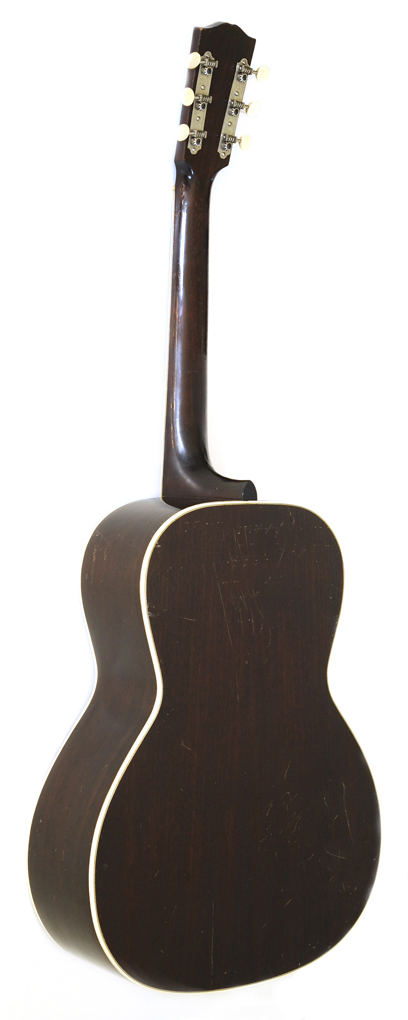
Every Nick Lucas Special is special. It's hard to find two that are identical. Perhaps the most common of the variations, however, are those with the later 14 3/4" body in mahogany and a 12 fret neck. These are among the first of the Gibsons with the later, larger body style. A number of collectors who have owned Nick Lucas Gibsons in numerous configurations, including the rare and more expensive rosewood and maple examples, consider the 12 fret mahogany Lucas to be among their favorite sounding guitars.
Serial Number 86608
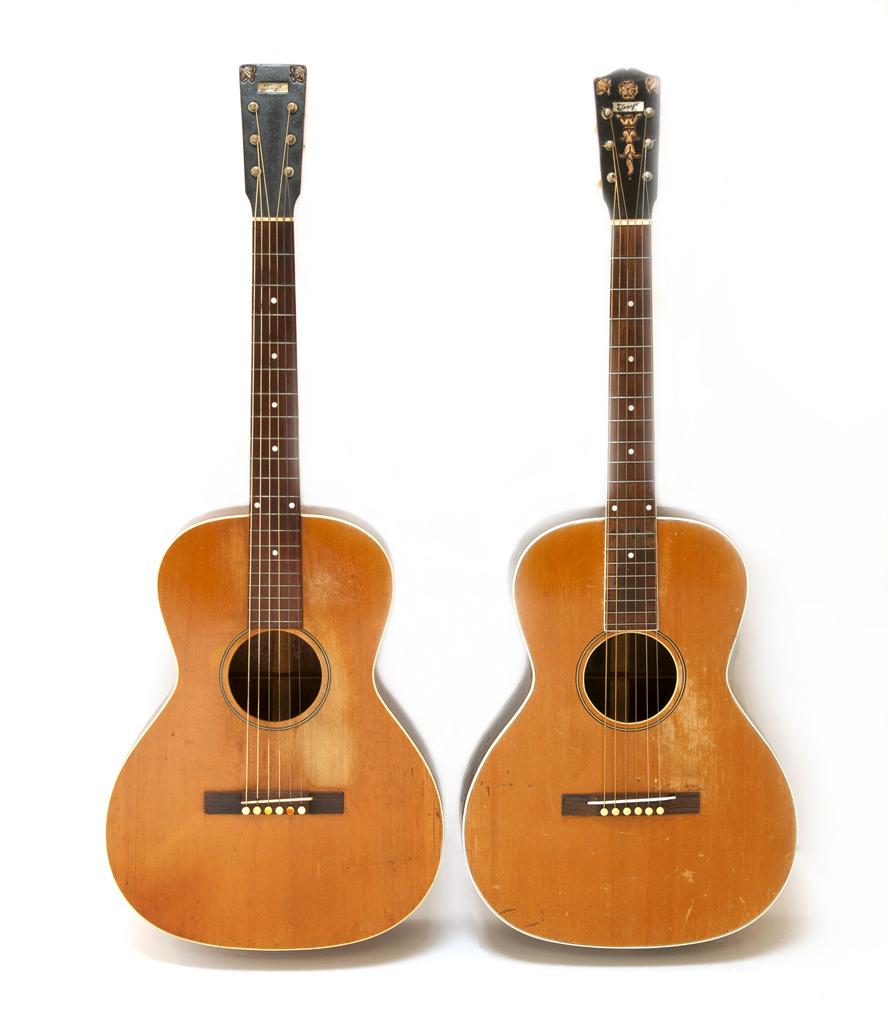
1930 Gibson Trujo Style A and 1931 Trujo Style B Guitars
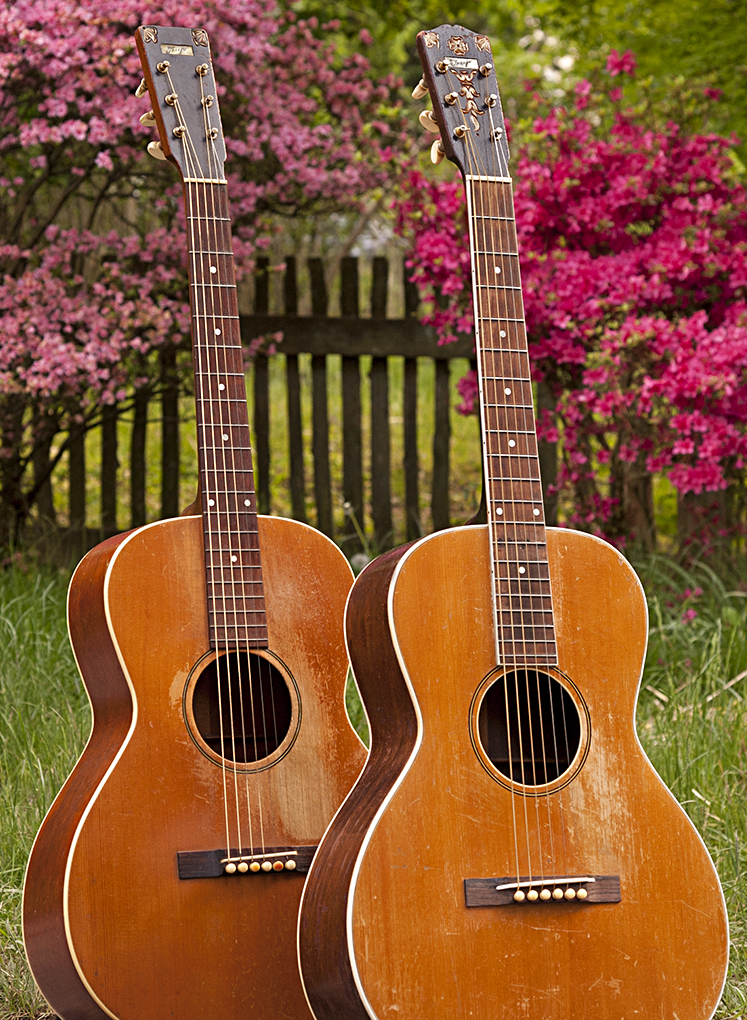
Manufactured by Gibson for the Trujo Banjo Company of San Fancisco, owned by a couple of banjo teachers named Truett and George, whose names were contracted to form the name "Trujo".
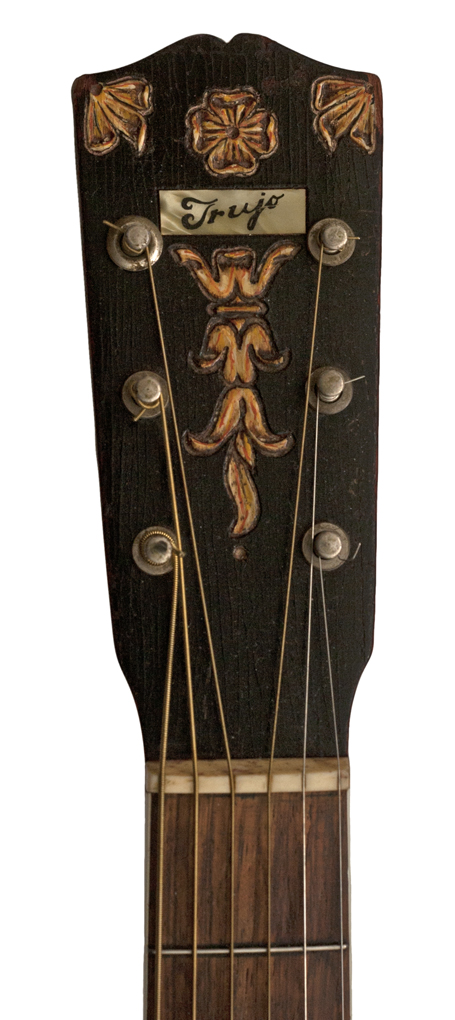
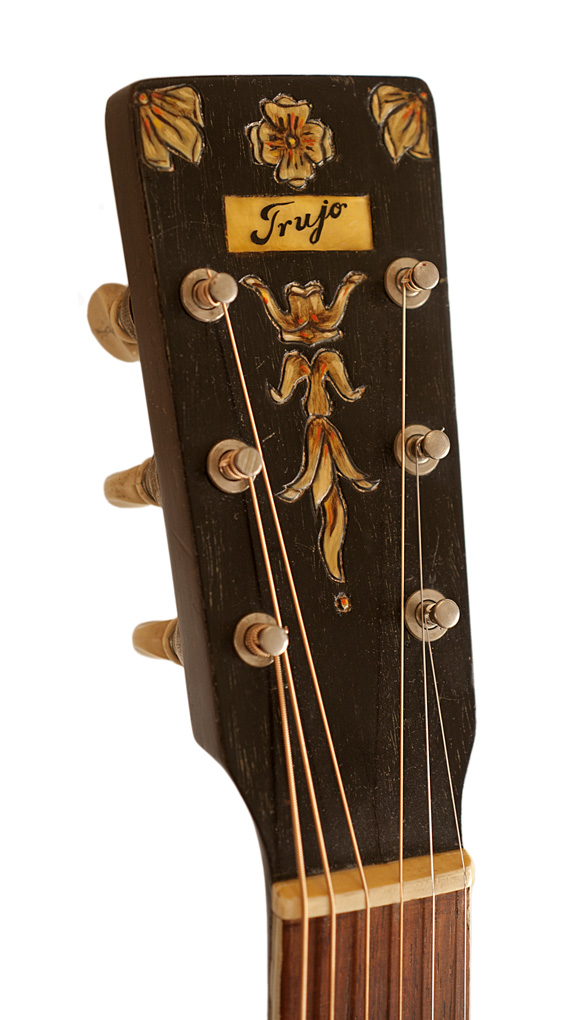
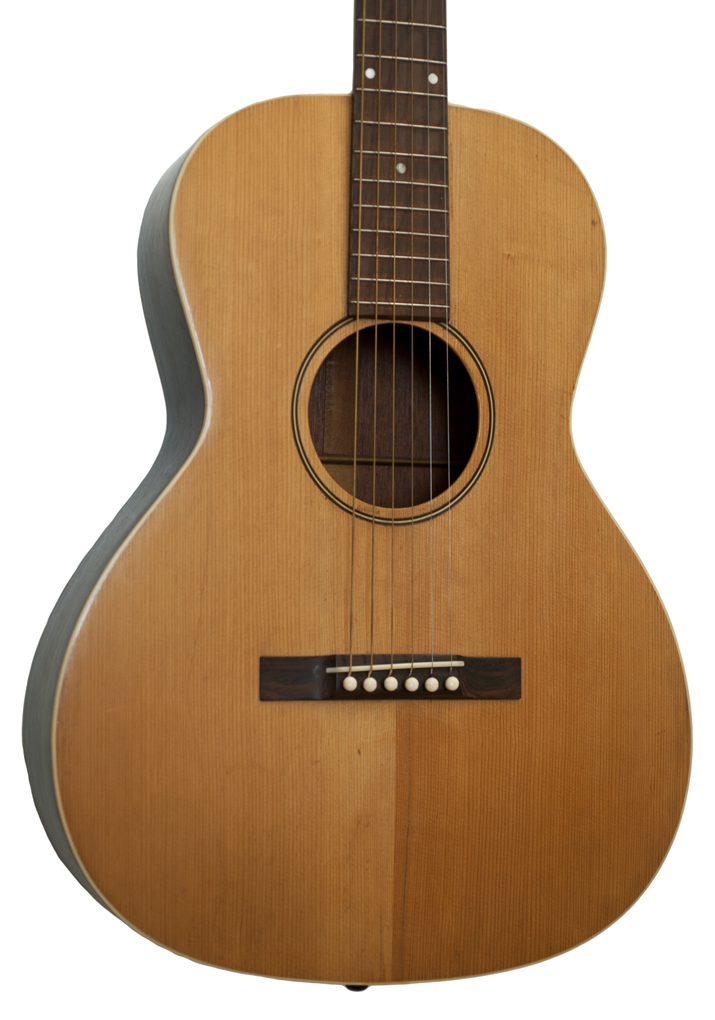
The Trujo style A is an extremely rare guitar, of which most dealers have seen no more than one in their lifetime, as Trujo sold mostly banjos, and very few guitars. This example conforms to the description of the Trujo Style A in Gruhn and Carter: "Similar to Kel Kroydon KK-1, S.S. Stewart and Gibson L-2 of the period, single bound spruce top with x pattern bracing, mahogany back and sides, 3 ply soundhole ring, mahogany neck, 12 frets clear of body, unbound rosewood fingerboard, dot inlay, squared off peghead painted black, inlaid perloid rectangle approx 1 1/2" x 5/8" with Trujo stenciled in black, small painted and carved leaf designs in upper corners of peghead, open back tuners with white buttons, natural finish. Available 1929."
Until recently I didn't know if the rosewood model B was actually produced and existed in wood, or never made it further than existing on paper. I'm thrilled to say that I now have a model B to show, and more importantly, to play.
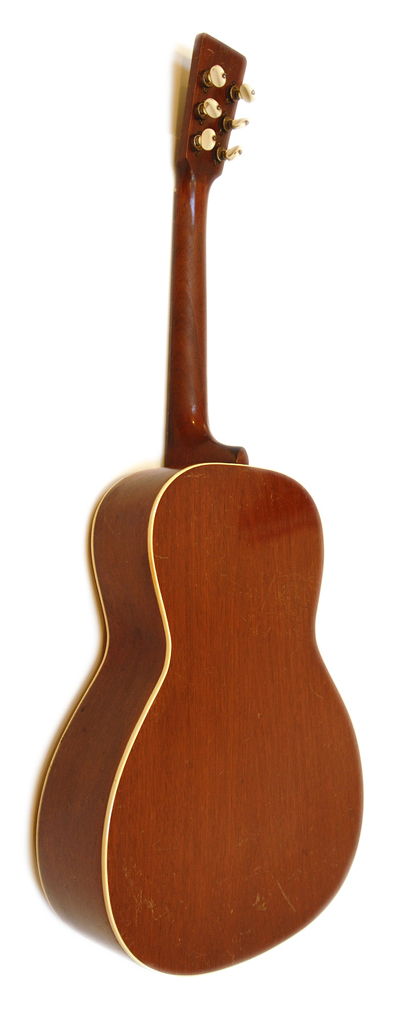
This example conforms to the description of the Trujo Style B in Gruhn and Carter: "L-2 size, spruce top with x pattern bracing, rosewood back and sides, triple bound top and back, bound soundhole with 3-ply ring, mahogany neck, 12 frets clear of body, bound rosewood fingerboard with black line on side of binding, dot inlay, standard Gibson peghead shape, black peghead with inlaid perloid rectangle approx 1 1/2" x 5/8" with Trujo stenciled in black, finely carved and painted designs in corners and down center of peghead, banjo tuners. Available 1930."
The Trujo A has a shallow round 1 3/4" at the nut neck similar to the early Martin OM of the same period. The Trujo B has a deeper V shaped neck of the same width.
While Gibsons are generally thought of as solidly built guitars, the Gibsons built around 1930, including the Gold Sparkle L-2, the Kel Kroydon, and those built for Trujo and S.S. Stewart, have some of the most delicate braces you'll ever see. I've often said, this first batch of Gibsons with the new larger 14 3/4" body, but still with 12 frets clear and an incredibly light build, are the sweet spot in Gibson construction for fingerpickers.
Gibson made very few guitars of rosewood, and most were of other varieties than Brazilian. More importantly, the few small body rosewood guitars that Gibson built were as a rule built with a tailpiece, as on the tenor L-2 that follows and a small number of rosewood Nick Lucas Model guitars, and not a pin bridge. While some examples have been converted to a pin bridge, the location of the bridge plate and braces make the conversion less than entirely successful. To find a lightly built 12 fret, pin bridge, 14 3/4" Gibson, such as the Trujo, with a Brazilian rosewood back and sides, is more than a dream come true!
My Trujo A and Kel Kroydon guitars each weigh about 2 5/8 lbs.
1930 Trujo A Guitar Serial Number 36 / FON 9804
1931 Trujo B Guitar Serial Number 9731
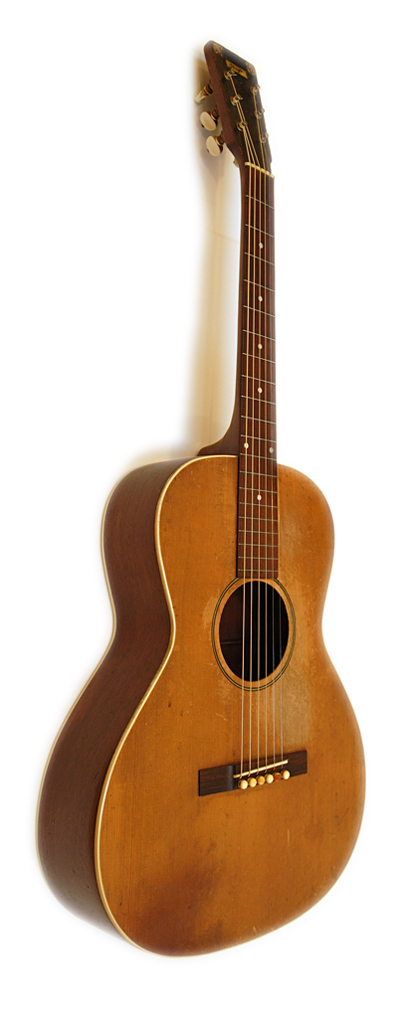
1930 Trujo A Guitar Serial Number 36 / FON 9804
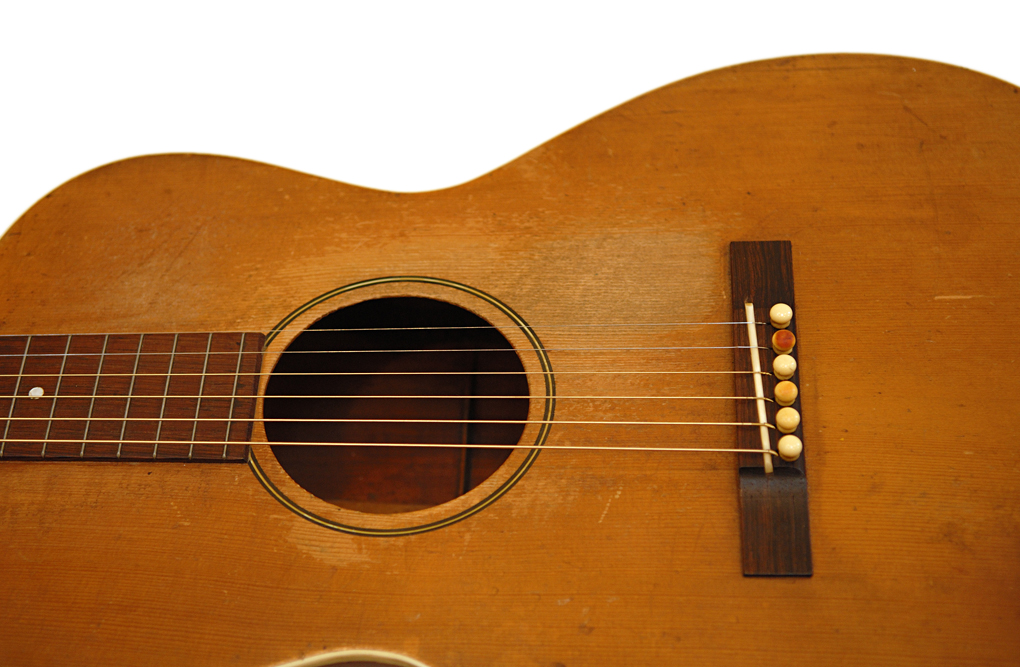
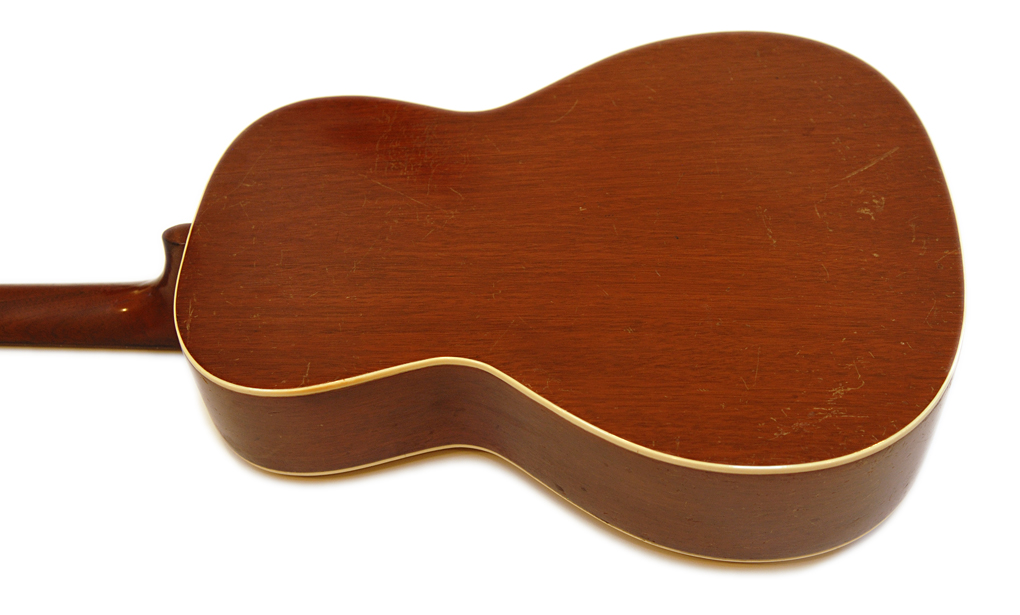
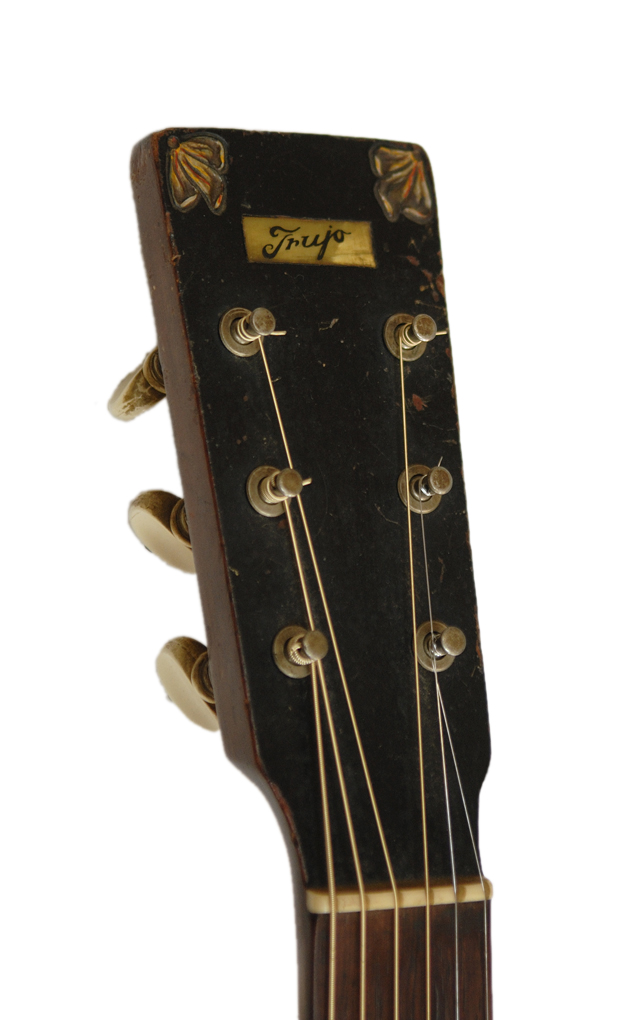
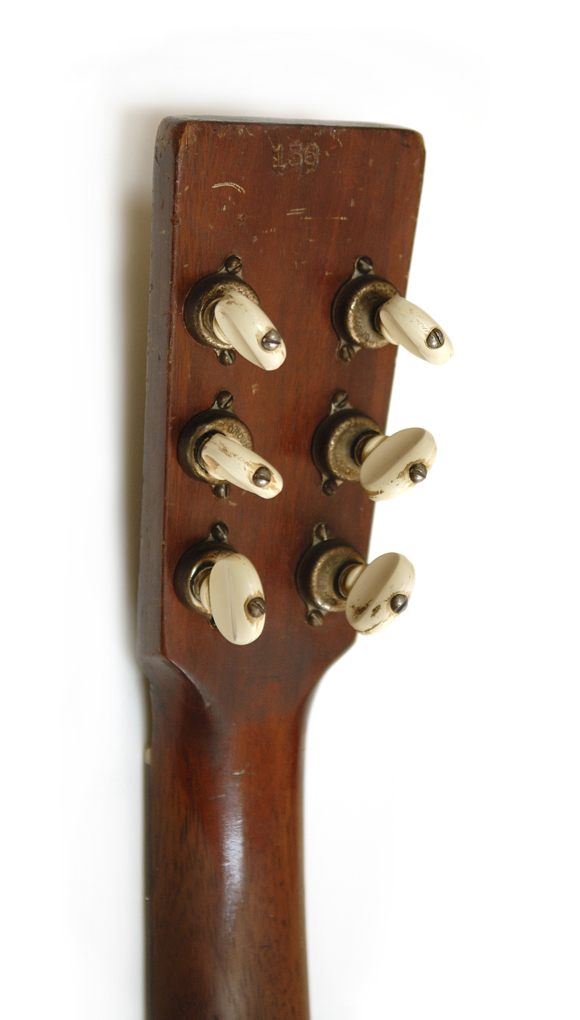
1931 Trujo B Guitar Serial Number 9731
1930 Trujo A Guitar with No Serial Number / FON 9512
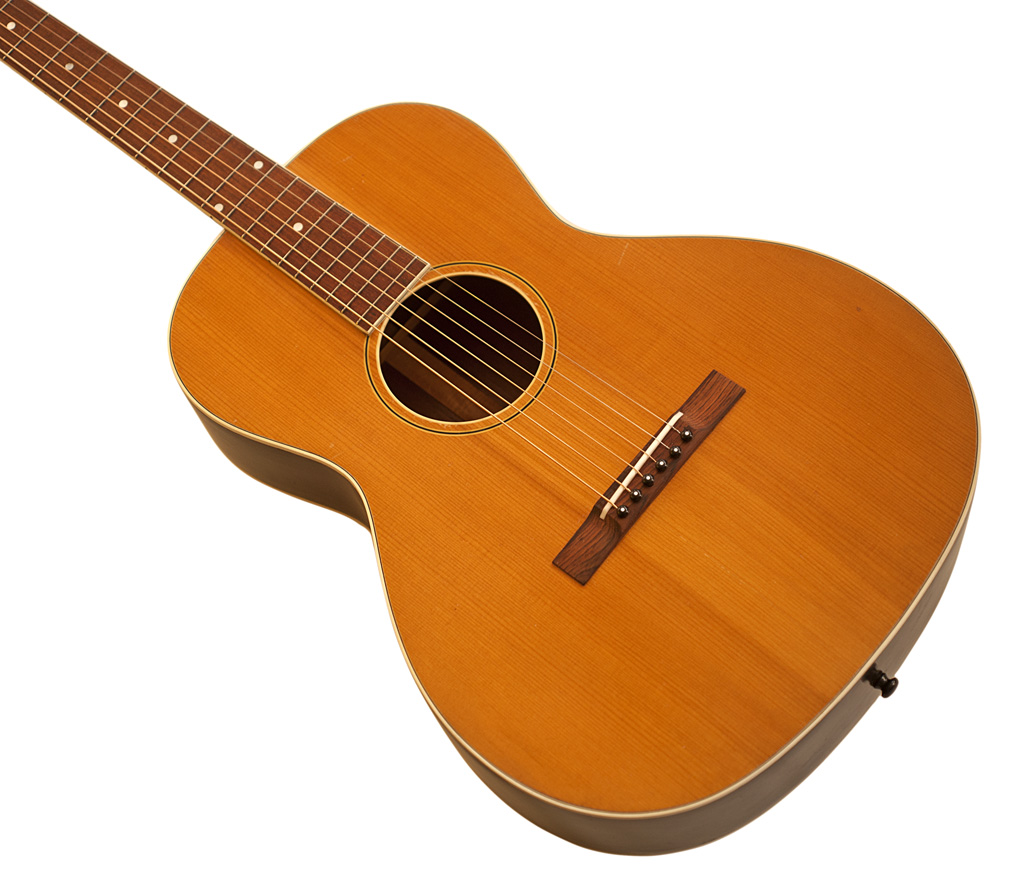
This immaculate earlier example of a Trujo A combines features of the Trujo A and B above.
This example appears to be either a prototype or at least a very early example to which changes were later made to further differentiate this model from the Style B.
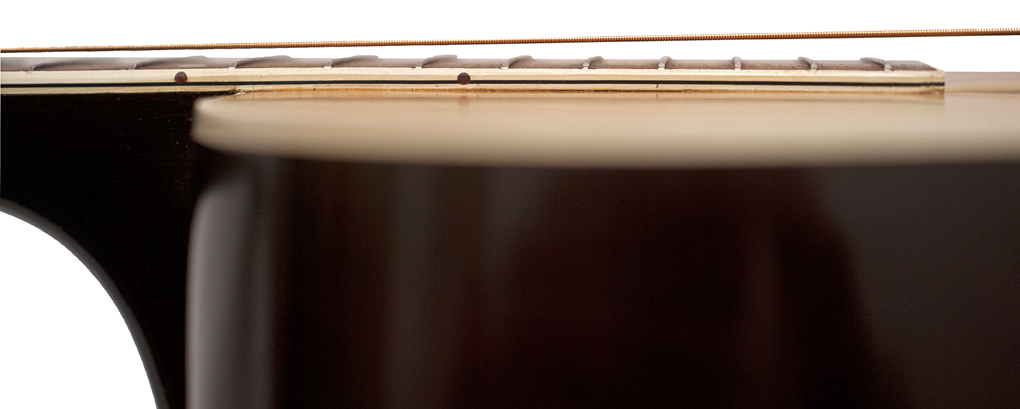
The fretboard is bound with the binding seen on a Nick Lucas. In place of the light mahogany finish of the Trujo A you will find the extremely dark back finish of the rosewood Trujo B.
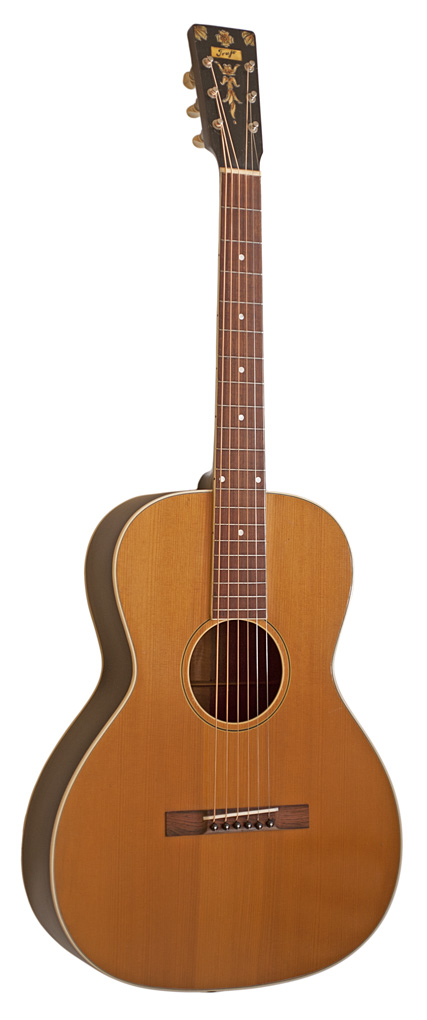
The flat headstock of the Style A has the more intricate design of the Trujo B.
This Trujo A has a fingerboard bound in the manner of fingerboards on the Nick Lucas, the L-2, and other high end Gibsons of the period, with red dots placed precisely at the high side of the horizontal line dividing the sides of the fingerboard.
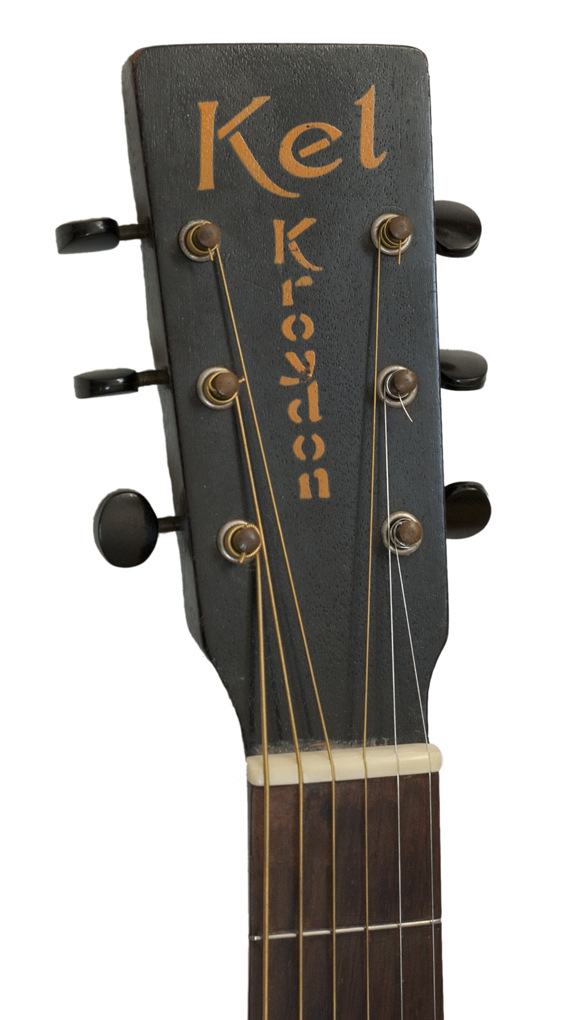
Gibson Kel Kroydon Guitar
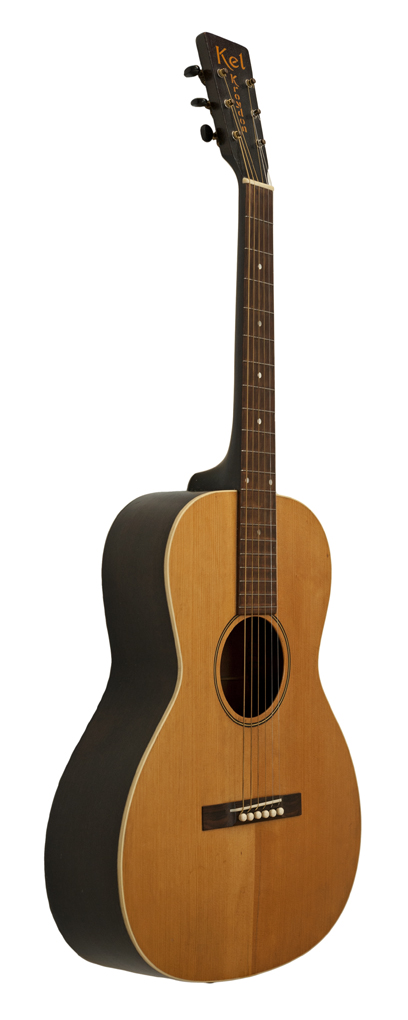
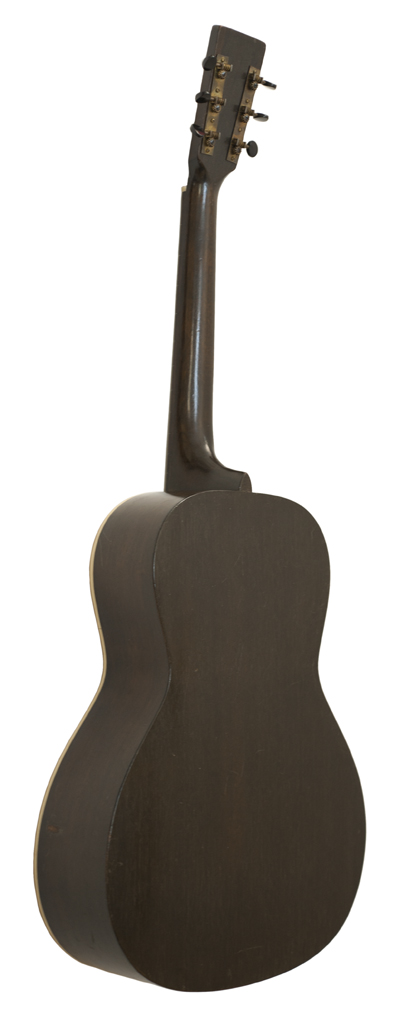
A similar guitar to the Trujo was built as the Kel Kroydon, a house brand similar to Kalamazoo.
The Kel Kroydon is often seen with a design stenciled on the top.
The Kel Kroydon name, the origin of which is not known, was later used for wooden toys produced by Gibson during the war years.
FON 9496 and 9819
Gibson L-2 and L-2 Tenor Guitar
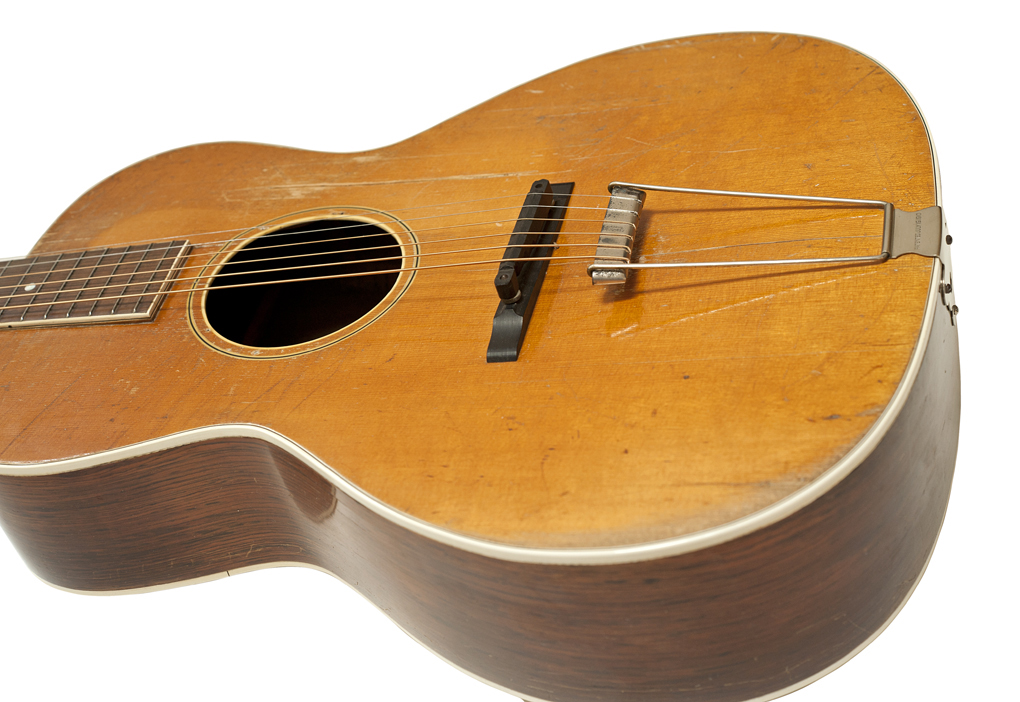
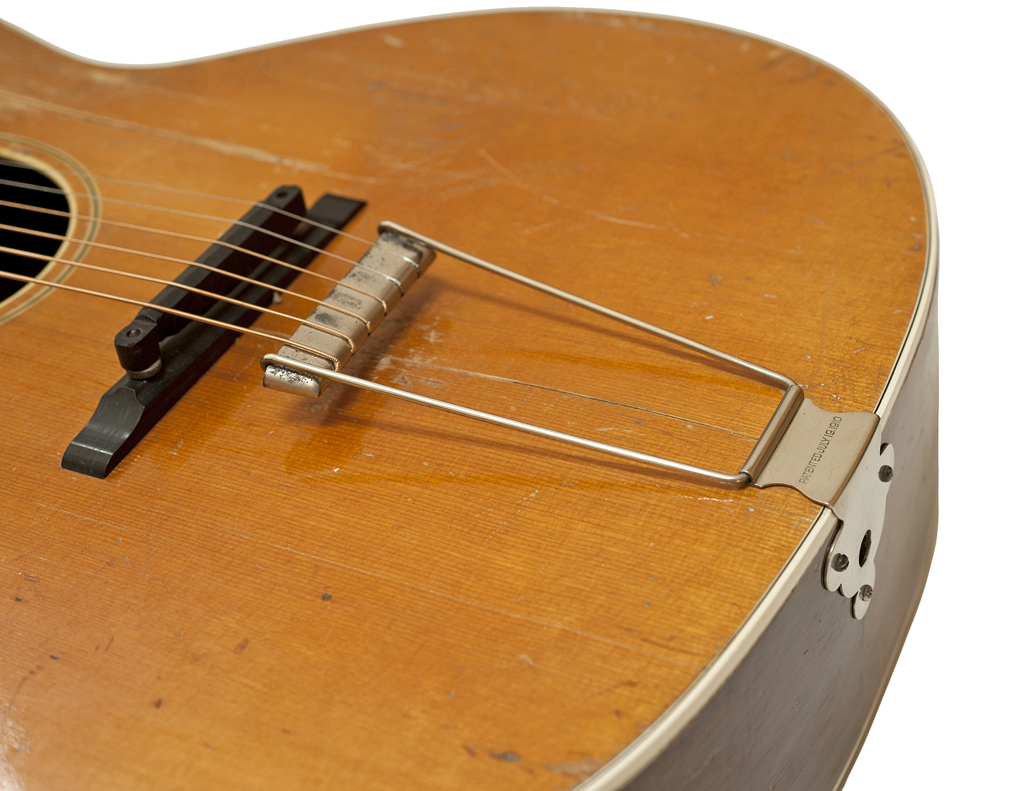
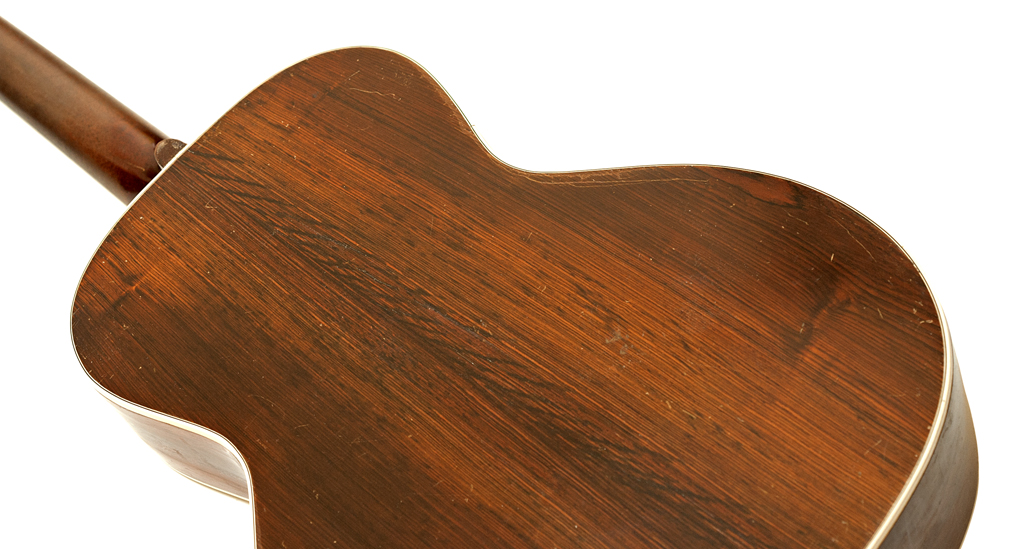
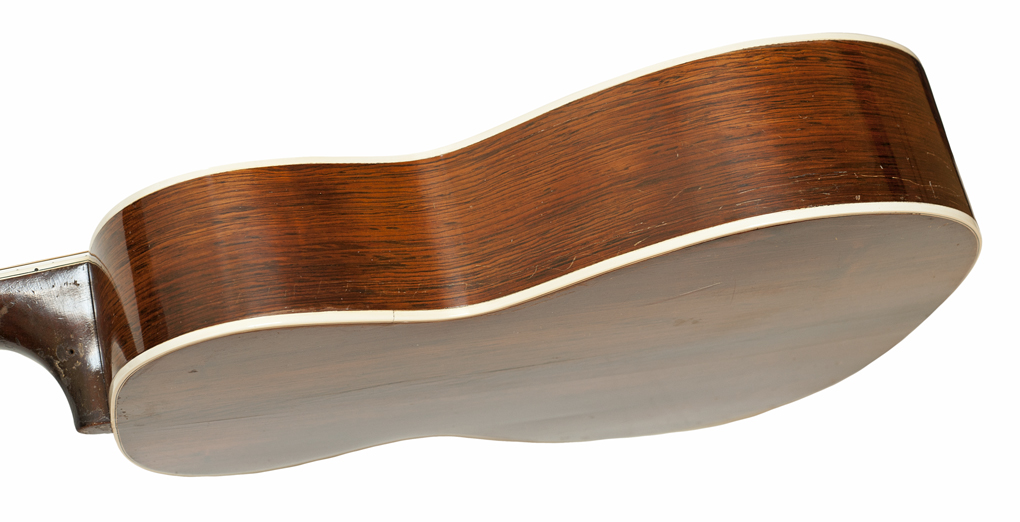
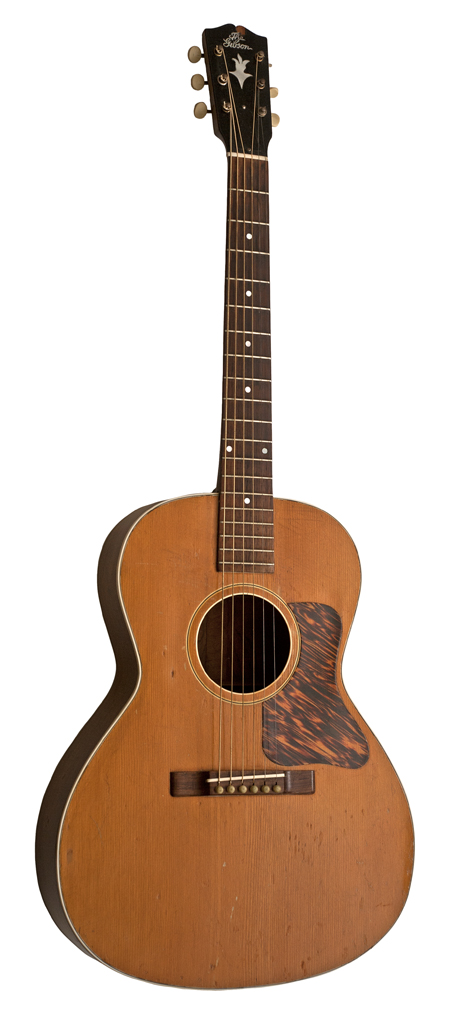
The Gibson L-2 changed several times in the transition from the 1920's to the 1930's, from small 13 1/2" to large 14 3/4" wide body, from 12 frets to 13, to 14, mahogany to rosewood and back, from pin bridge to trapeze tailpiece and back, from raised to large glued pickguard, and from natural top to Argentine Grey with Gold Sparkle border and back.
While Gibson made relatively few rosewood guitars, it's long been assumed that those vintage rosewood Gibsons were built with Brazilian rosewood. It's recently been discovered, however, that even rare and expensive rosewood Gibsons such as the Advanced Jumbo built from 1935 on were built with Amazon or East Indian rosewood.
While most earlier small body rosewood Gibsons, such as the rosewood L-2 and Nick Lucas Special, were built with Brazilian rosewood, some transitional guitars were built with an Amazon or East Indian rosewood back and Brazilian rosewood sides.
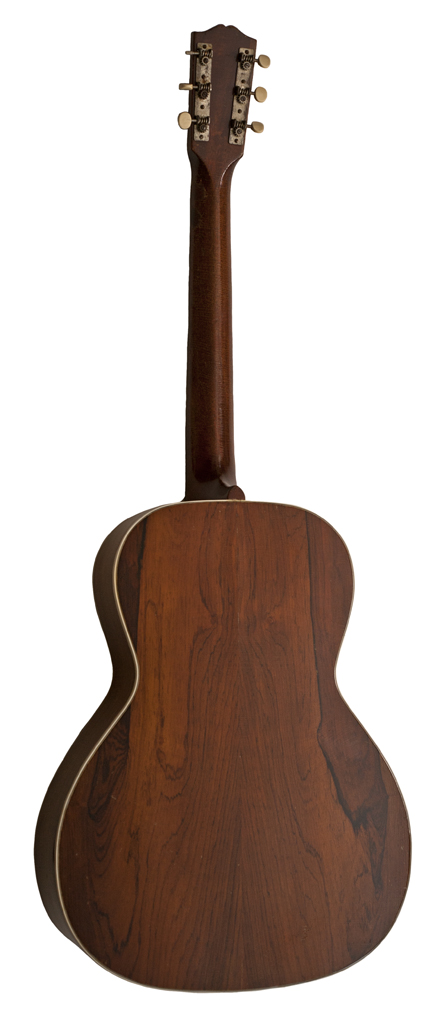
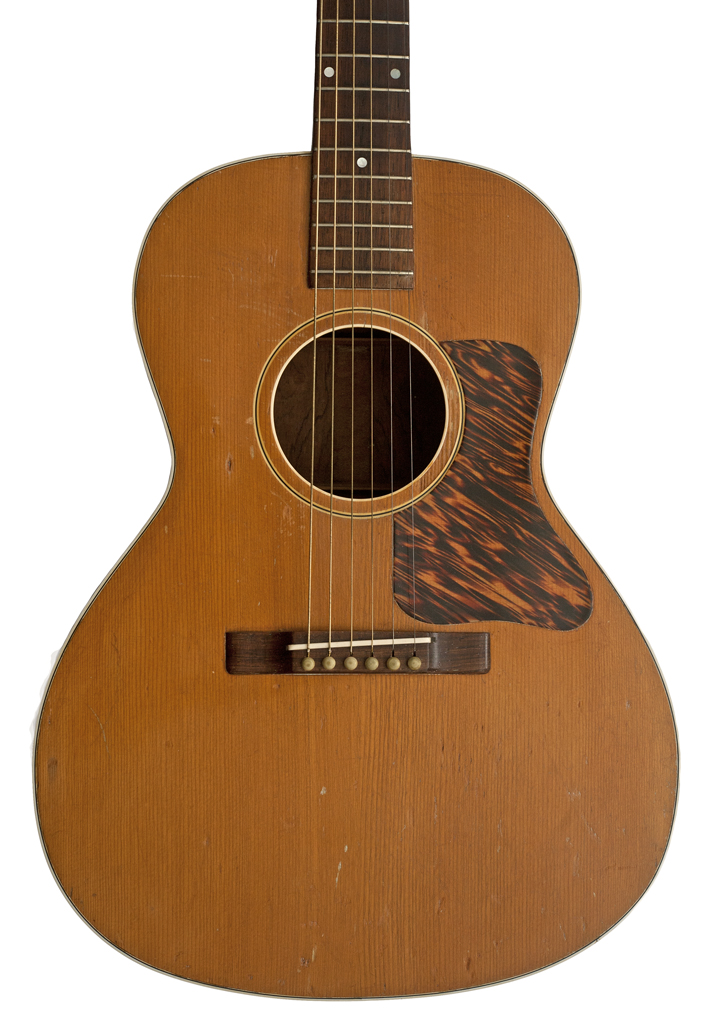
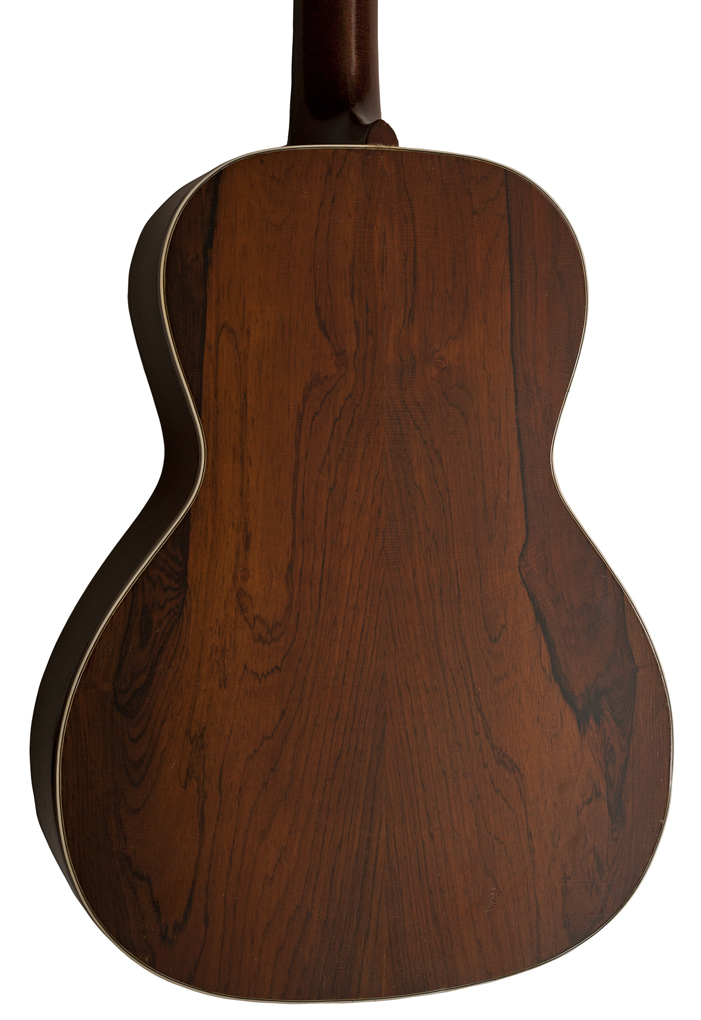
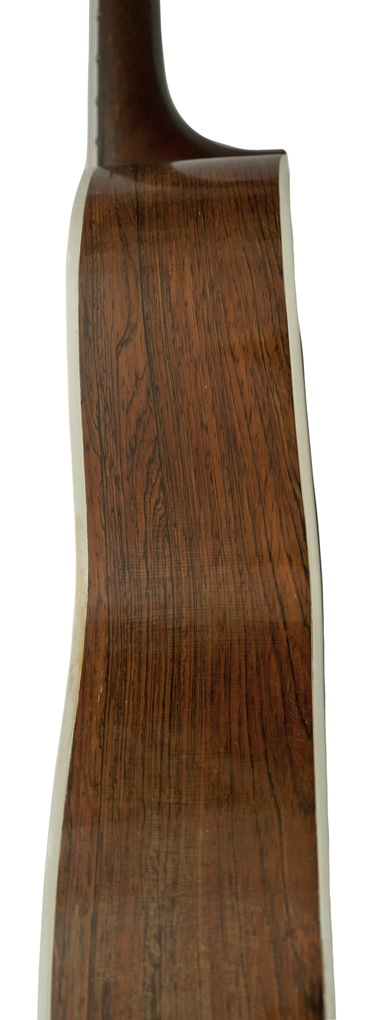
While this 1931 and 1932 L-2 are each made from Brazilian Rosewood, this 1931 L-2 Tenor is a surprisingly early example to have the transitional mix of Amazon or possibly East Indian rosewood back with Brazilian rosewood sides.
Gibson 1931 L-2 FON 119
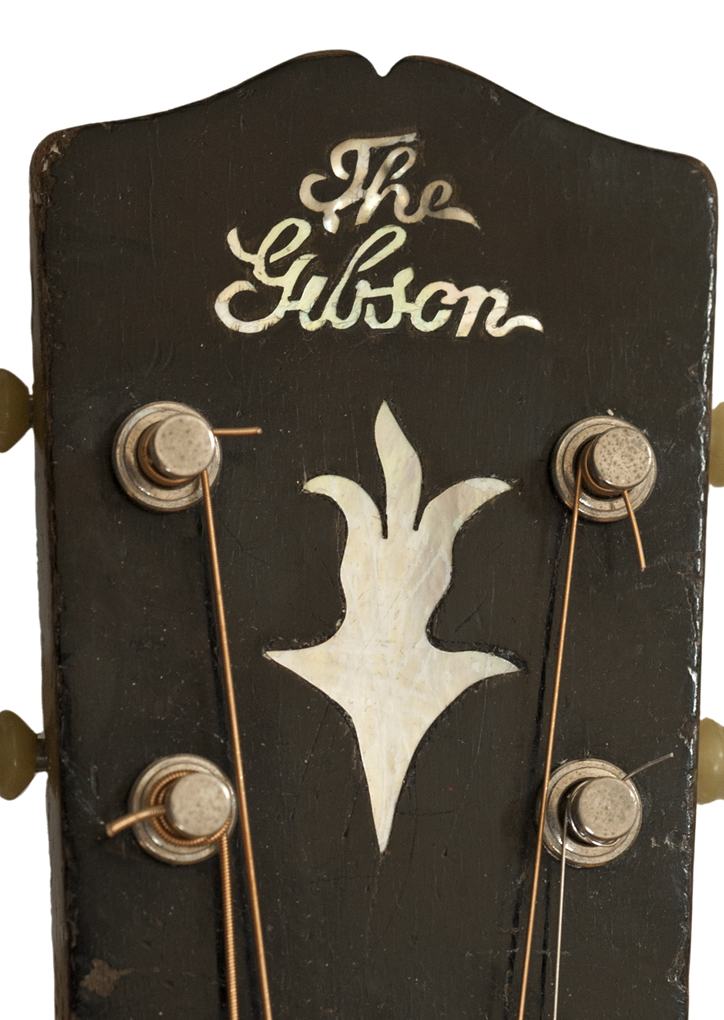
Gibson 1932 L-2 Guitar
After producing a mahogany back and sides L-2 with 12 frets and Argentine Grey Sunburst finish, Gibson returned to a beautiful Brazilian rosewood L-2 for a natural top 14 fret pin bridge version in 1932.
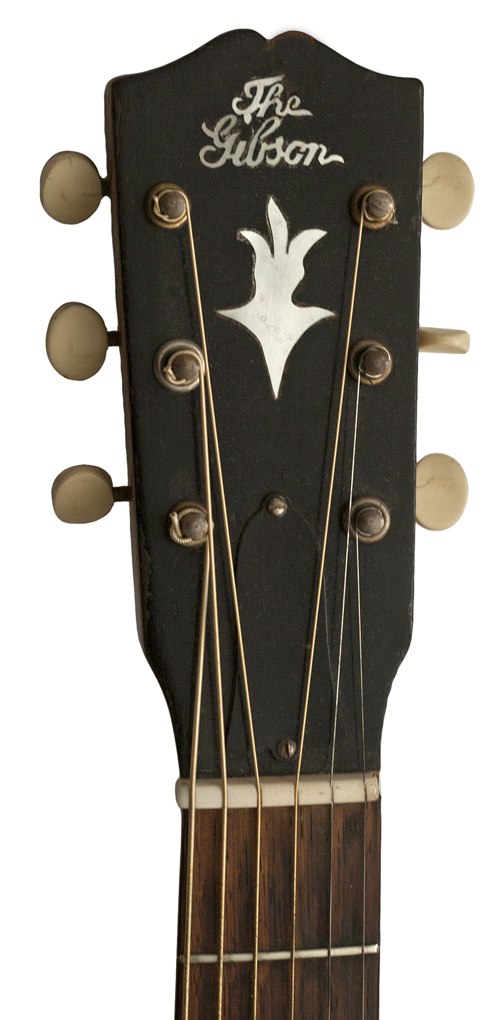
Gibson L-2 Tenor FON 595
Tenor guitars are typically tuned in fifths, usually CGDA, similar to the tenor banjo or the viola, and the same intervals as a mandolin or fiddle, but starting a fifth lower.
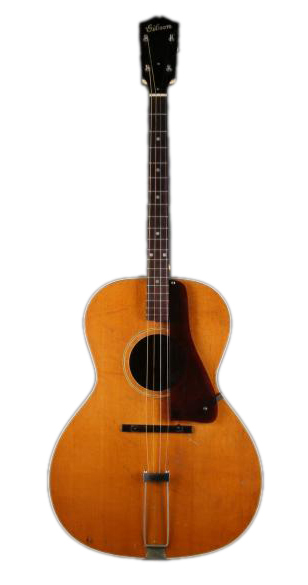
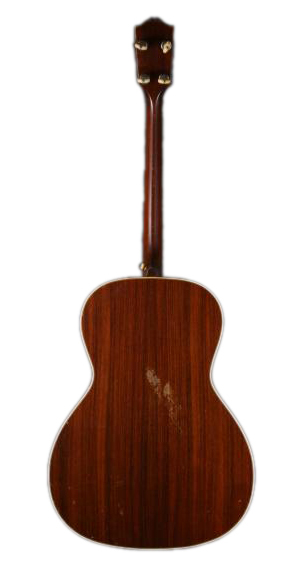
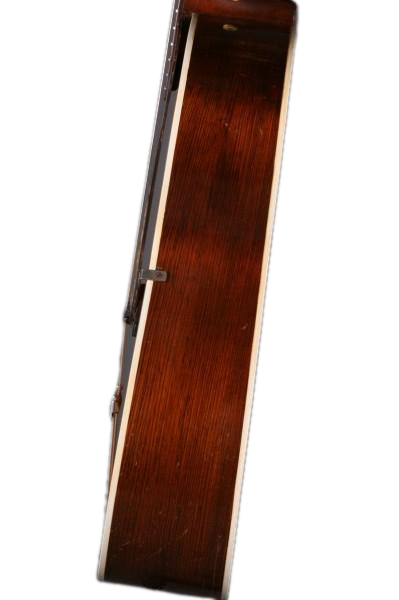
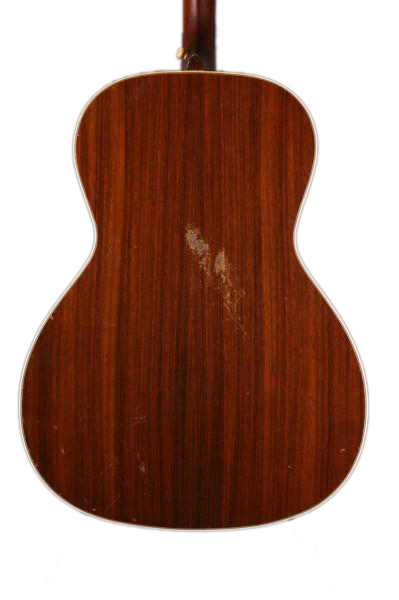
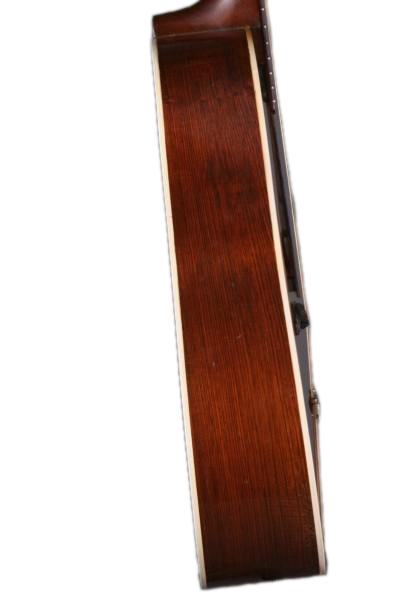
Gibson "Century" L-C Guitar
The Gibson L-C "Century" Model, with it's space age plastic "mother of toilet seat" fretboard, was built for the 1933 Century of Progress Exposition in Chicago.
1934 Gibson Century FON 889
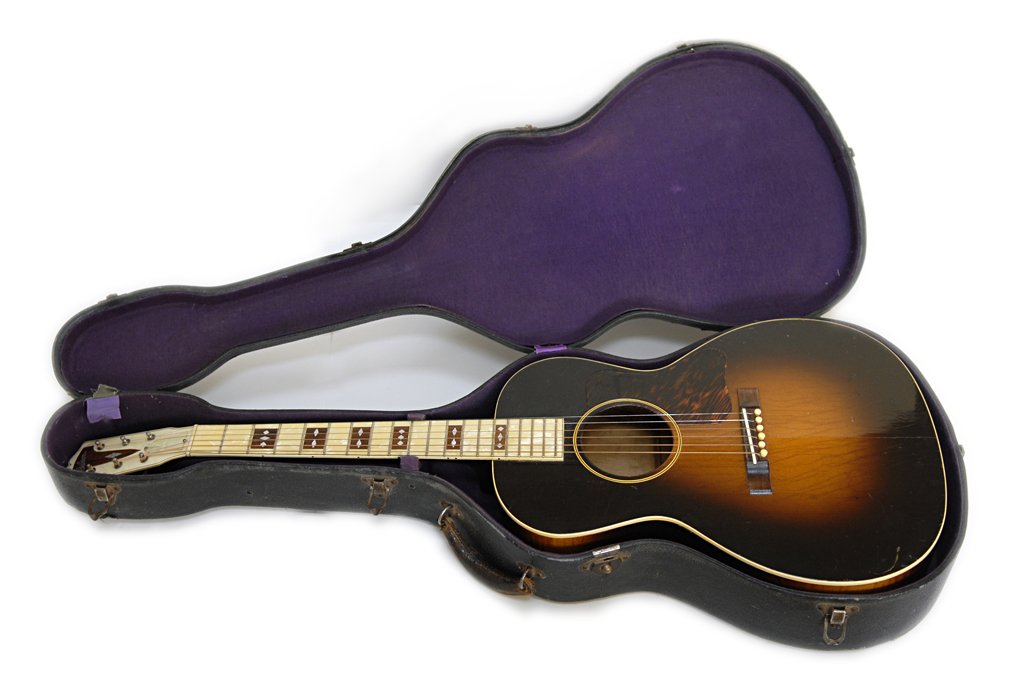
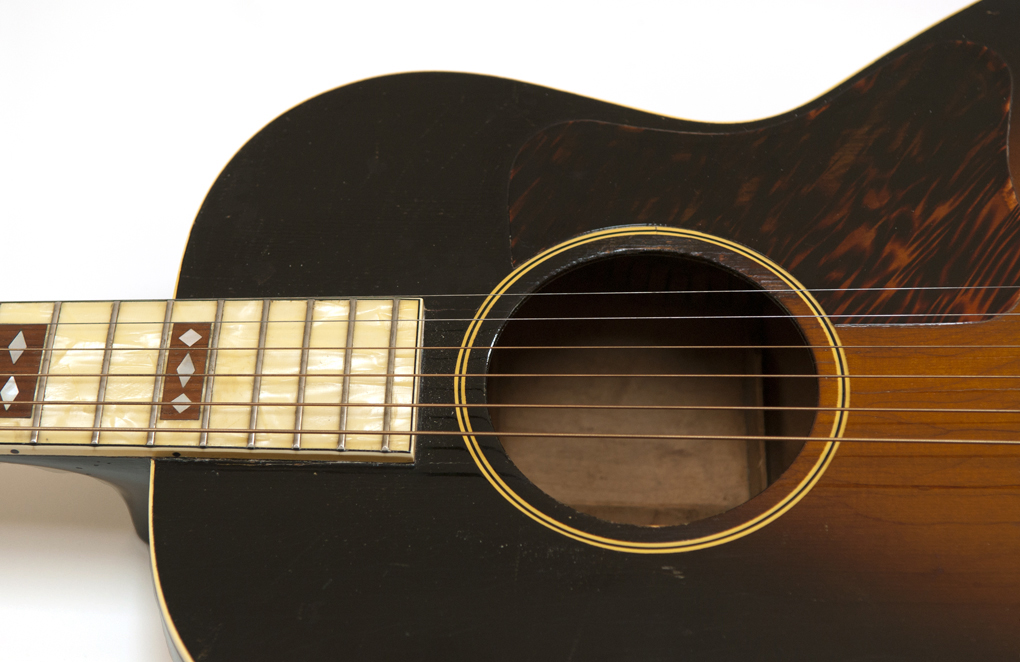
Gibson Jumbo Guitars
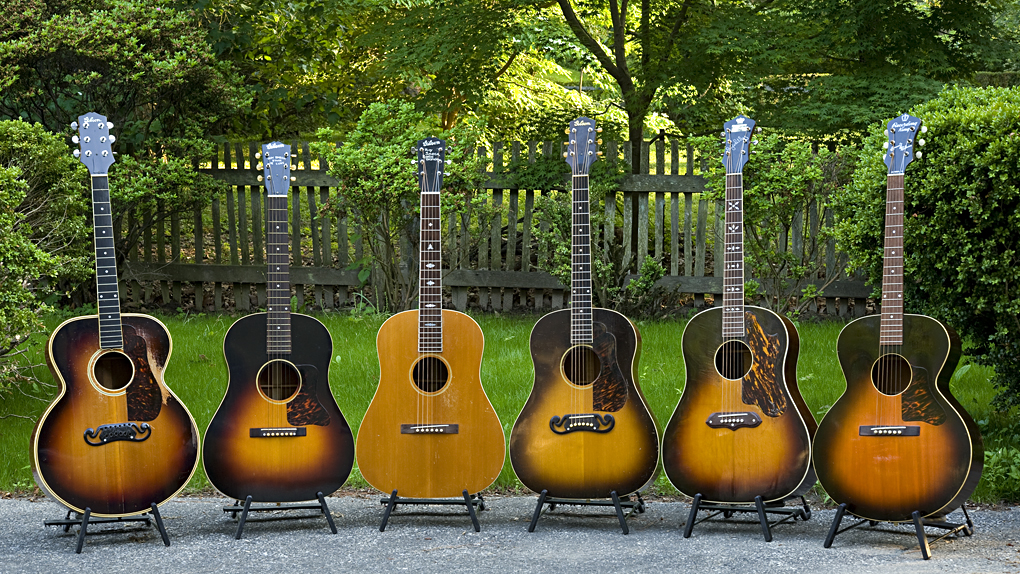
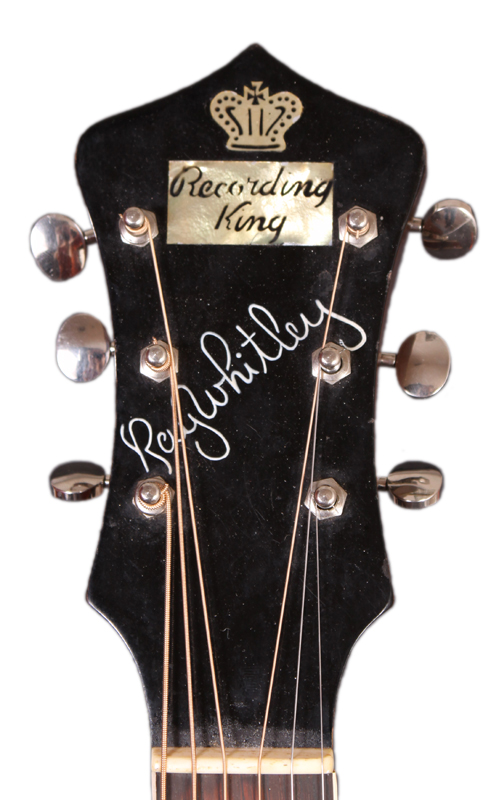
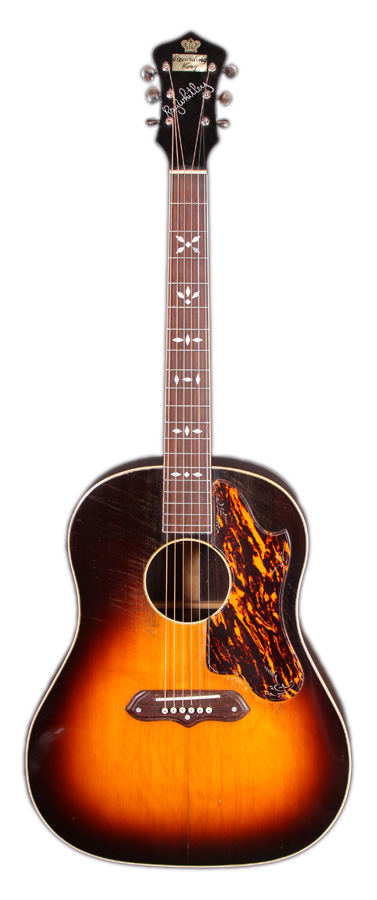
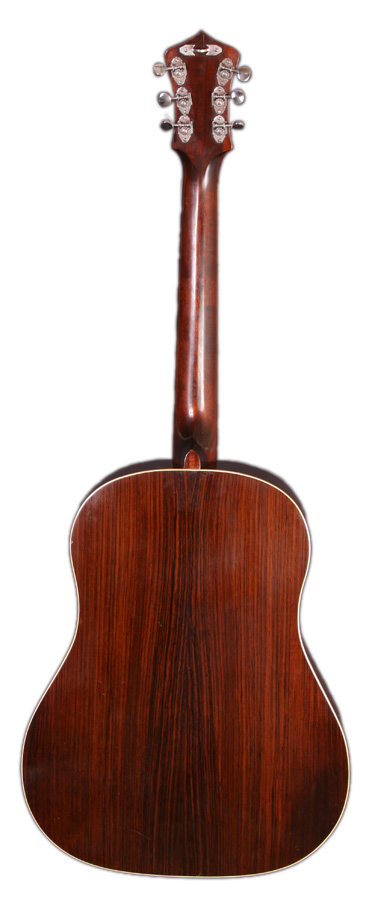
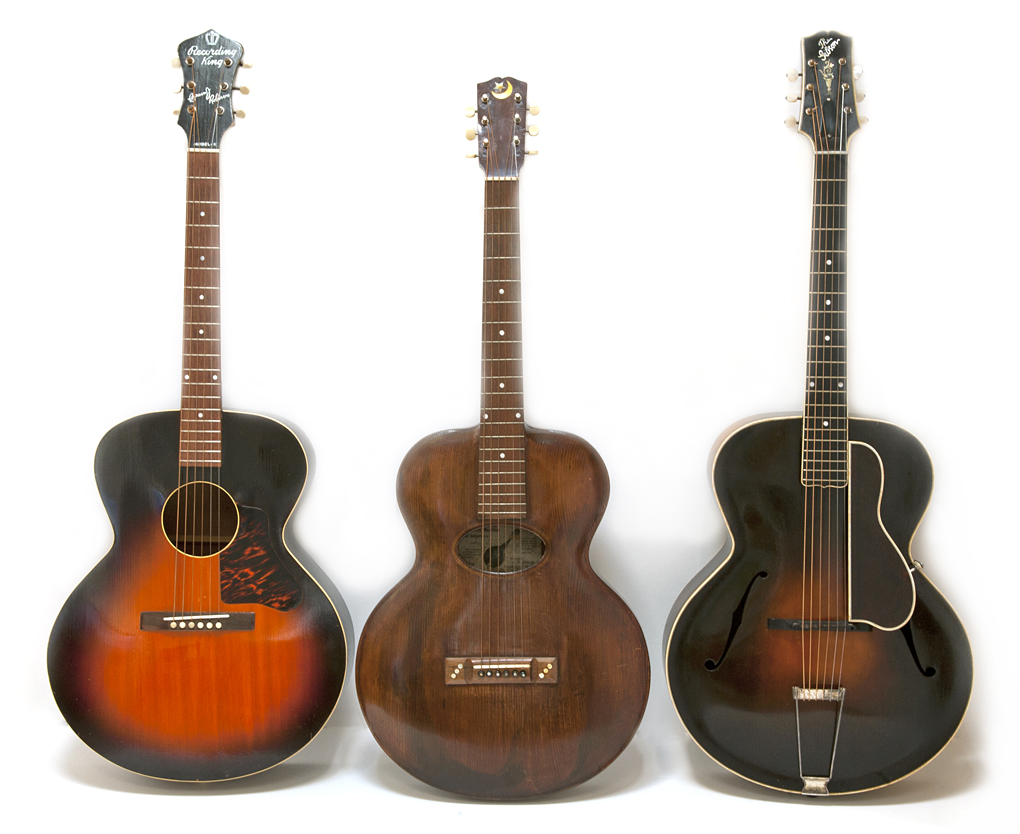
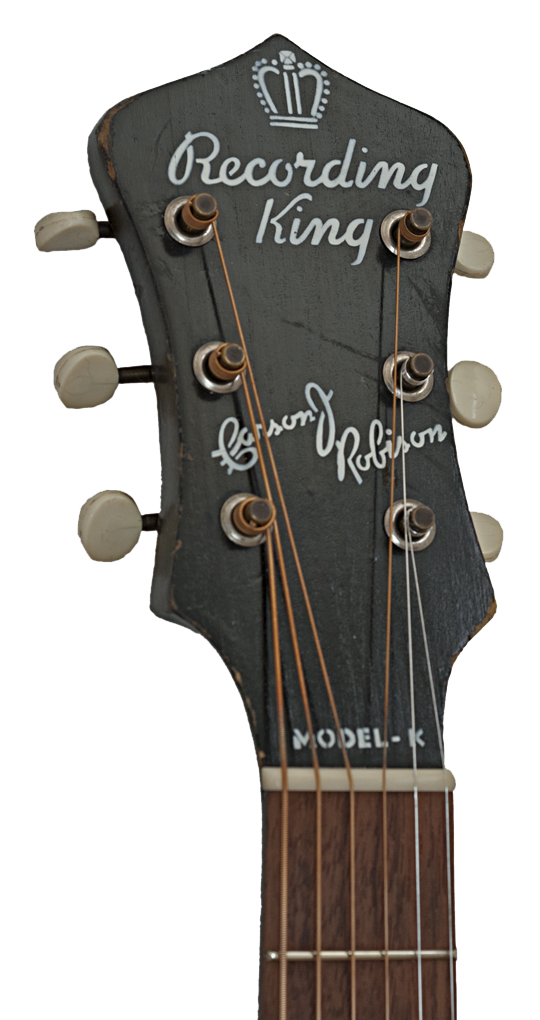
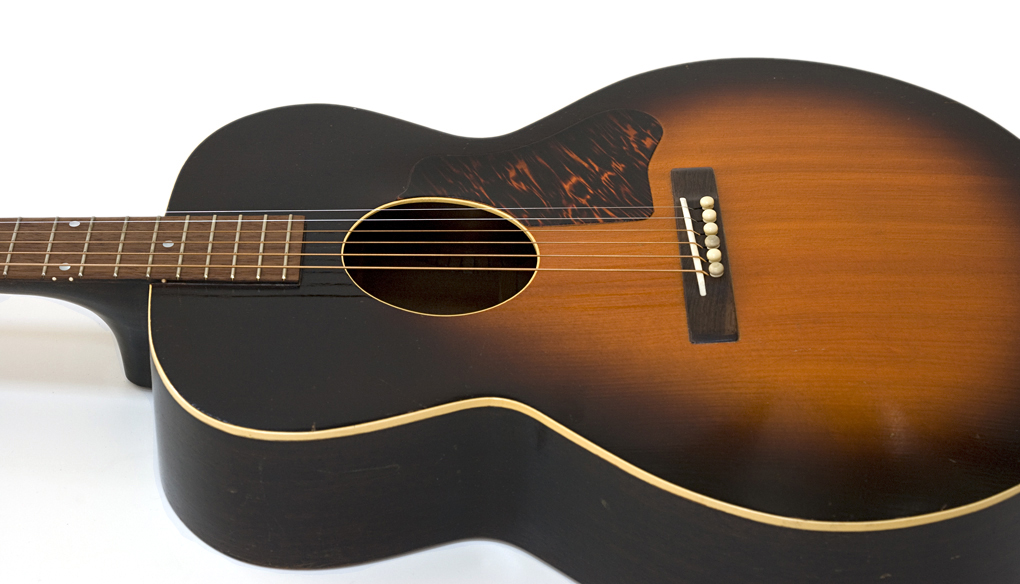
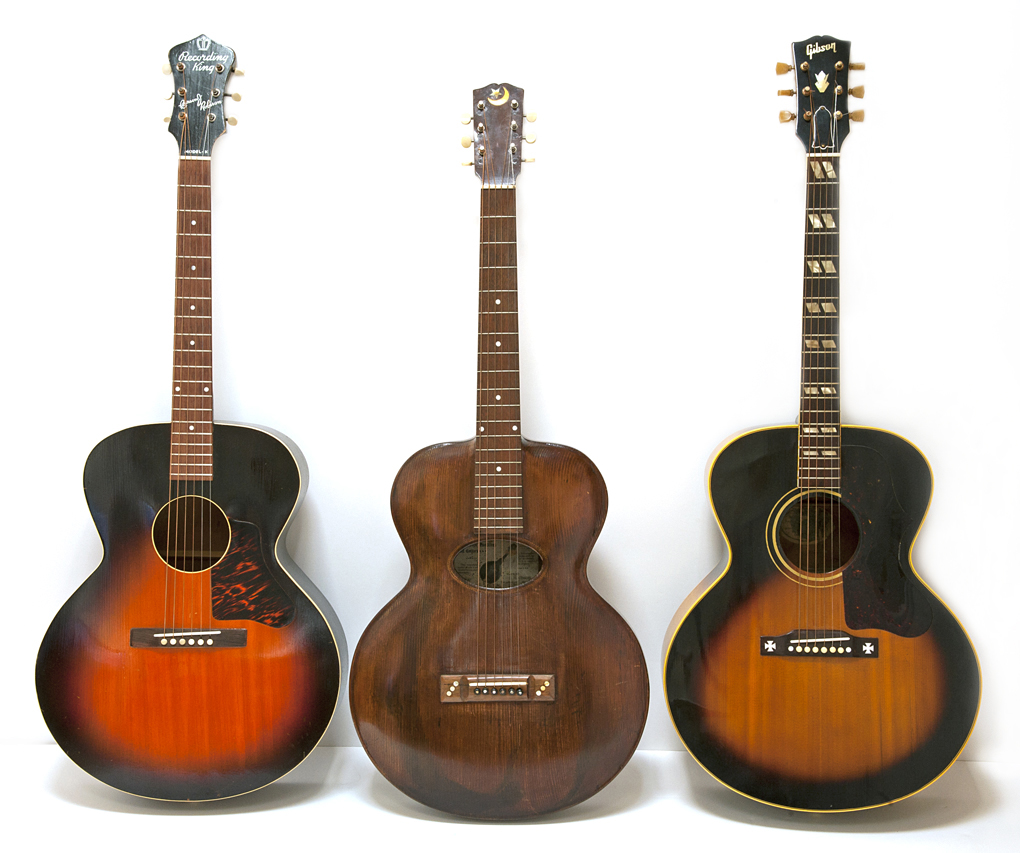
1940 J-100, 1940 Roy Smeck Stage Deluxe, 1934 Roy Smeck Radio Grande, 1940 J-55, 1939 Recording King Ray Whitely, 1939 Recording King Carson Robison Jumbo
1932 Gibson HG-20, HG-22, and HG 24 Hawaiian Guitars
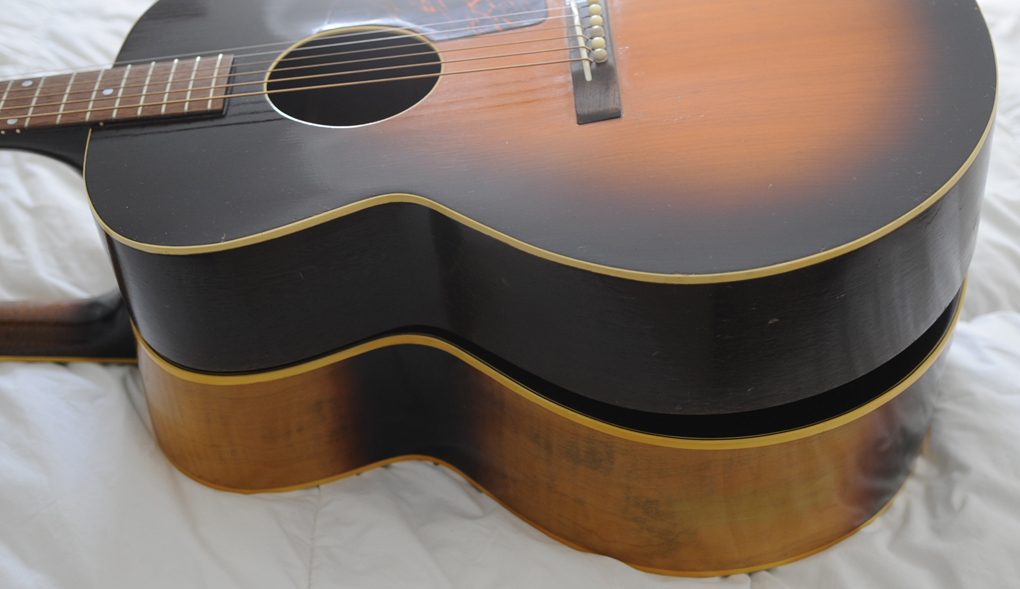
While Gibsons had previously been made available with nut adjusters for Hawaiian playing, the first Gibson guitars intended specifically for playing in the Hawaiian style were the dual chambered HG-20, HG-22, and HG-24, unique feats of engineering with an inner baffle, in essence a second set of sides set 1 1/2" inside of the outer sides, attached to the top of the guitar, but ending one inch above the back of the guitar, creating the greater volume of a National or Dobro resonator guitar while breaking up unpleasant lower frequency overtones. The HG has a 3 1/4" round soundhole in the normal position and four "F" holes, two smaller 3" "F" holes on the upper bout, and two larger 6 3/8" "F" holes on the lower bout, located above the outer chambers between the two sets of side walls.
The HG-24 was Gibson's first full size 16" Jumbo 14 fret Dreadnaught guitar, first appearing by 1932, well before the six string Gibson Jumbos and Martin's 14 fret Dreadnaughts, made with Brazilian rosewood back and sides, and selling for a huge $160 when a Martin OM-28 cost $85. The HG-24 has mahogany baffles, a sunburst top finish, three ply binding on the top and back, three-ply bound fingerboard with large pearloid block inlays, a pearl script Gibson logo and fleu-de-lis on the peghead, and clipped end Grover tuners with scalloped buttons.
The HG-20 and 22 have a smaller 14 1/4" wide waisted Dreadnaught shaped body with laminated backs and sides made from maple, with maple baffles, dot fingerboard inlays, and a white painted Gibson logo, the 22 with a lighter suburst finish with white single ply binding on the top and back, a tortoise Celluloid pickguard, and three on a nickel plate tuners with Ivoroid buttons, selling for $80, and the economy HG-20 with a dark brown top finish without sunburst, dark stained back and sides, white binding on the top only, and three on a brass plate tuners with black buttons, selling for $45.50. While the HG-20 and 22 have raised fingerboard extensions, the HG-24 does not. I've also seen the HG-20 with a plain white pickguard. The 20 and 22 sometimes have backs and sides made from local Northern Michigan beech.
Unlike later Gibson Hawaiians, these guitars have rather narrow necks, with a 1 5/8" nut on the HG-22 and HG-24, a 1 3/4" nut on the HG-20, and standard frets.
While sometimes said to date from 1929, the first mention in Gibson records is in late 1931 and the first FON that I know of is from 1932.
This set of guitars illustrates the progression of Gibson logos, from slanted to straight "The Gibson" logos briefly in the late 1920's, to white silkscreened "Gibson" script logos on the lower end models in the late 1920's, while the higher end models did not transition to "Gibson" until 1933 or 1934.
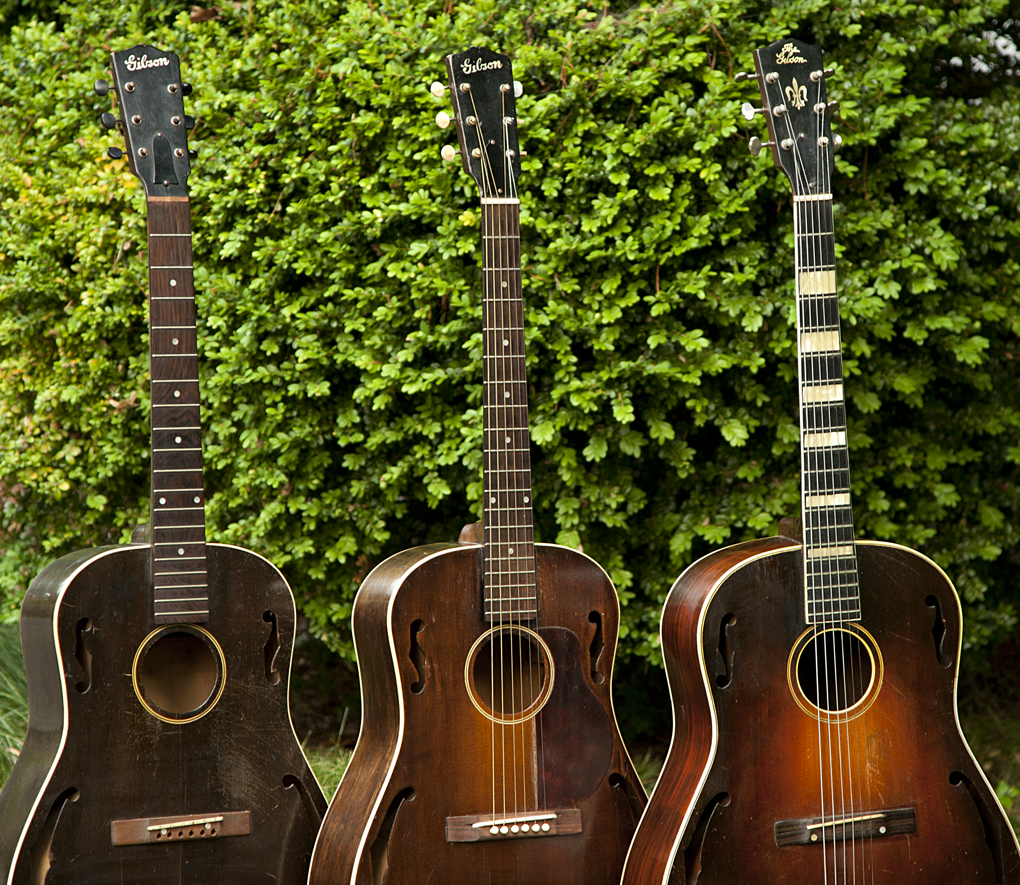
1932 HG-20 FON 302, HG-22 FON 283, and HG-24 with no number.
Gibson Roy Smeck Radio Grande and Stage Deluxe Hawaiian Guitars
The early Gibson Hawaiian HG guitars were followed by the Roy Smeck, a Jumbo 12 fret guitar built for Hawaiian Style playing in a rosewood version called the Radio Grande, and a mahogany version called the Stage Deluxe. These were Gibson's first high strung Hawaiian guitars, with round but large necks, high nuts and straight saddles, and flush Ivoroid fret markers in the place of frets.
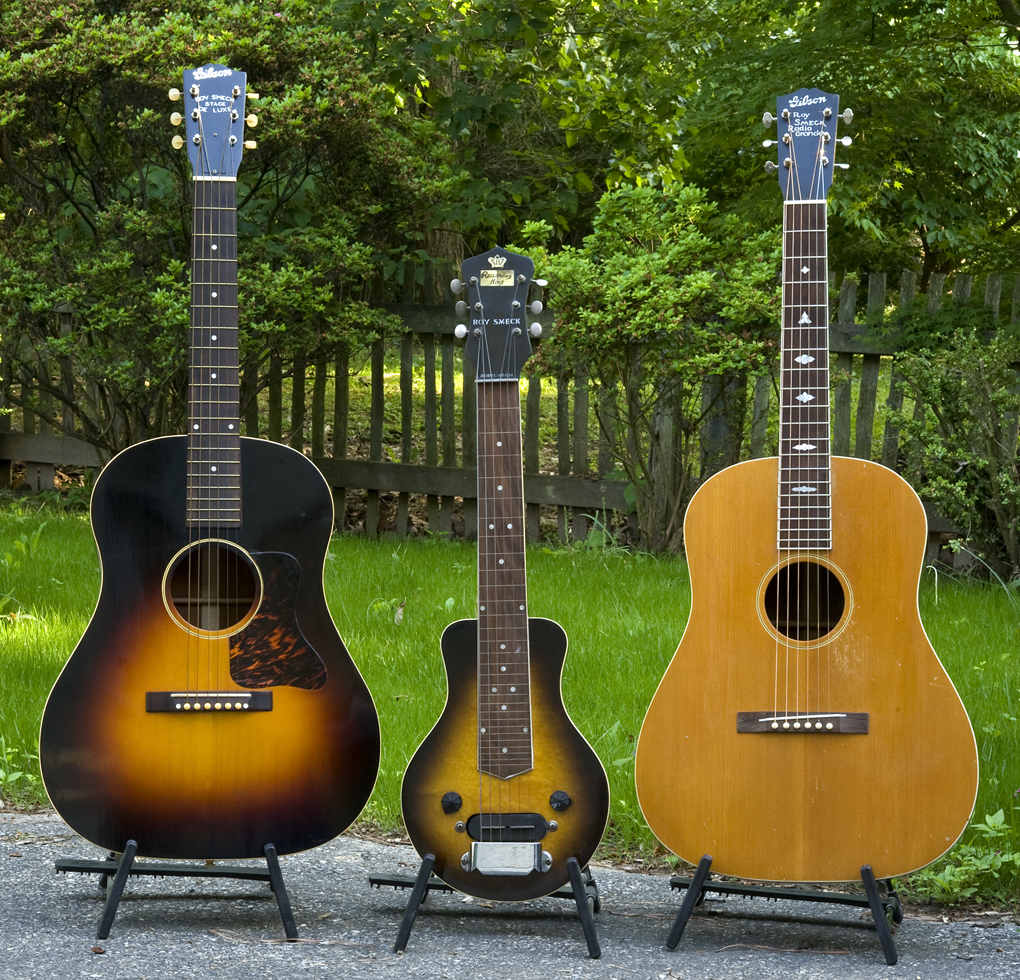
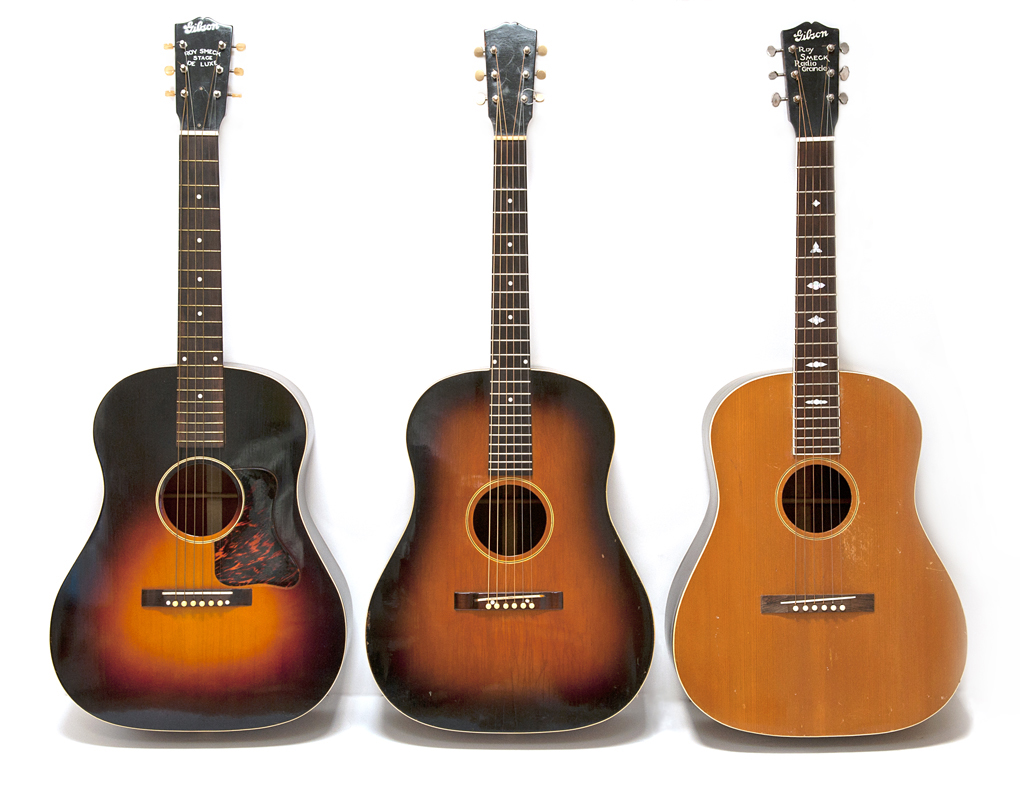
1940 Roy Smeck Stage Deluxe #FG2804, 1940 Recording King Roy Smeck Lap Steel #FWE727, 1934 Roy Smeck Radio Grande #888
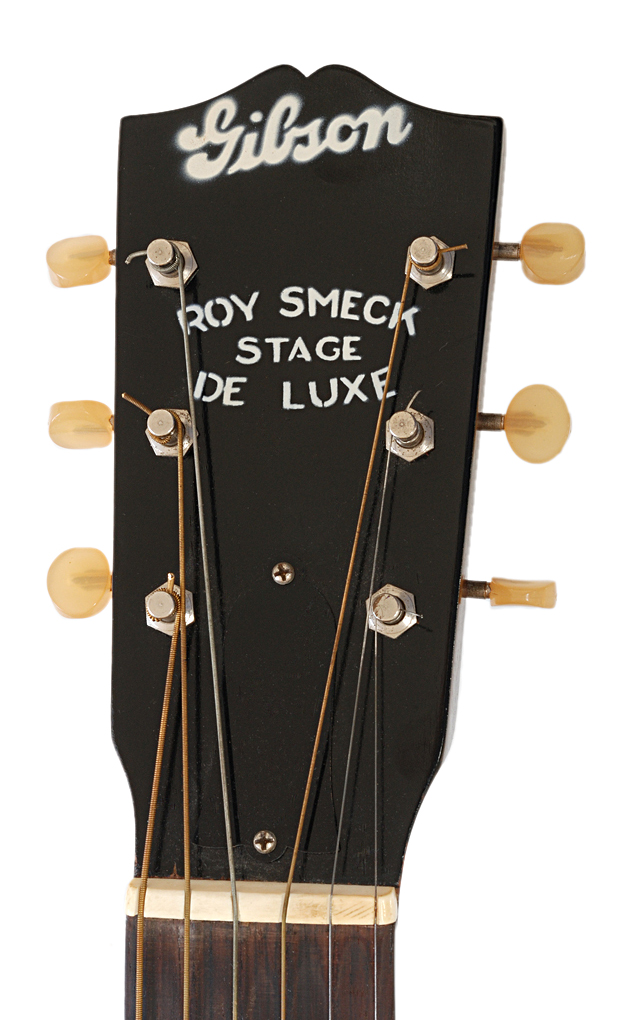
1940 Roy Smeck Stage Deluxe
` ` ` ` ` ` ` ` ` ` ` ` ` ` ` `
16" Round-shouldered Dreadnaught body
24 3/4" Scale
Straight, red spruce "Adirondack" top.
Sunburst finish.
Book matched mahogany rosewood back and sides.
Large "firestripe" pickguard.
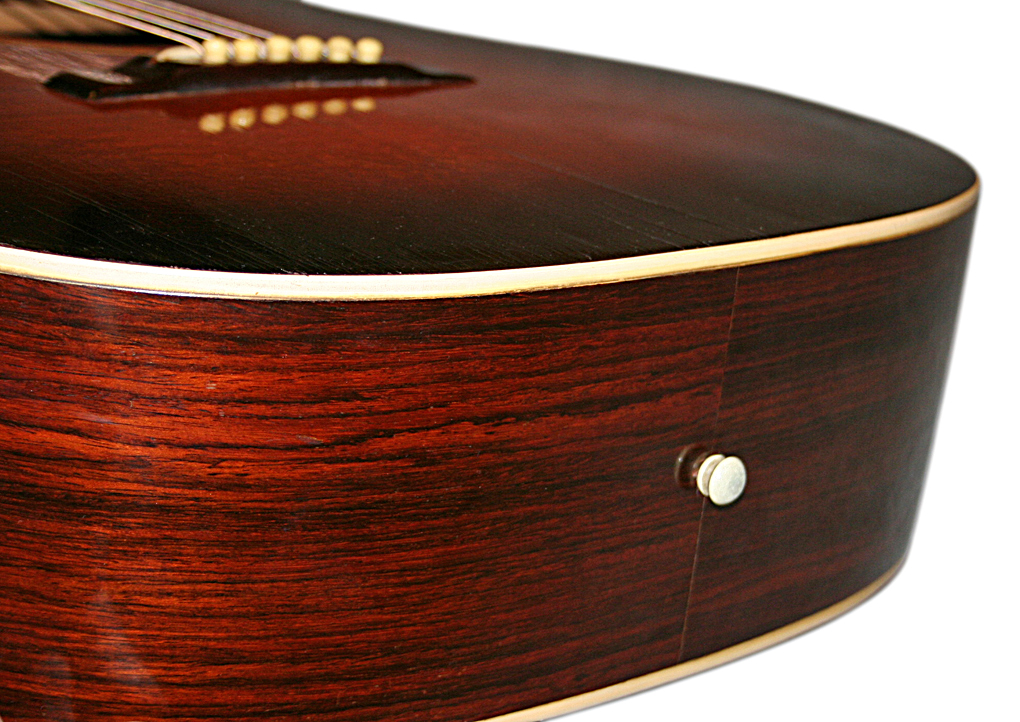
Rectangular bridge with dots on either side of bridge pins.
Silkscreened "Gibson" Script logo with silkscreened "Roy Smeck Stage Deluxe".
Dot inlays.
12 frets clear of body.
Narrow neck heel.
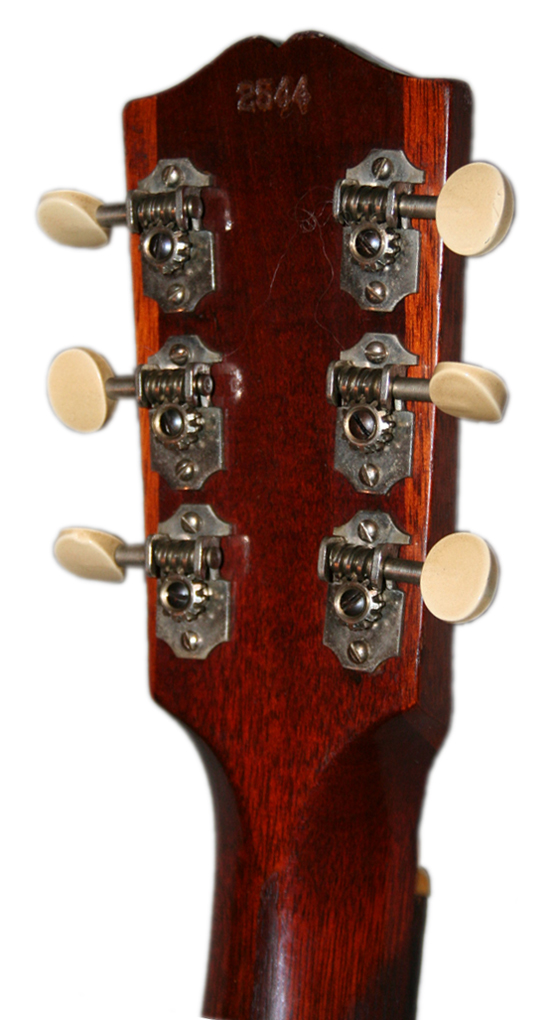
Pre-war individual Kluson tuners with translucent buttons.
` ` ` ` ` ` ` ` ` ` ` ` ` ` ` `
4 lbs. 1.6 oz.
` ` ` ` ` ` ` ` ` ` ` ` ` `
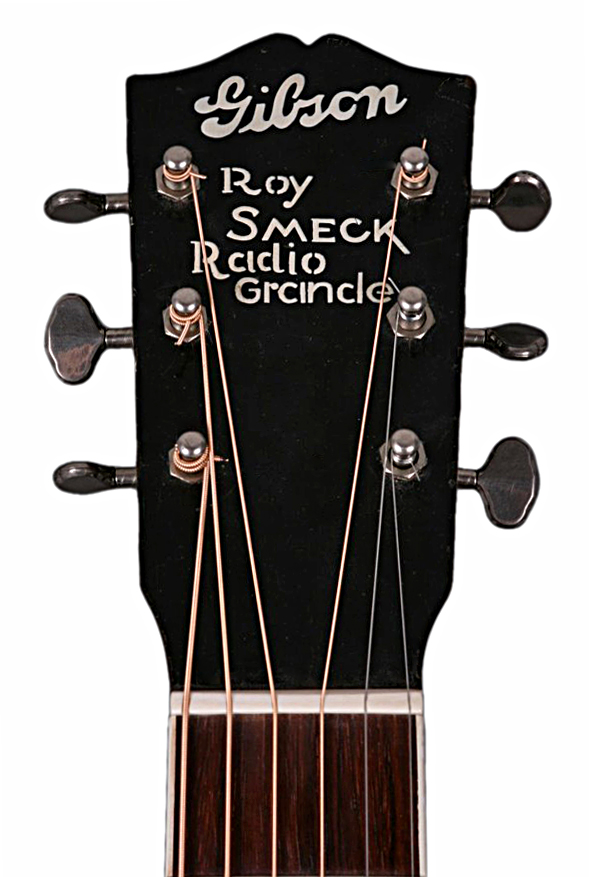
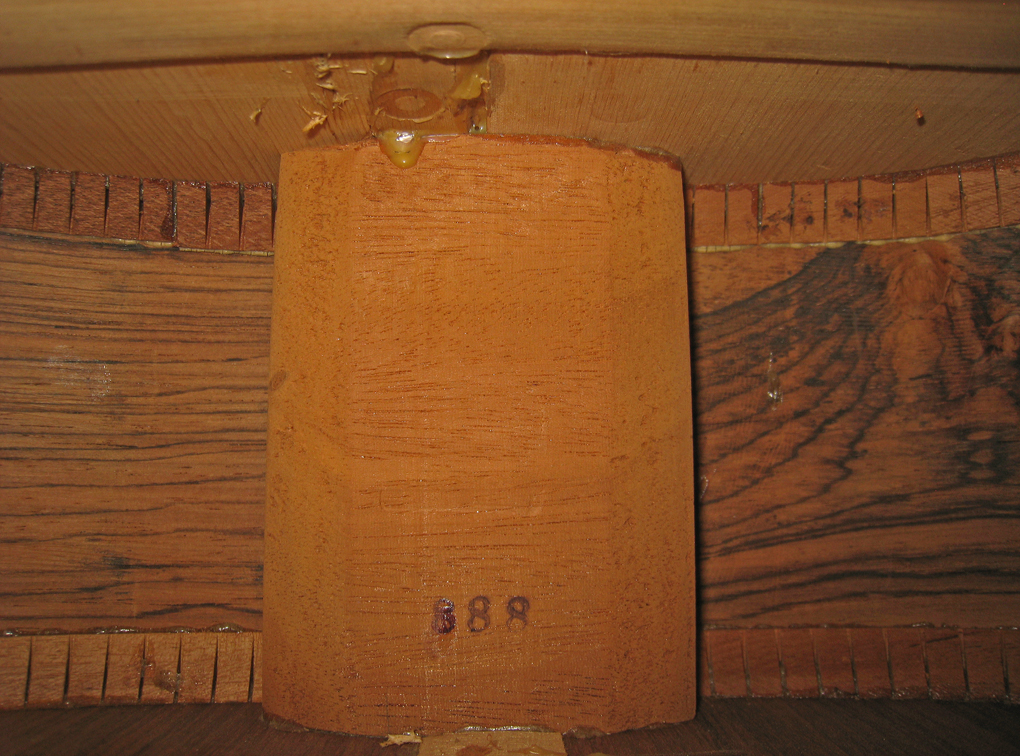
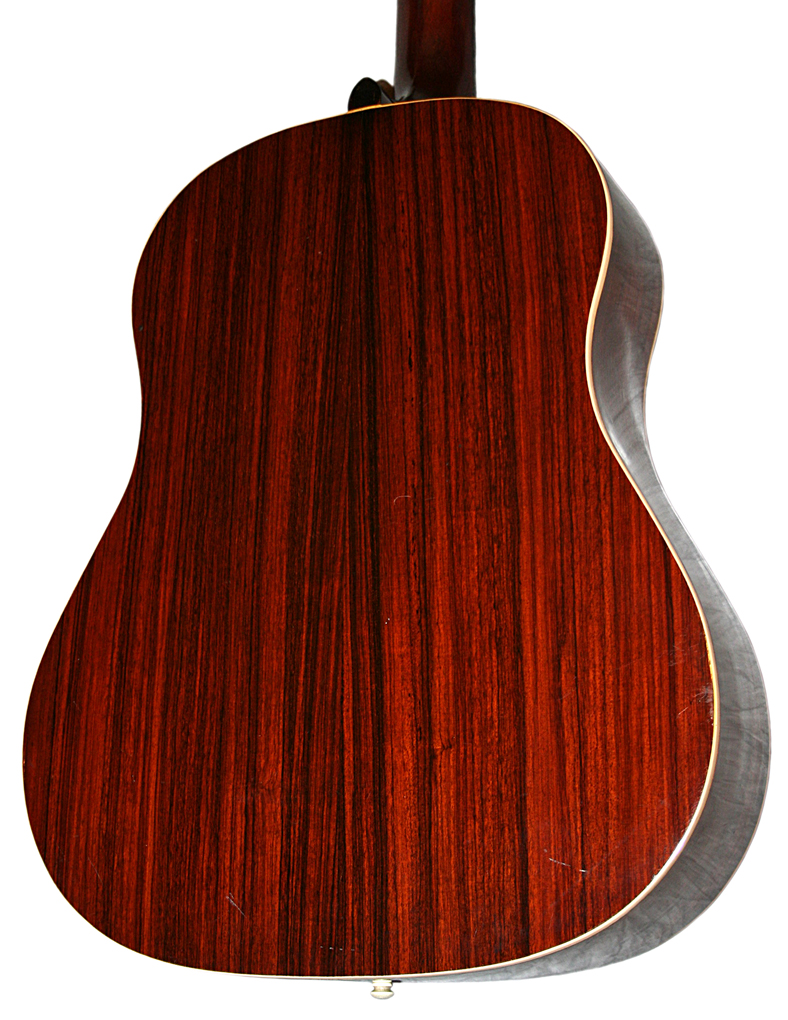
This first year of production Radio Grande, built in 1934, is one of the small handful of Jumbo Gibsons built with Brazilian rosewood, before Gibson made the change to Amazon rosewood the following year.
This example has been converted for Spanish style playing. With it's huge 12 fret body, it is thunderously loud. The neck is round, not square, but with a pronounced "V" shape, and quite large at 2 1/4" wide.
1934 Roy Smeck Radio Grande
` ` ` ` ` ` ` ` ` ` ` ` ` ` ` `
16" Round-shouldered Dreadnaught body
24 3/4" Scale
Straight, red spruce "Adirondack" top.
Natural finish.
Book matched Brazilian rosewood back and sides.
No pickguard.
Rectangular bridge.
Silkscreened "Gibson" Script logo with silkscreened "Roy Smeck Radio Grande".
"Lucas Style" inlays.
12 frets clear of body.
Narrow neck heel.
"Clipped-end" Grover tuners with plated buttons.
` ` ` ` ` ` ` ` ` ` ` ` ` ` ` `
4 lbs. 1.8 oz.
` ` ` ` ` ` ` ` ` ` ` ` ` `
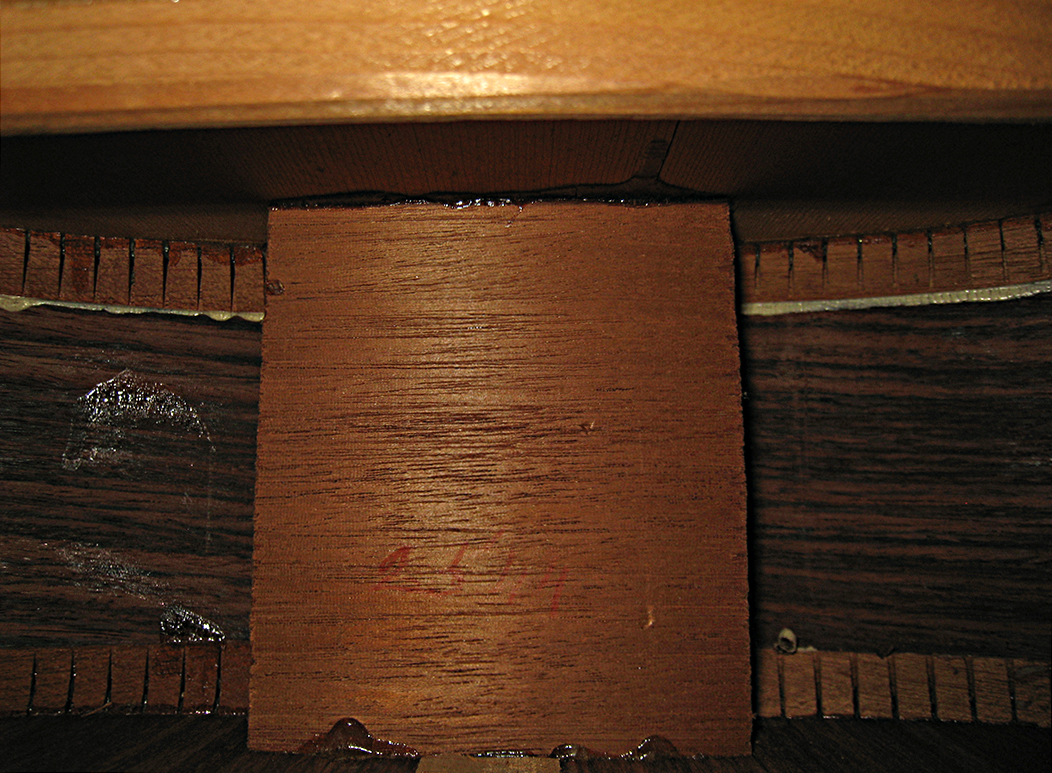
FON 888
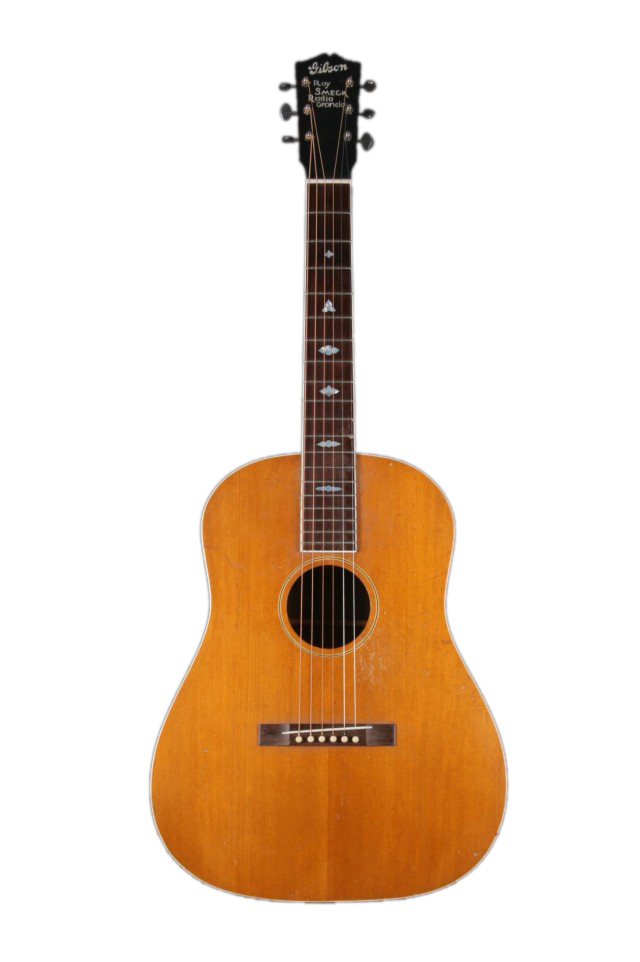
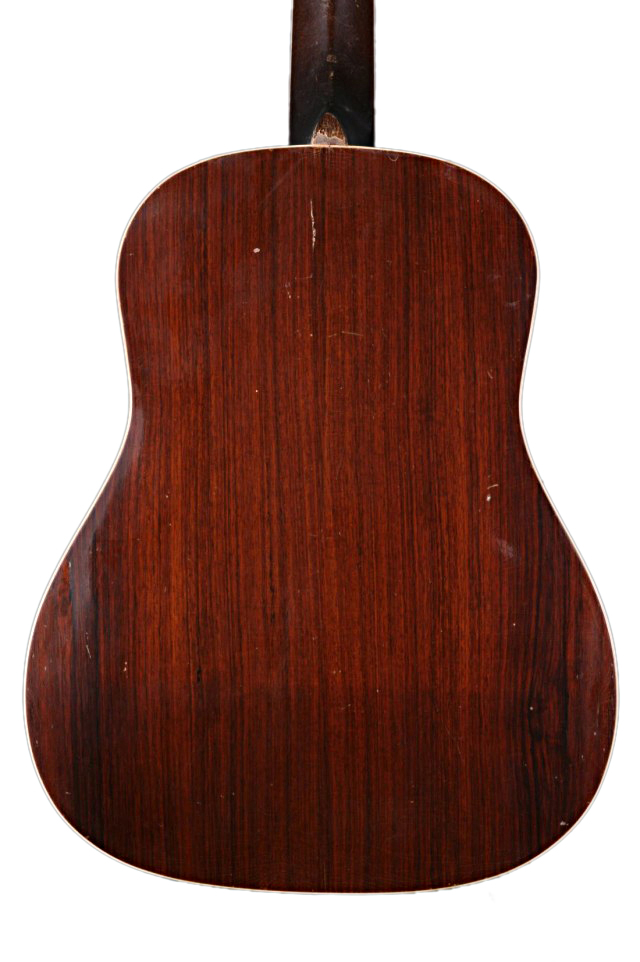
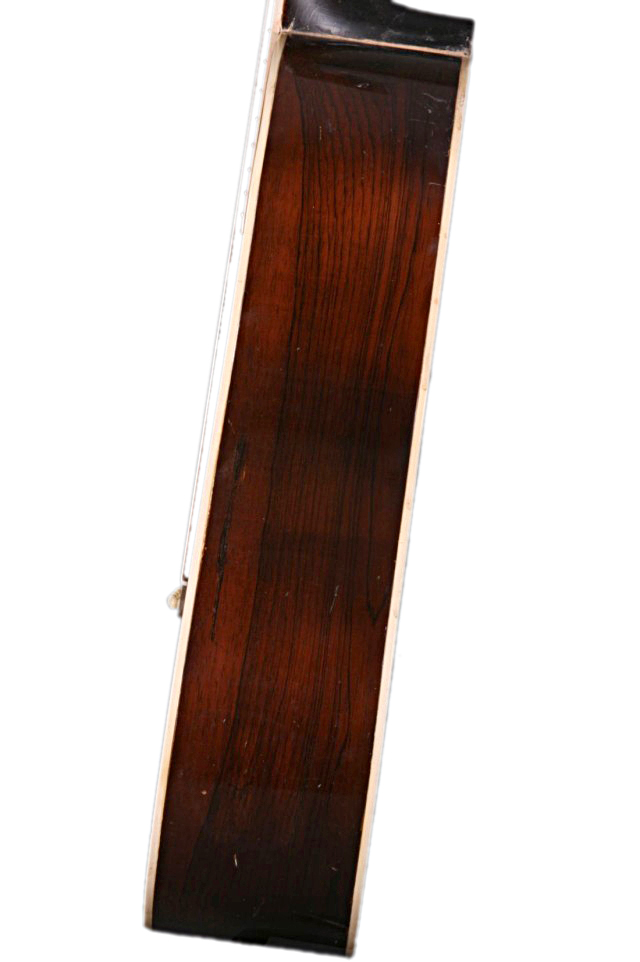
Opinions of the Radio Grande will vary. Some may not prefer the sound as a non-Hawaiian. Some are philosophically against converting the guitars for non-Hawaiian standard style playing, and I can understand that. Some will find the huge neck impossible to play as is. Preferences vary with any guitar. That's why God invented Gibsons and Martins, and even Taylors, and many models of each. Some want one of each, and some have a clear preference for only one.
Some say it's wrong to convert a Hawaiian when you can buy a guitar that was intended to do what you want it to do. Gibson didn't make many rosewood guitars, and the large ones are expensive. An original Advanced Jumbo, even with it's East Indian Rosewood, can cost $60,000 and much, much more. Personally I find my converted RG to be an astounding guitar that cannot be matched by any other guitar at any price. This example is one of the few made in the first year of production, the one year they were made of Brazilian rosewood.
The Radio Grande is a huge 12 fret dreadnaught with a huge sound. The price of a vintage Martin 12 fret Dreadnaught is astronomical, and the volume of the 12 fret Dreadnaught is huge. I'd say the volume of the Radio Grande is infinitely more. Besides being a boomer, I also find the sound quality to be wonderful. Some think it is great with a flat pick for old time/bluegrass jams. I love mine as a fingerpicking guitar. I'd say it's much smoother than other of the more boomy Gibson Jumbos, which have a tendency to be rough sounding.
Personally, I don't mind the neck as is, and wouldn't choose to alter or replace it for size and/or shape. While some conversions are involved and expensive, without re-shaping the neck the Roy Smeck conversions seem to be minimally invasive, and rather easily reversible. The neck angle is not bad as is. The flush fret markers are made of Ivoroid, not of fret wire as they are on Martins. It can be a bear to remove frets that are both metal and flush with the fingerboard.
Simply put, I don't think the sound of the Roy Smeck Radio Grande can be matched by any other guitar, but is probably most closely matched by a vintage 12 fret Dreadnaught Martin. I haven't played a bunch of the Radio Grandes to compare, but would guess they are fairly consistent. I've played converted Stage Deluxe examples against each other, and found them to have vastly different sounds.
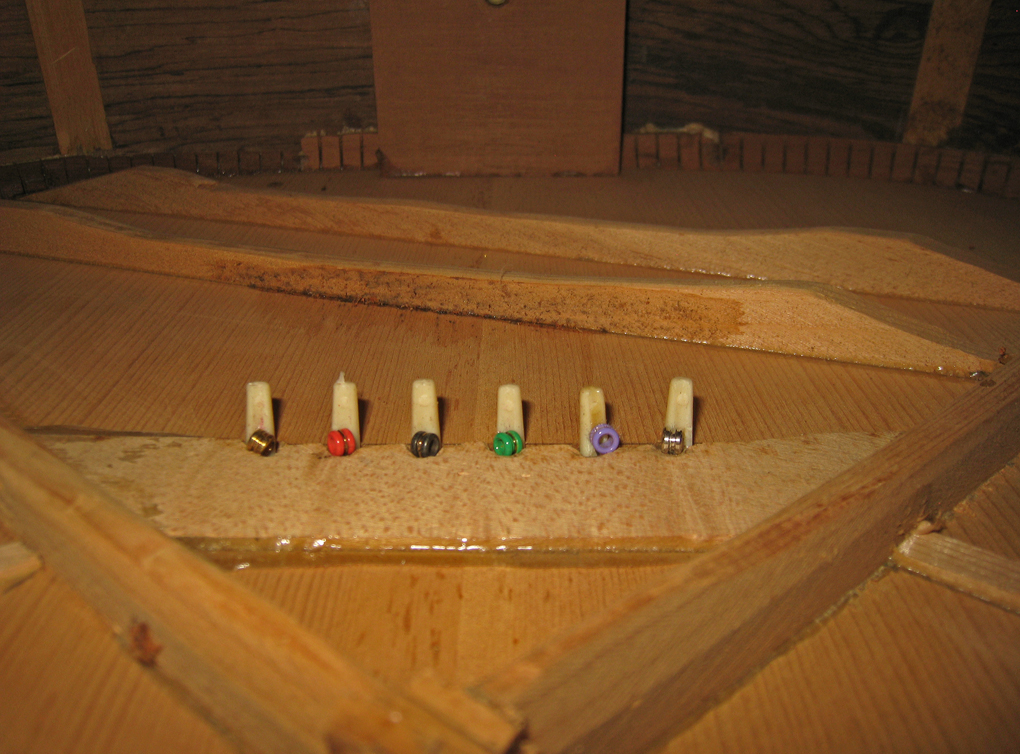
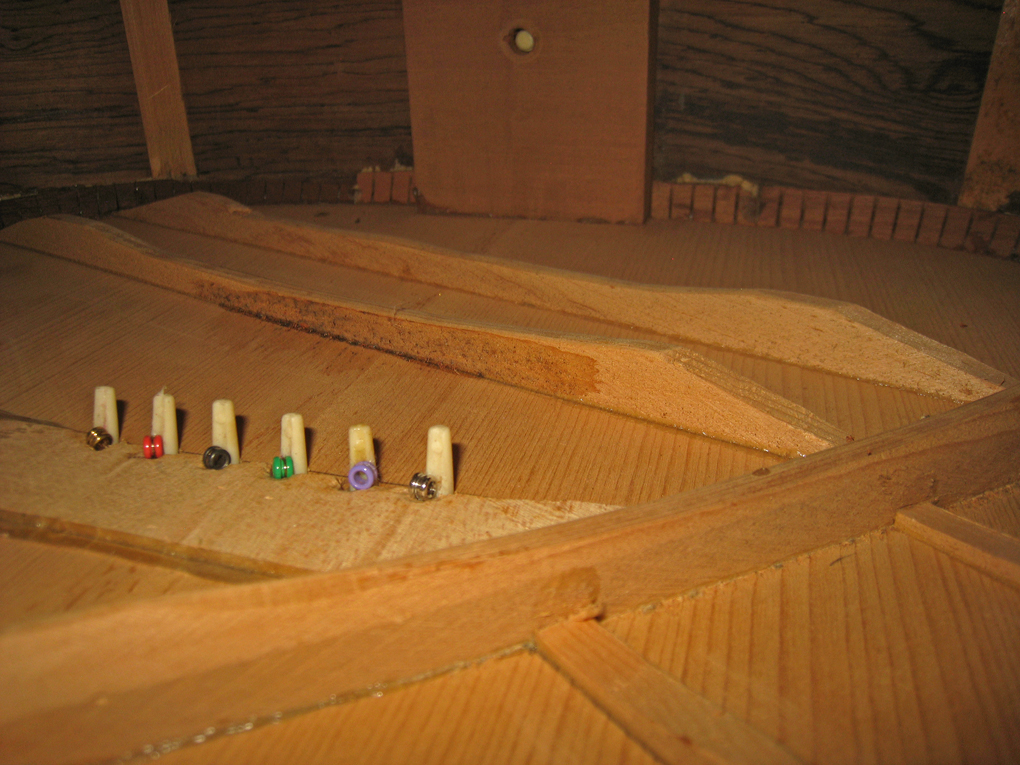
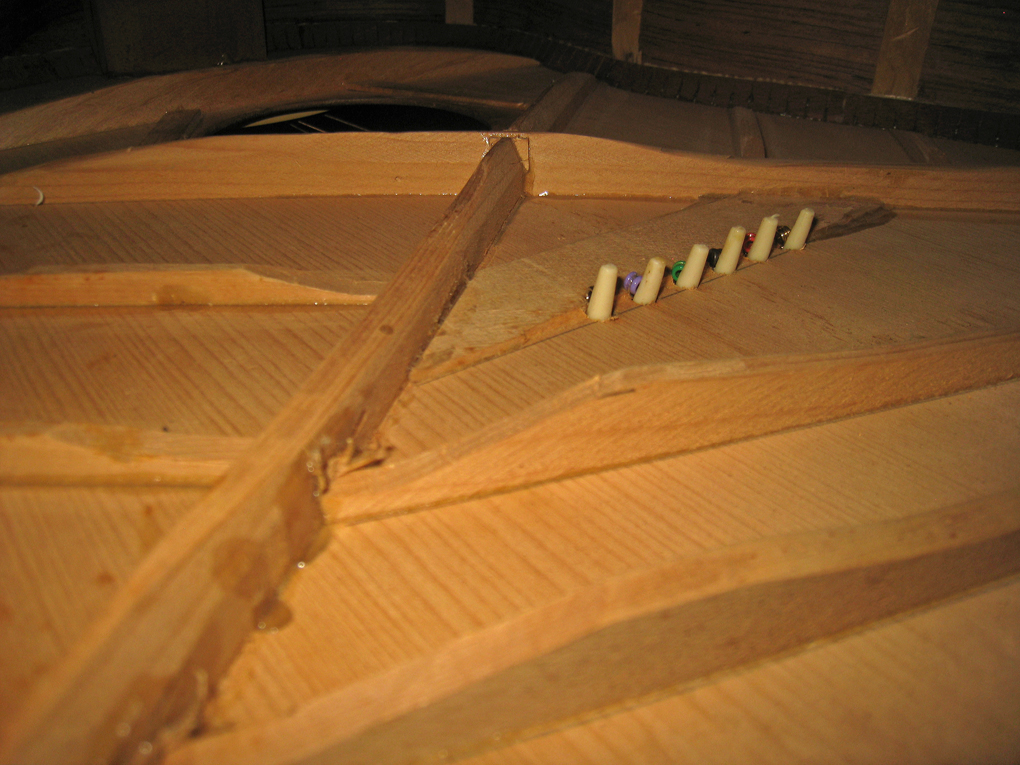
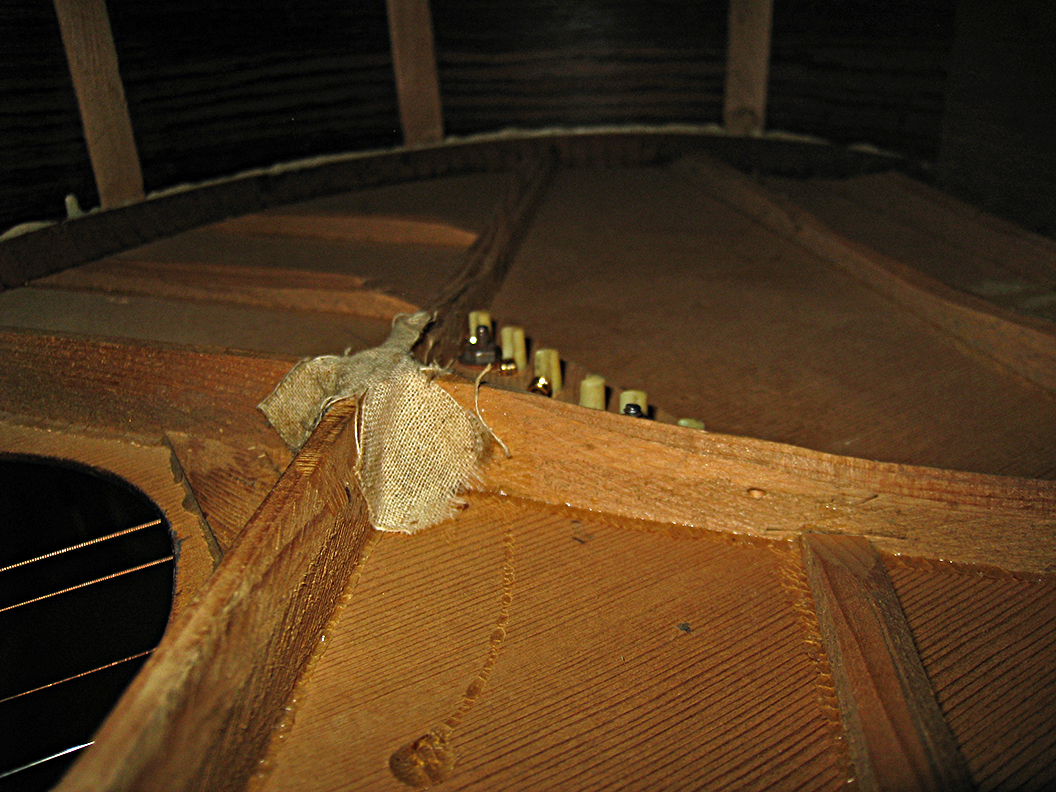
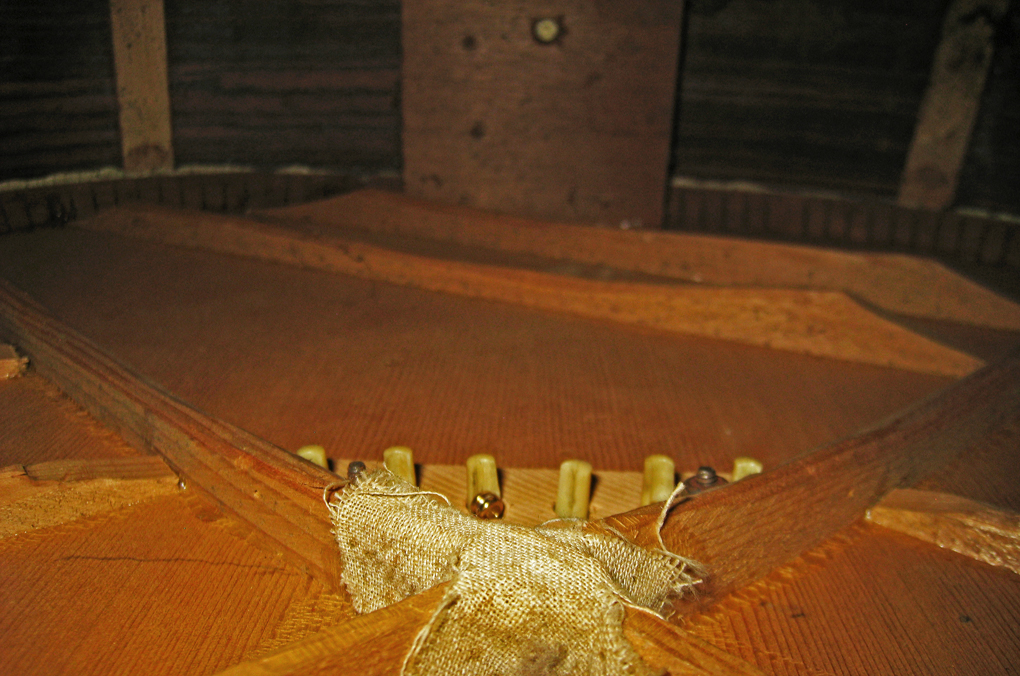
Radio
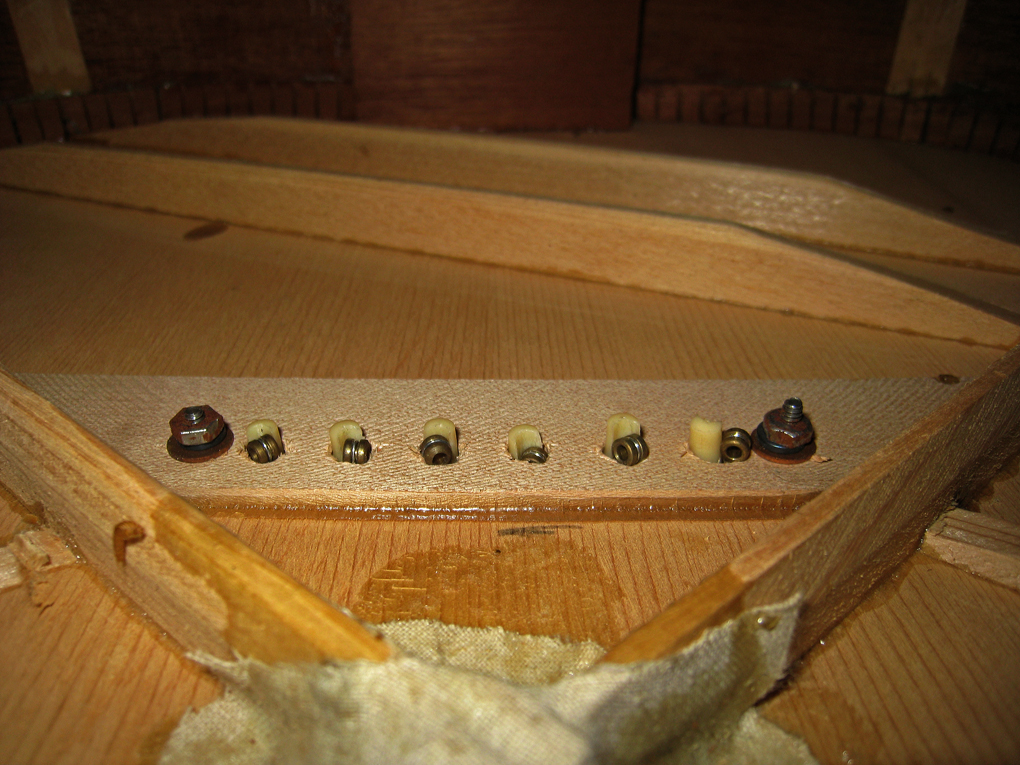
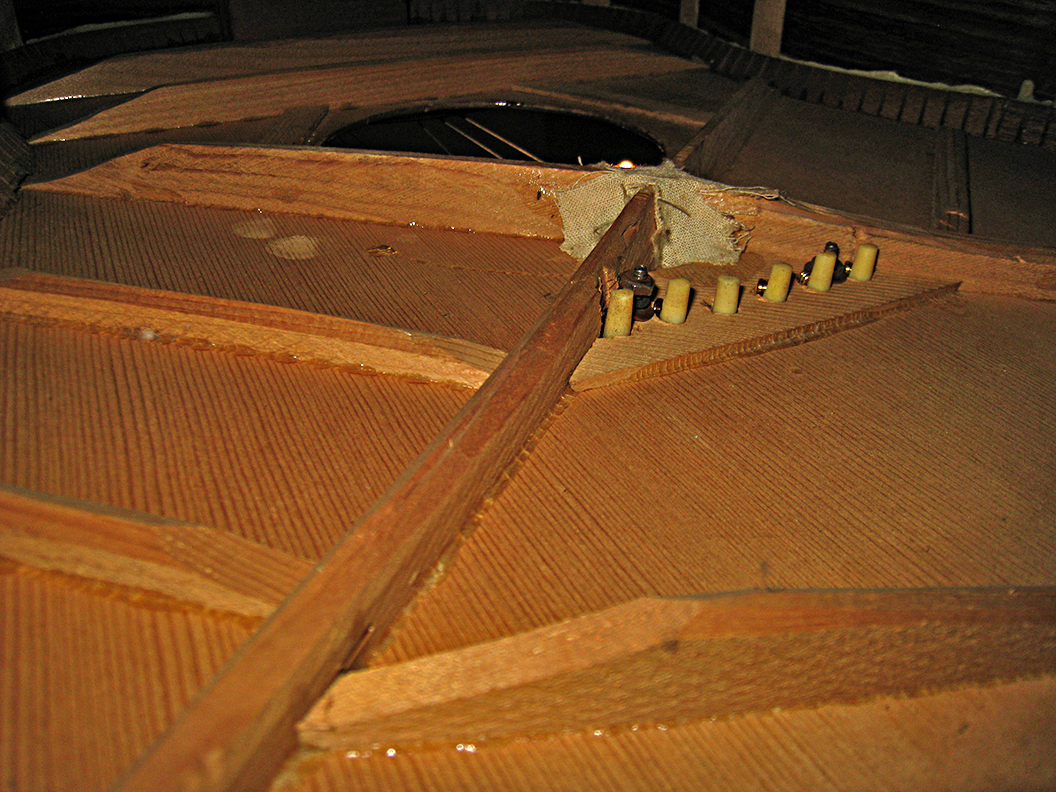
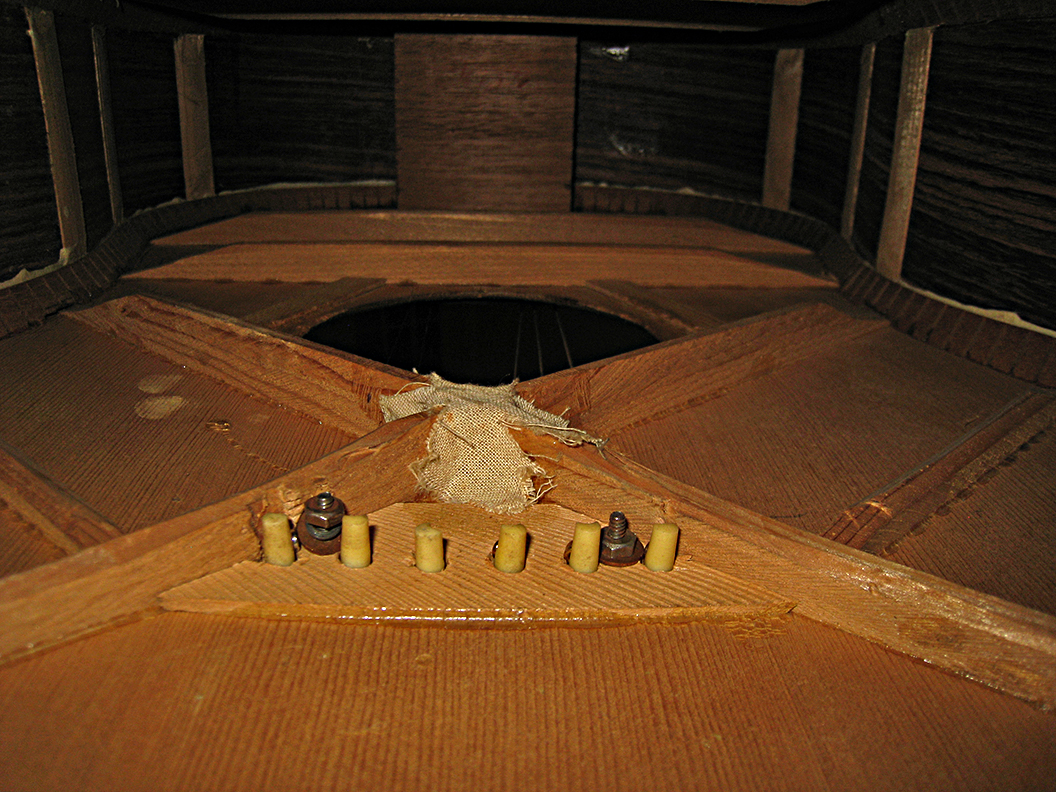
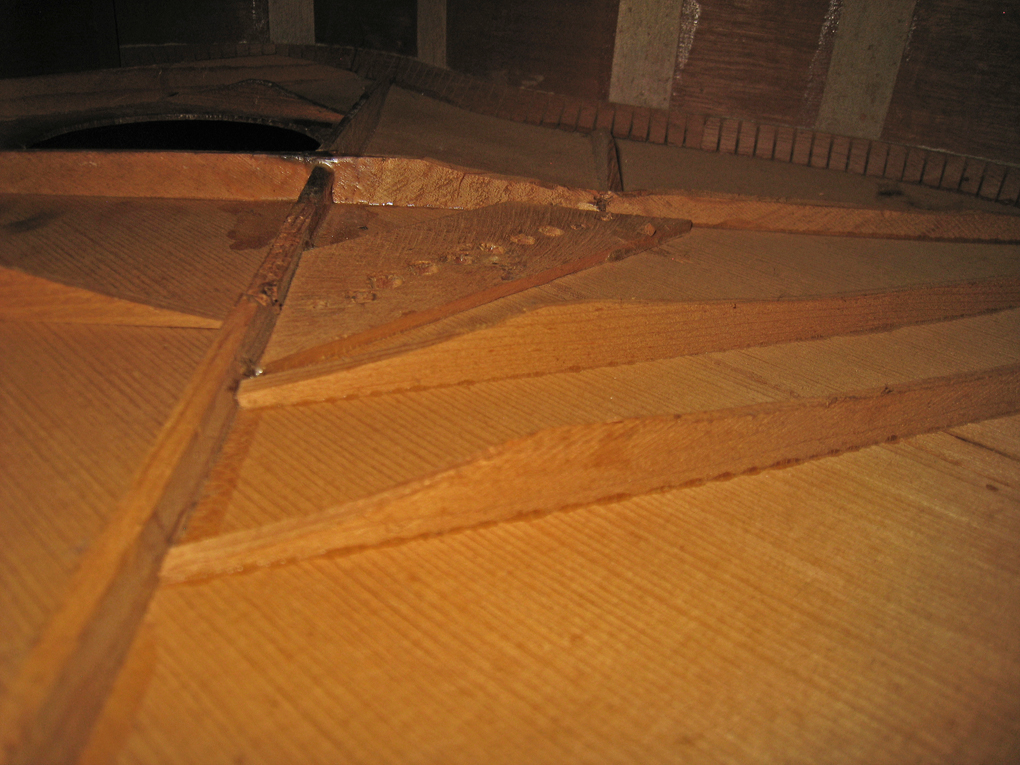
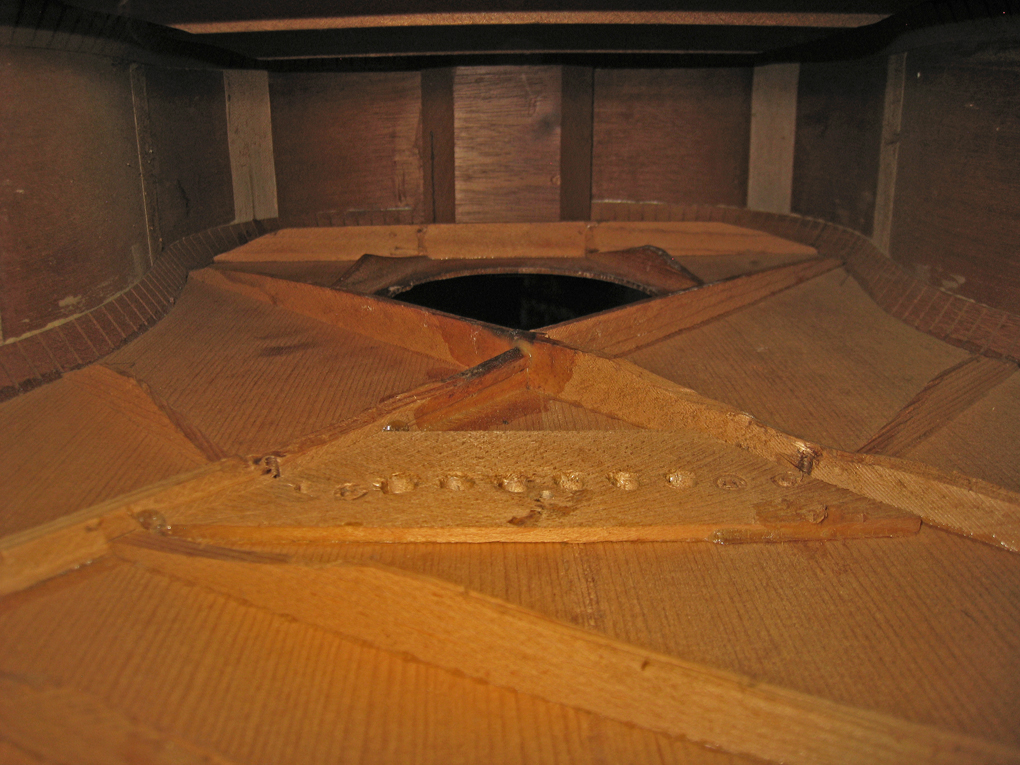
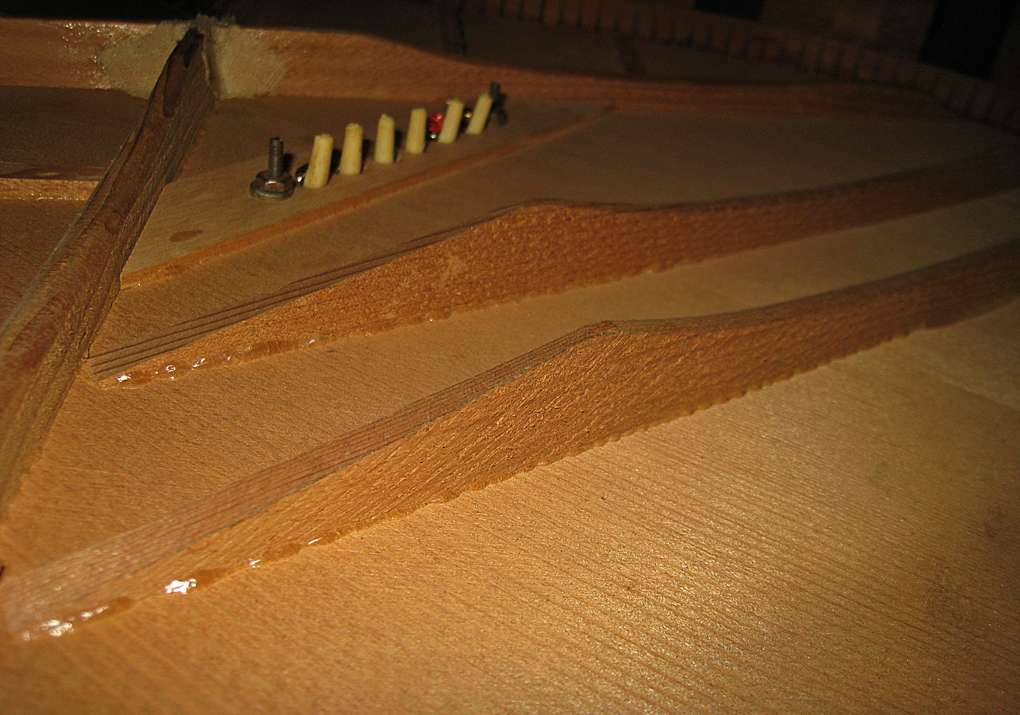
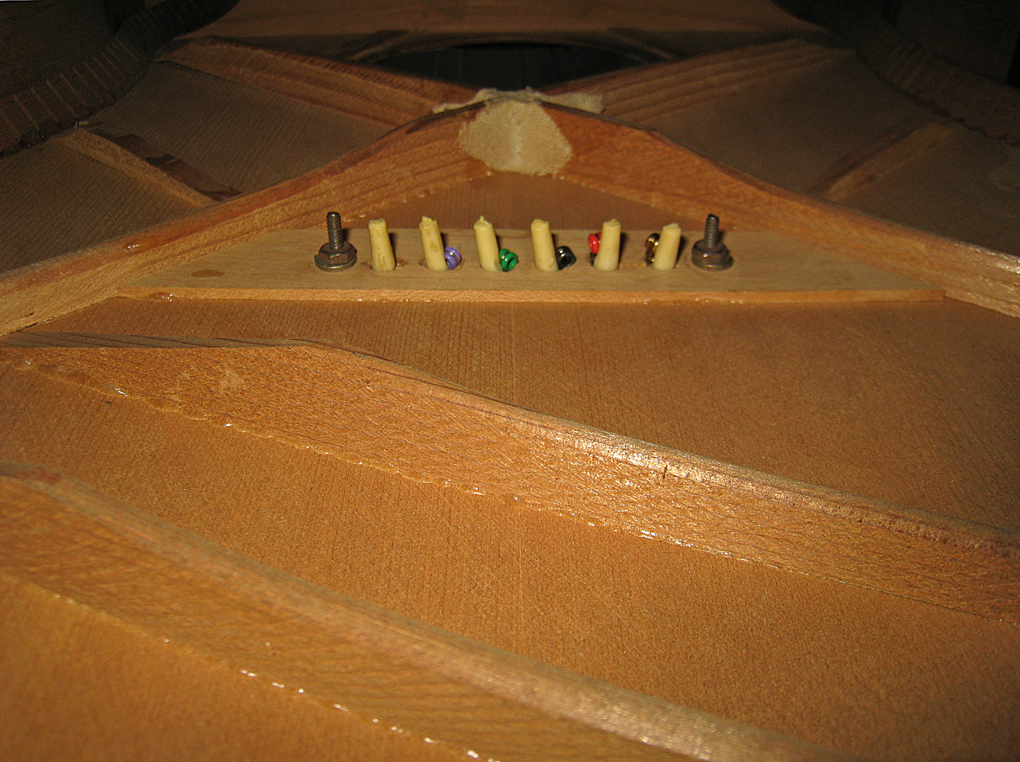
Grande Braces...